


Usually my articles split into a free half and a paid half. Not this one. AI is the most important issue of our era, and most of what people hear about it is fear. This should be a resource anyone can read and share. If you find this valuable, you can support my work by becoming a paid subscriber above.
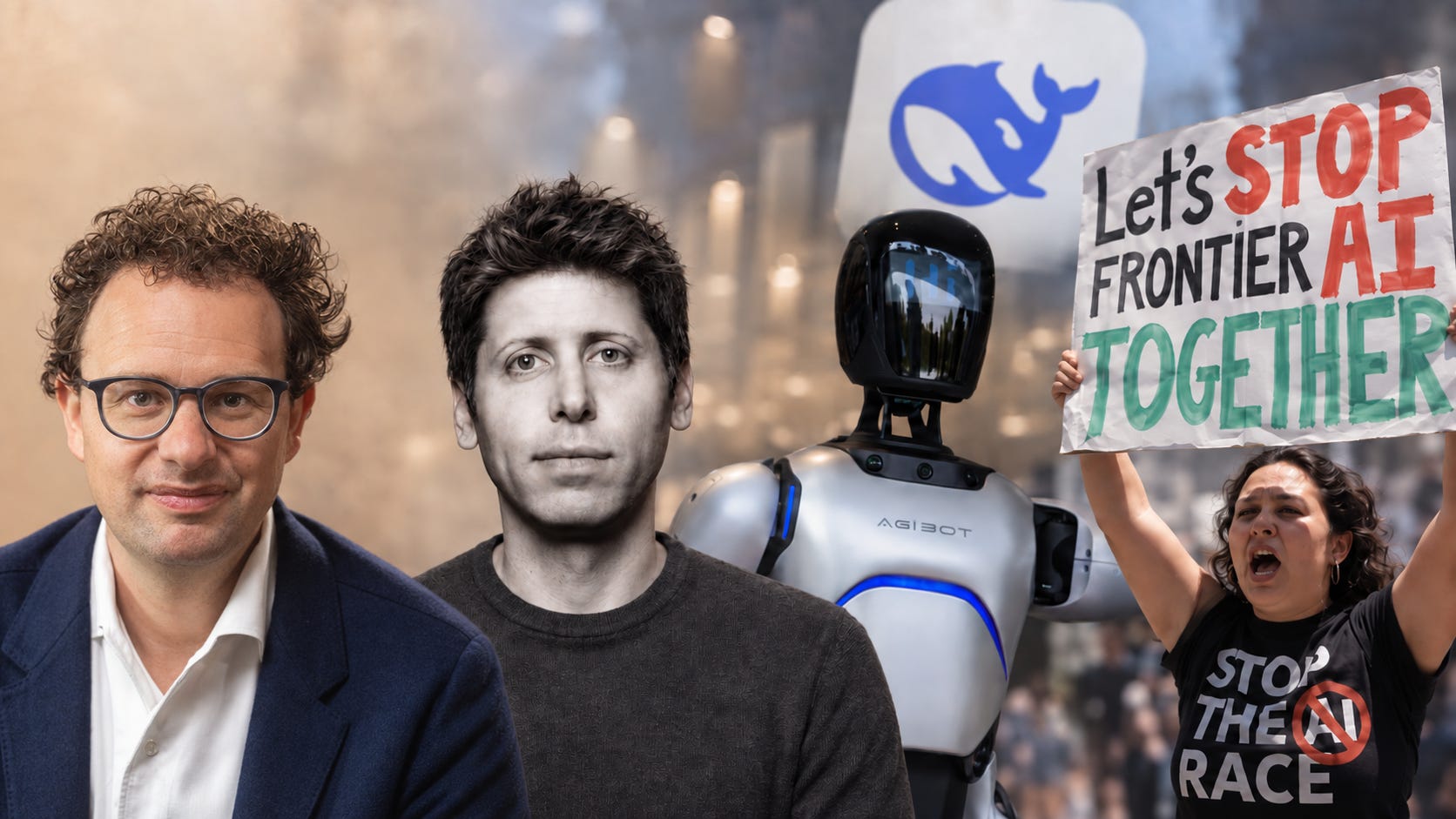
Turn on the news and the media tells you AI is going to kill us.
Turn on social media and you’ll see people trying to ban data centers.
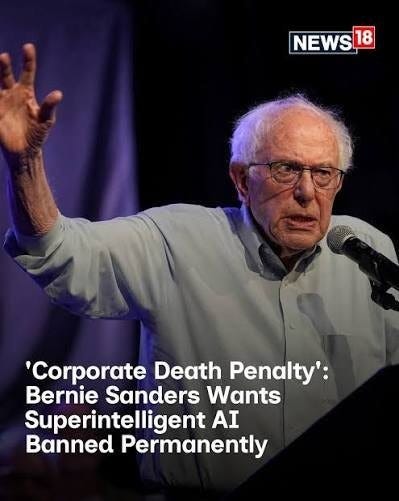
Look at our politicians and you’ll see them trying to ban AI.
America is afraid of AI.
But you know who isn’t?
China.
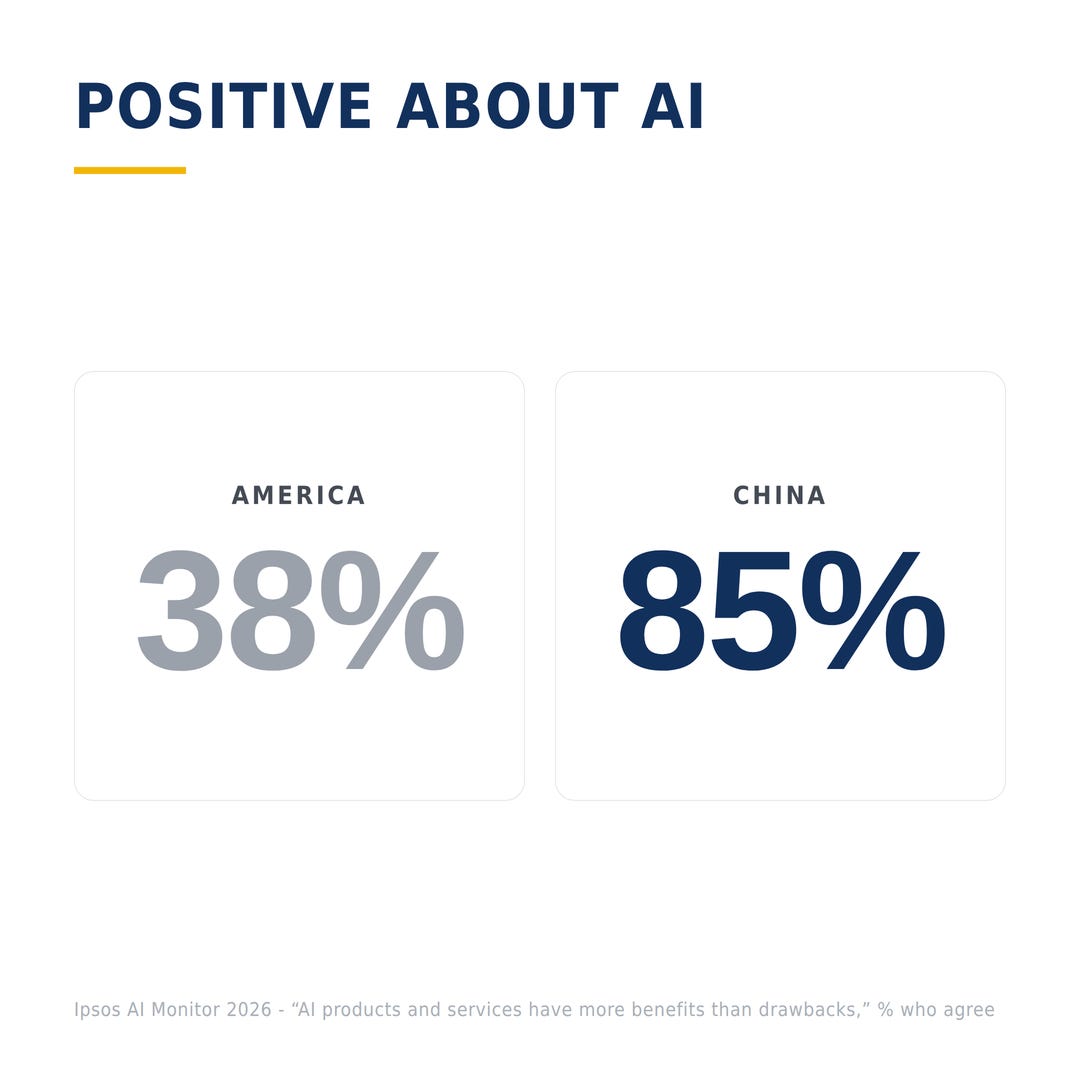
In America, only 38% of us are positive about AI. In China, 85% are.
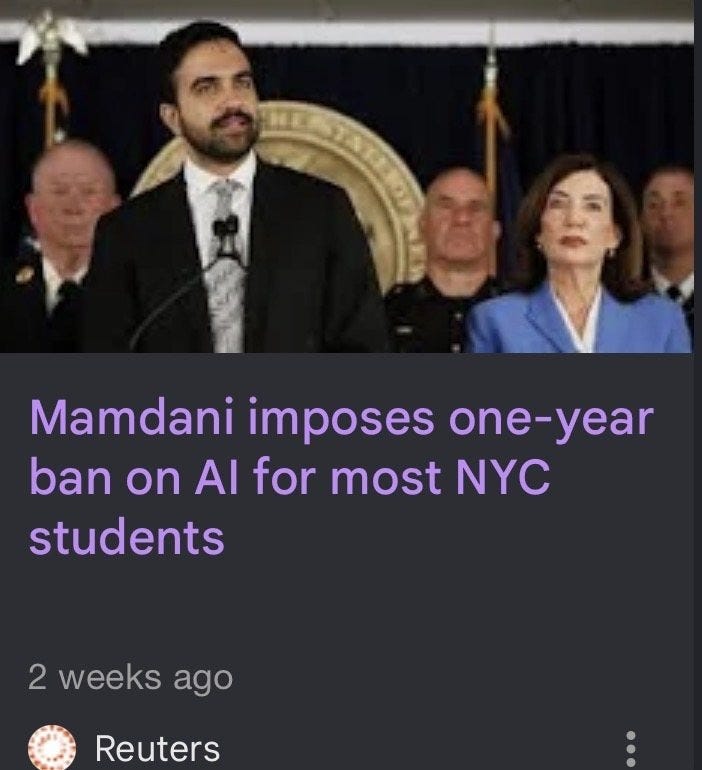
In America, we ban AI in classrooms.
In China, they put it in the curriculum.

In America, we’re scared of the Terminator.
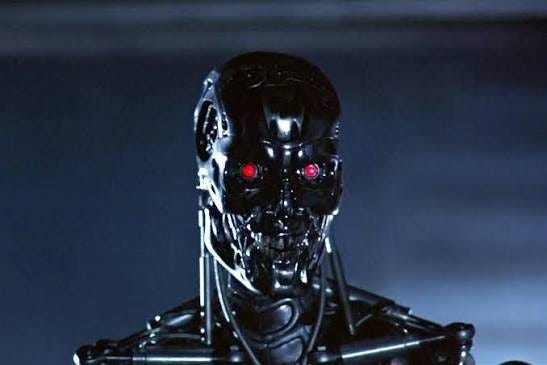
In China, they’re hosting Robot Olympics.
America - what happened to us?
When did we go from masters of our fate to slaves to our fear?
There are risks to AI.
But humanity has always walked a tightrope between opportunity and oblivion.
And once again we find ourselves at a frontier.
And there are two ways forward - with faith or in fear.
The difference between being positive and negative is not the presence of problems.
It’s whether you see yourself as greater than your problems.
So when did we start to think so small?
We used to have leaders who told us the only thing to fear is fear itself.
To go to the moon.
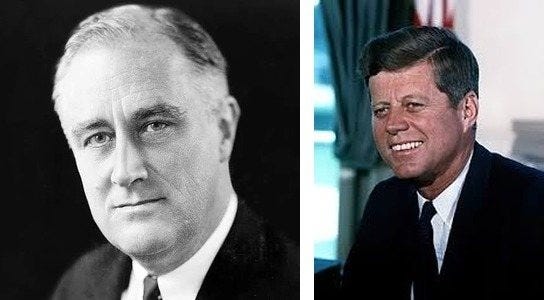
Now our leaders tell us to fear everything.
And while we have culture wars with each other, China is at war with us.
They use bot farms on X to spread fear here about data centers - and ChatGPT to write the posts.
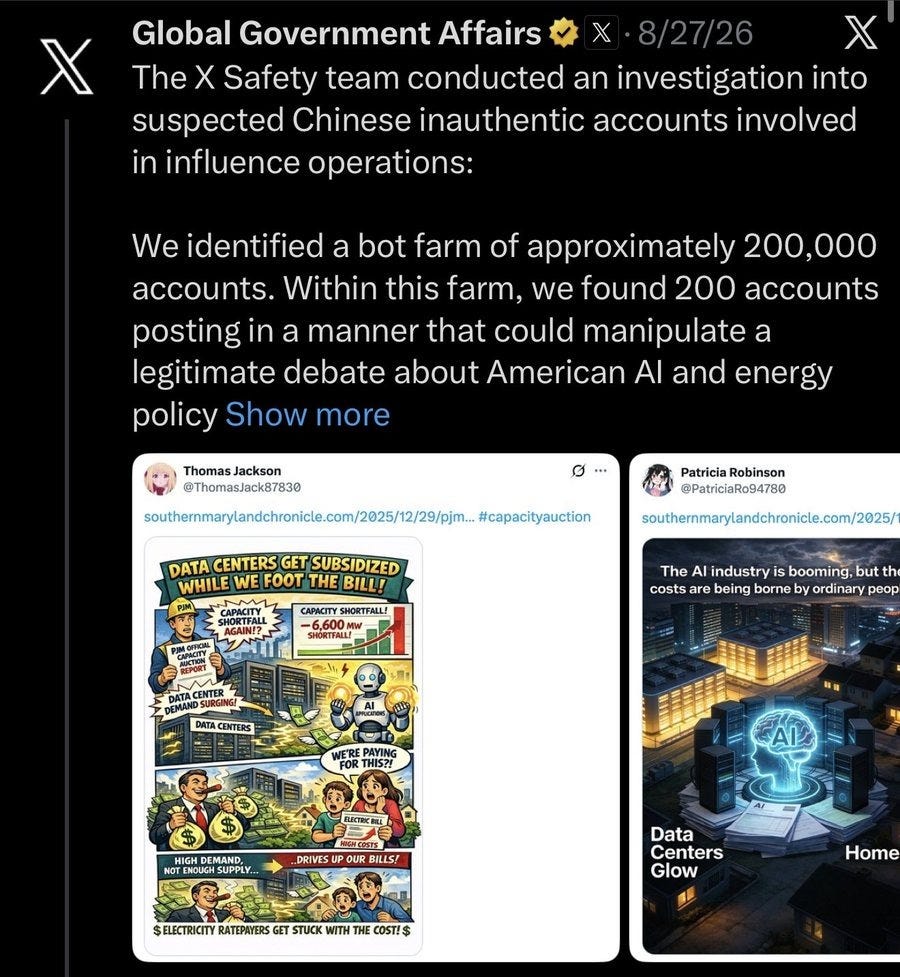
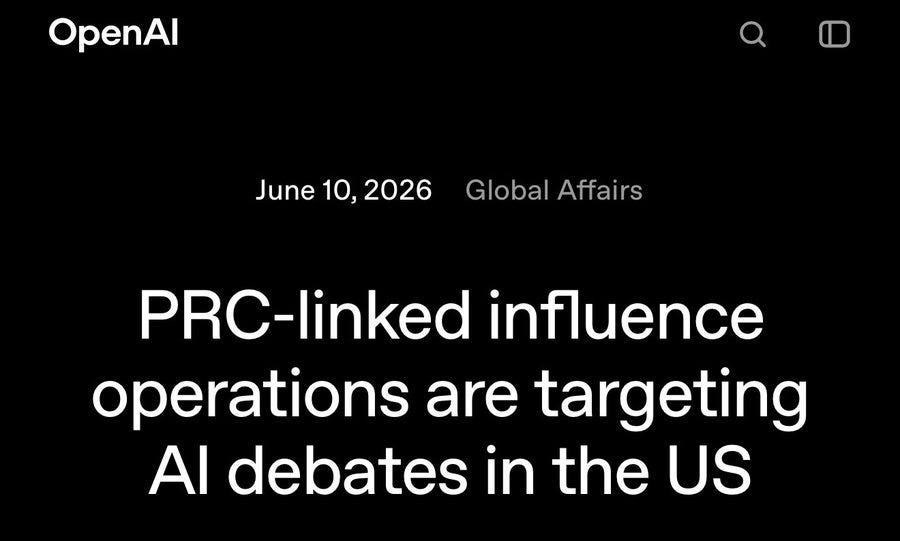
There is an information war happening. And we’re losing.
But the bots didn’t create our mood. They found it.
Thailand, India, and Brazil are all more optimistic than us.
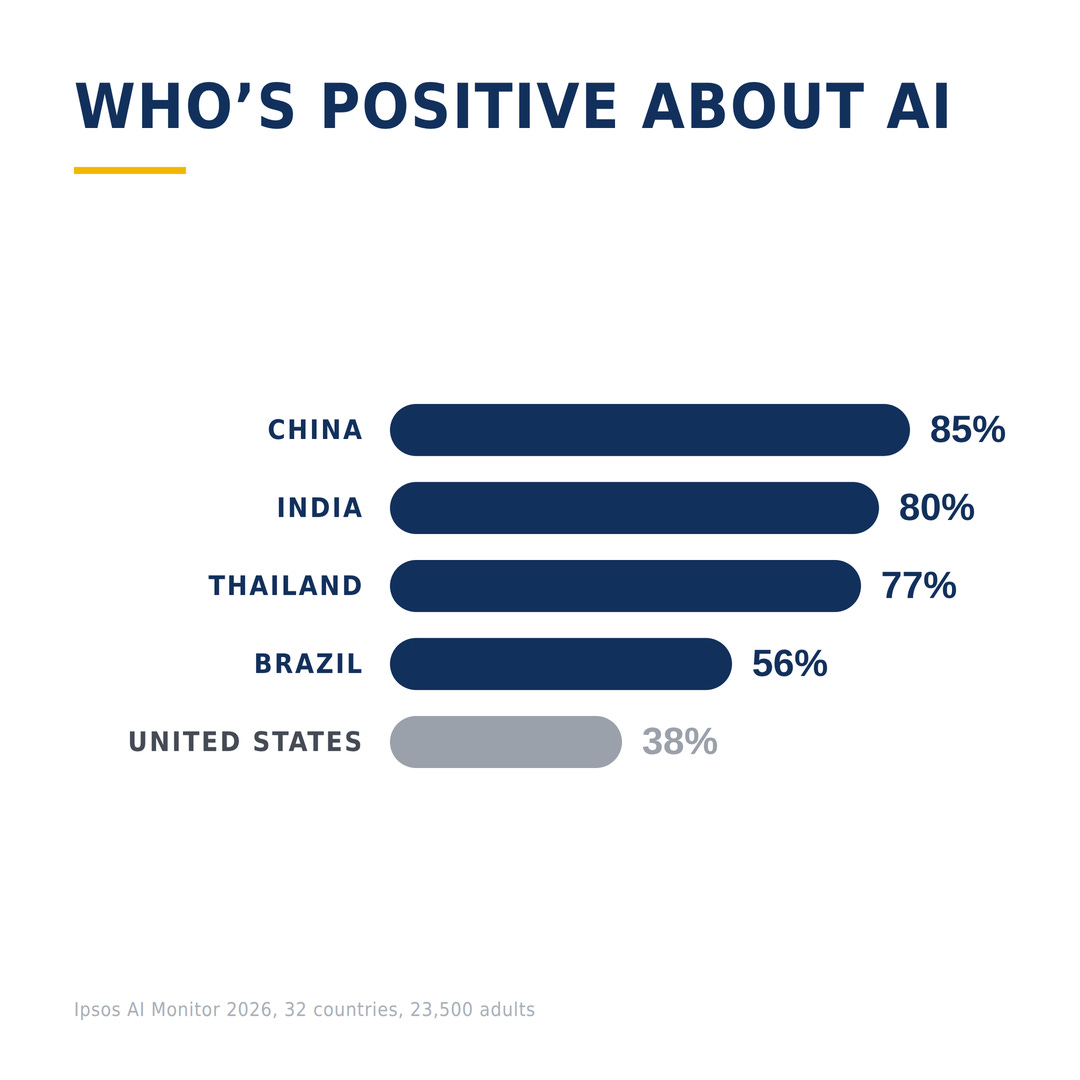
Because they have the optimism of the ascendant, while we have the pessimism of the abundant.
Since 1978, China lifted 800 million out of poverty and starvation by abandoning socialism for capitalism and innovation - as I wrote about previously.
They know what it’s like to be hungry, and remember what fed them.
But we’ve become obese with success, while demonizing what created it.
Capitalism. Risk. Optimism.
Our media emphasizes how unguided AI use makes students dumber.
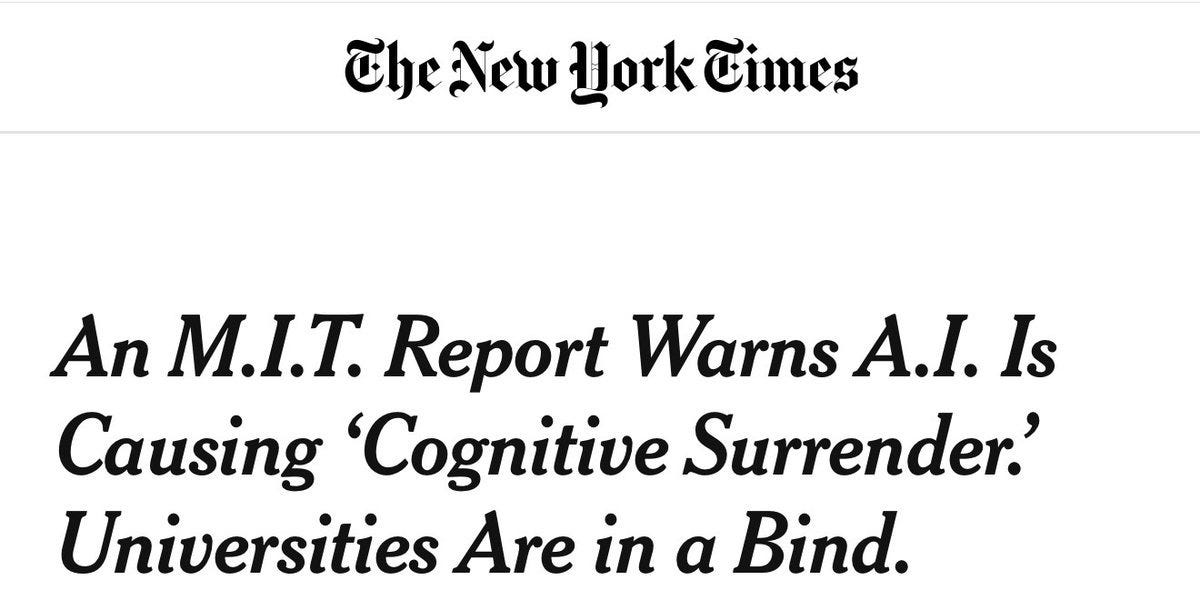
Yes - it’s true: hand a kid ChatGPT, don’t supervise him, let him copy the answers, and his test scores will drop.
But intentional AI use is very different.
The World Bank gave kids an AI tutor for six weeks, and they gained nearly two years of learning.
China knows that.
This year Stanford’s education school reviewed more than 800 studies on AI in K-12 and pulled out the 20 most rigorous ones.
Their finding: student performance often improves with AI tools.
Take the tools away and the results are mixed.
Tool design matters.
The mayor of New York, Zohran Mamdani, said he had yet to see a study showing AI helps kids. Stanford had twenty.
China knows that too.
Our media frets over job loss, while AI has created more jobs than it’s removed.
AI jobs are up 69%. The overall job market, 9%.
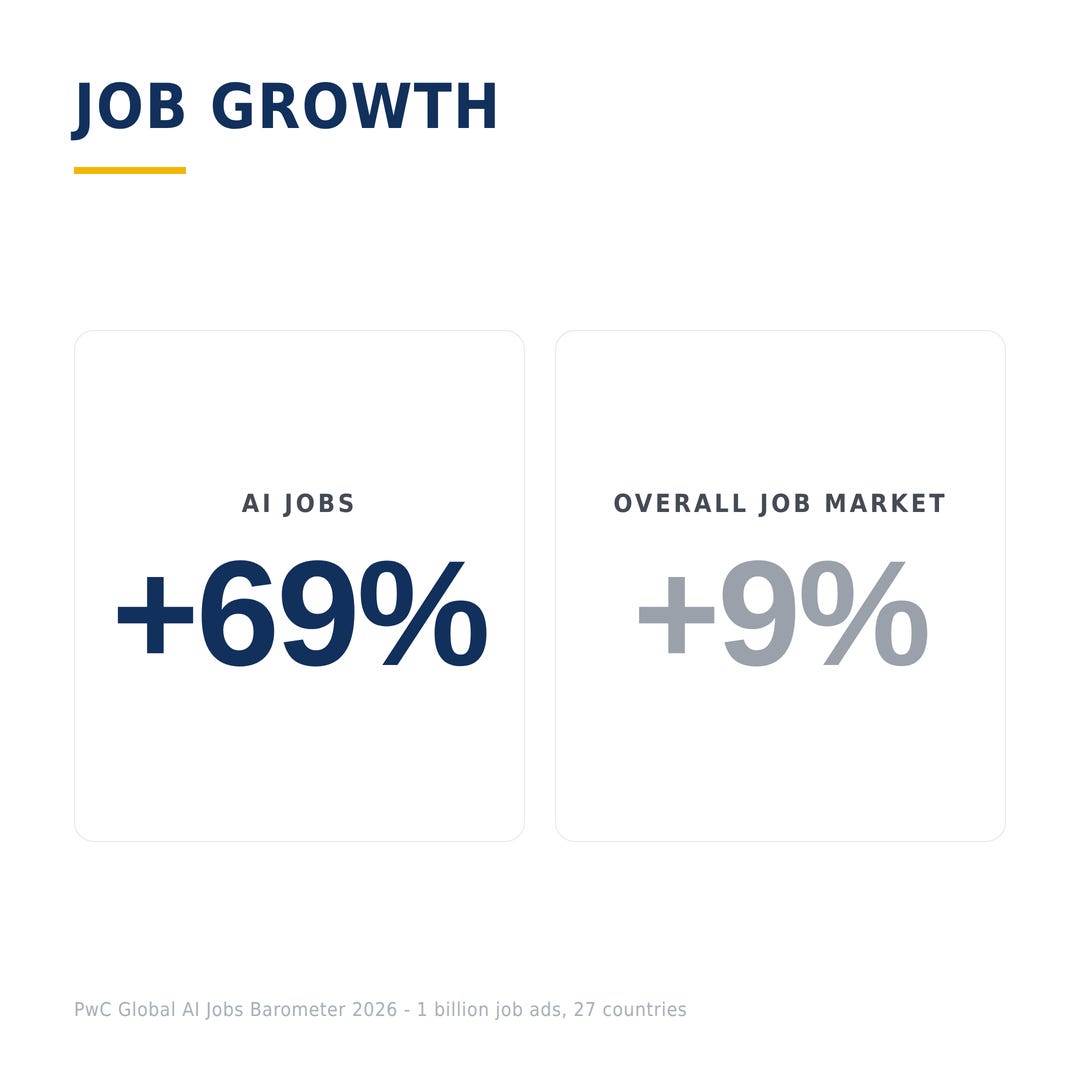
China knows that.
So what do they know that we don’t?
Three things. Let’s start with the one in your backyard. The truth about data centers.
1. Data Centers
Americans are extremely negative about data centers. 47% say building them is bad for the country. 24% say good.
And it makes sense - they are the visible representation of everything there is already hostility against:
Tech billionaires.
Corporate interests.
And concentration of wealth, without the belief that the wealth will trickle down.
And the fact of the matter is - in some places, data centers have raised costs.
In Maryland, Baltimore Gas and Electric customers saw their bills jump 19% in June of last year.
But that’s not the whole picture.
Because the Electric Power Research Institute also found that if you double a state’s data center capacity, residential power costs fall 3.5%.
Why? Because most of what you pay for is the wires, the substations, and the plants. Those cost about the same whether the grid is half-used or full.
So a giant new customer coming in and paying a share of those costs means everyone else pays less.
That held through 2024. The same researchers say it can reverse where the grid runs out of room.
So do data centers raise or lower electricity costs?
Well - it depends on the grid.
Where the grid had room to support more usage, data centers lowered the bill.
Where the grid didn’t have room, they raised it.
This helps explain why there’s such a gap between Chinese perception of AI data centers and American.
China has been massively expanding their power supply for years.
China ended last year with 3.9 terawatts of generating capacity.
America has about 1.3.
Last year alone, China added roughly 540 gigawatts.
America added 53.
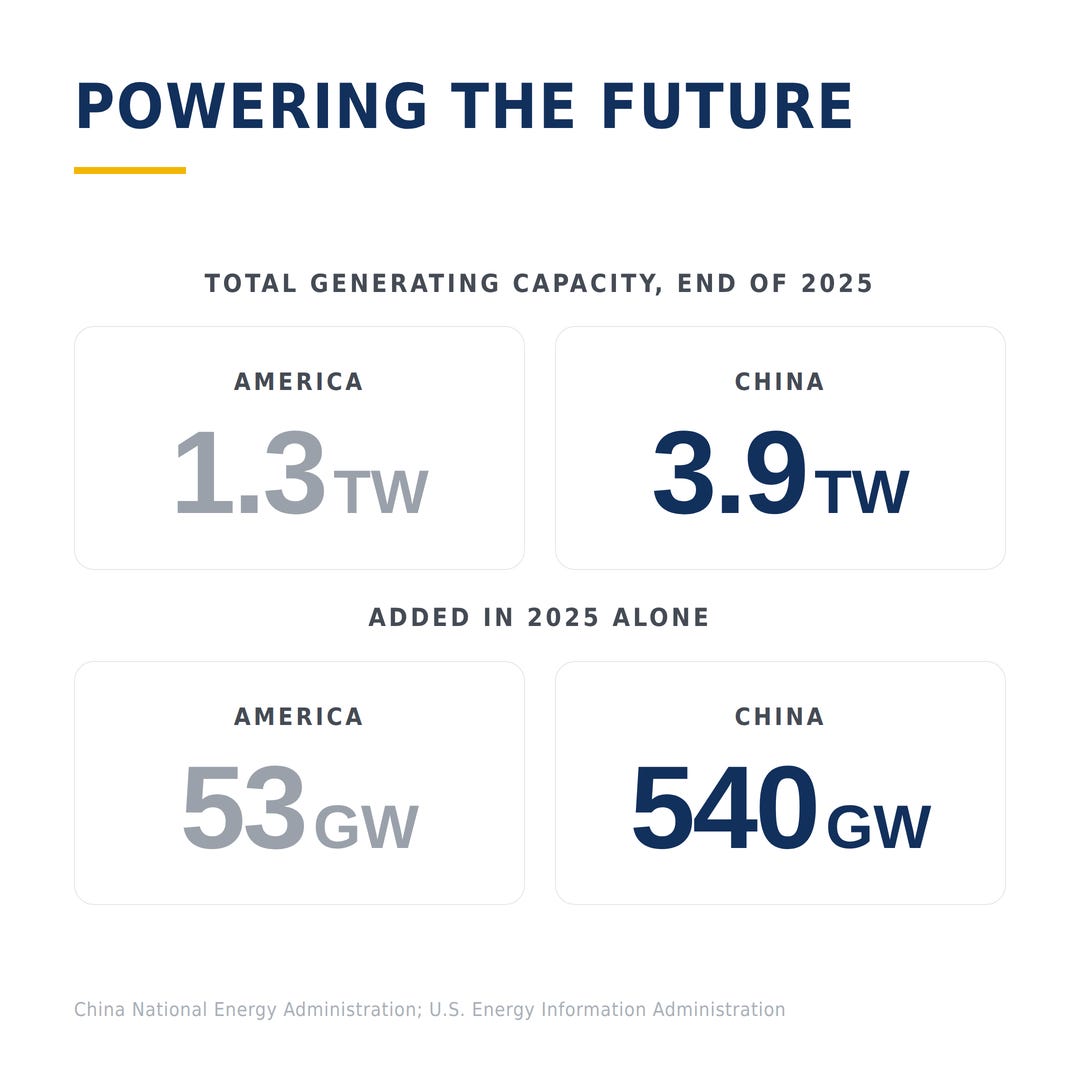
China builds an entire American grid about every two and a half years.
They’ve been building the capacity to power the future.
Until very recently - we weren’t.
American electricity use was flat for fifteen years. So we stopped building. Now demand is rising for the first time in a generation, and the grid wasn’t ready.
Much of the last decade has been focused on environmental policy and restrictions instead of growth.
While well-intentioned in many cases - the effect of that has also been to drive up costs in two key areas - energy and housing.
It’s become slower, more difficult, and more expensive to supply the two things that every citizen needs.
And local laws make it hard to build more energy supply.
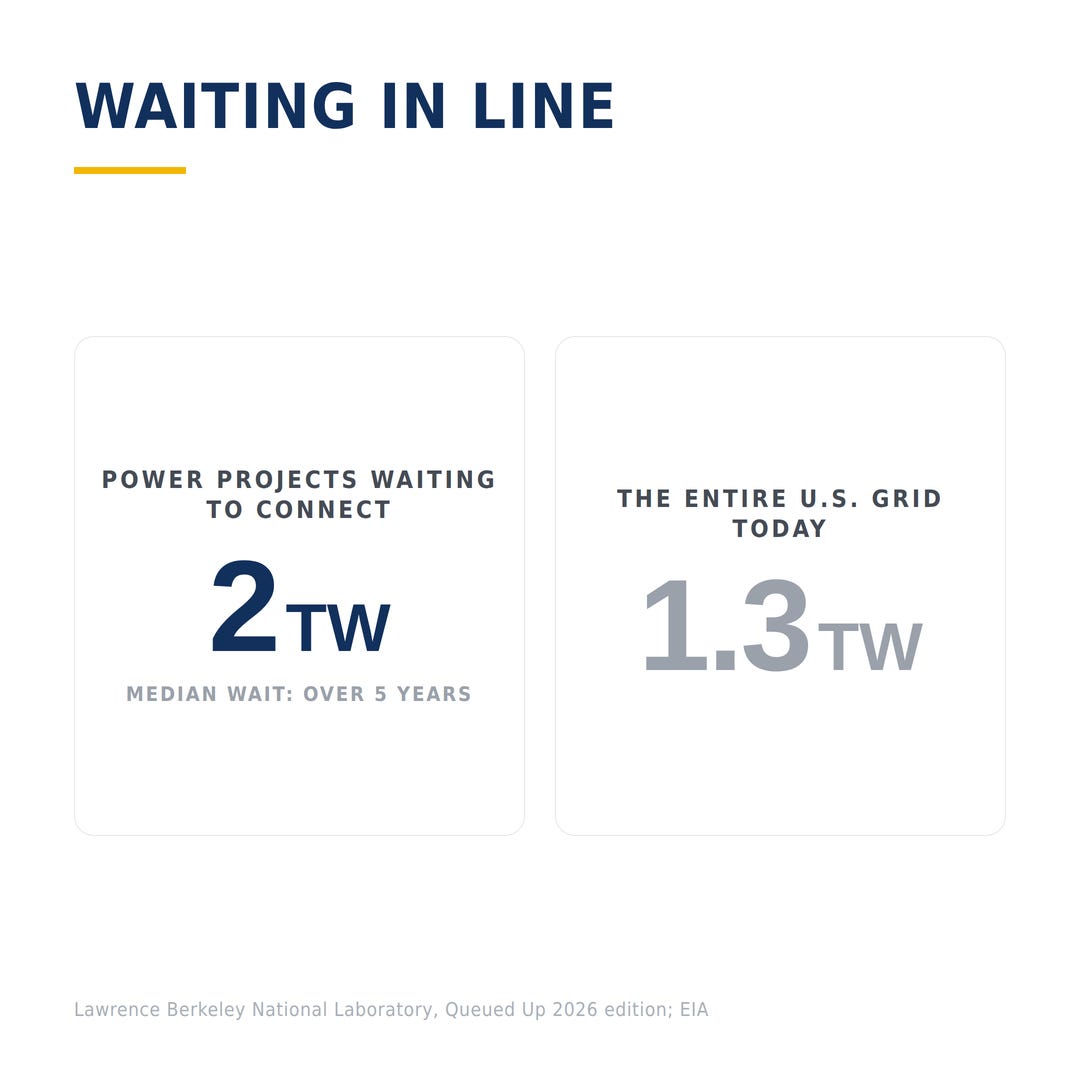
Right now there are 2 terawatts of power projects standing in line, waiting for permission to expand the American grid.
That’s more than the entire grid we have.
The median wait is over five years.
Most of the projects give up before they’re built.
This doesn’t mean that we should ignore the environment - but it does mean that we’re experiencing the downside of that particular regime of policies - especially in places like California, where electricity costs about twice the national average.
And if we want to participate in all the incredible benefits AI can bring - which I’ll get to later - we simply need more power.
So what could be looked at as a supply issue on the power side is being framed as a demand issue on the data center side.
Now there is some positive momentum.
The White House ordered nuclear power quadrupled by 2050.
Two shut-down nuclear plants, in Michigan and Pennsylvania, are being restarted. New reactors are being built.
This year America is on track to add 86 gigawatts of new generating capacity. The most in a single year since 2002.
And while we’re adding new power supply, data centers are getting more efficient.
To illustrate - here’s an analogy.
Think about computers.
You’ve probably seen those pictures of computers from the 80s that took up entire rooms.
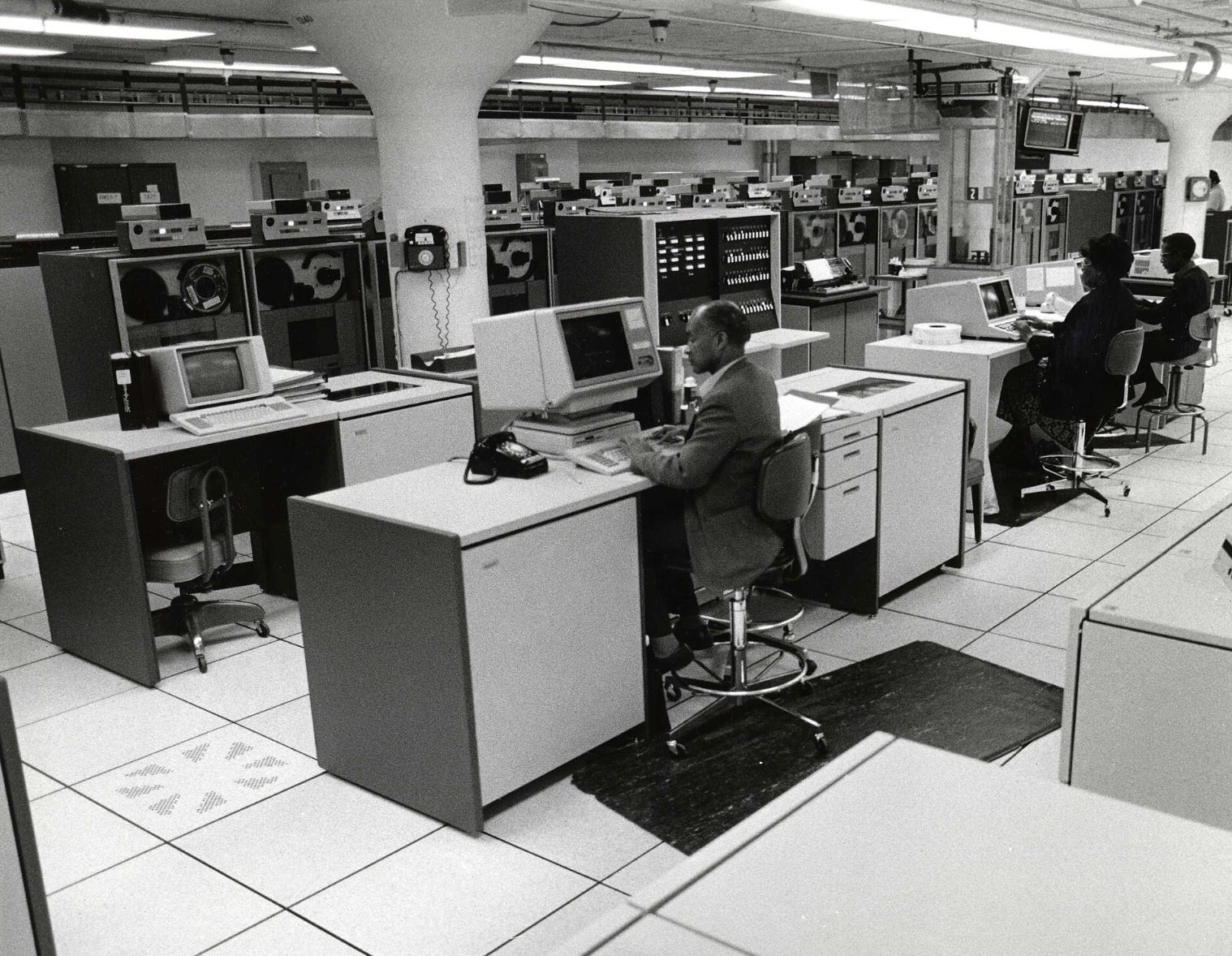
Fast forward to today, and you have a computer in your pocket with exponentially more processing power, at a fraction of the power usage.
And that’s the direction data centers are going, already.
Between 2010 and 2018, the world’s data center computing grew 550%. The electricity they used grew 6%.
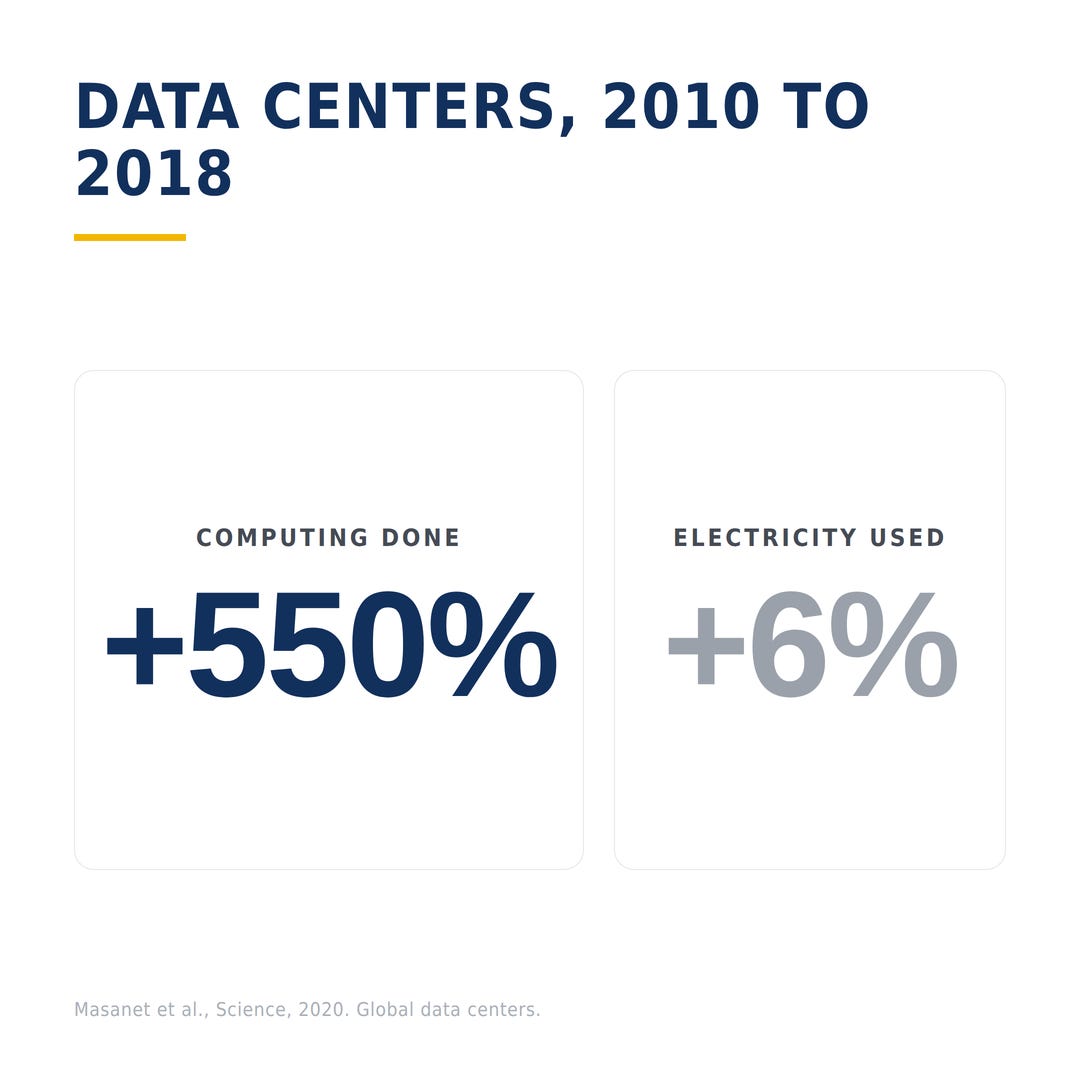
That was before the AI training boom, and power use has climbed since. But the efficiency curve didn’t stop.
Last year Google measured the energy of a single Gemini prompt. In twelve months, it fell 33 times.
And the water? Perhaps you’ve heard every AI query drinks a bottle of water.
Google measured that too. A median AI prompt uses about five drops.
American golf courses use 30 times more water than every data center in the country.
And the newest data centers reuse the same water over and over, rather than requiring more water.
Every Microsoft data center designed since 2024 is built this way, and the company’s water use per unit of computing is already down 39% since 2021.
So the technology used to build data centers is becoming more powerful while becoming more energy efficient.
While the technology is improving, the laws are evolving too.
Some places are just banning data centers outright.
But others are choosing to work with them, while protecting citizens.
Like Texas.
Texas passed a law stating that any data center load over 75 megawatts has to pay for the grid upgrades it needs.
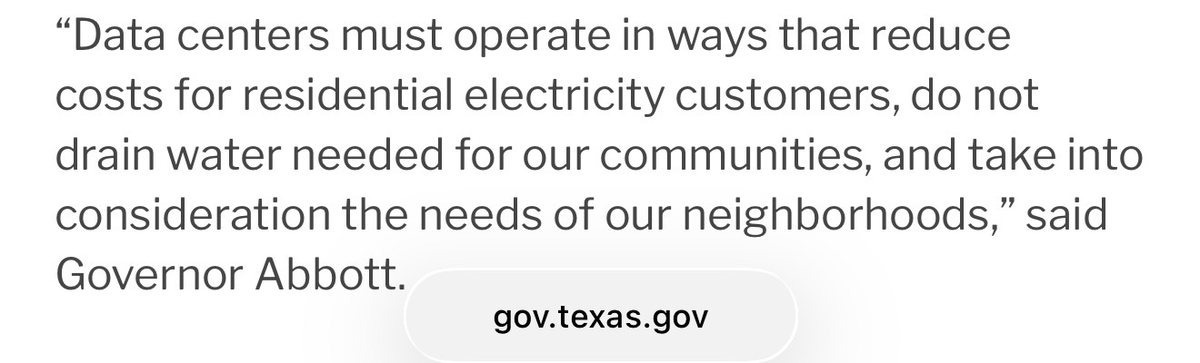
Said otherwise - they pay for the wires and upgrades they need, instead of homeowners.
Those grid upgrades benefit everyone.
Especially in a place like Texas, which is notorious for power grid failures.
And in an emergency, they can be ordered off the grid entirely.
Pennsylvania just did the same thing.
But OK - at best, a good law just makes a data center neutral for the community.
That’s fine for tech CEOs, but how does it help the average person?
Well, ask Ellendale, North Dakota.
Population 1,100. A farm town that was dying.
Then a data center came.
The mayor says it nearly doubled the town’s tax base. Sales tax revenue up 775% in seven months.
Power bills went down.
Or ask Loudoun County, Virginia.
Data centers sit on 4% of the commercial land and pay 38% of the county’s budget.
$1.1 billion this year.
They cut everyone’s property tax rate.
Or ask Ohio. Data centers have paid $5.2 billion in taxes since 2017.
Before this, areas like these were eviscerated by excessive globalism.
In 2000, America had 17 million manufacturing jobs.
By 2010, 11 million.
Manufacturing jobs disappeared overseas to places like China, and while tech, finance, and service industries grew, multinational companies sent the factories abroad, and towns withered with them.
But some of those same towns are starting to bloom anew.
Richland Parish, Louisiana. Rural. Poor.
The superintendent says their best and brightest leave for college and never come back, because there were no jobs to come back to.
Then Meta started building a data center there. The biggest one it’s ever built.
Last June, every full-time teacher in the parish got a check for almost $51,000 on top of their salary.
The cafeteria workers and bus drivers got $17,000.
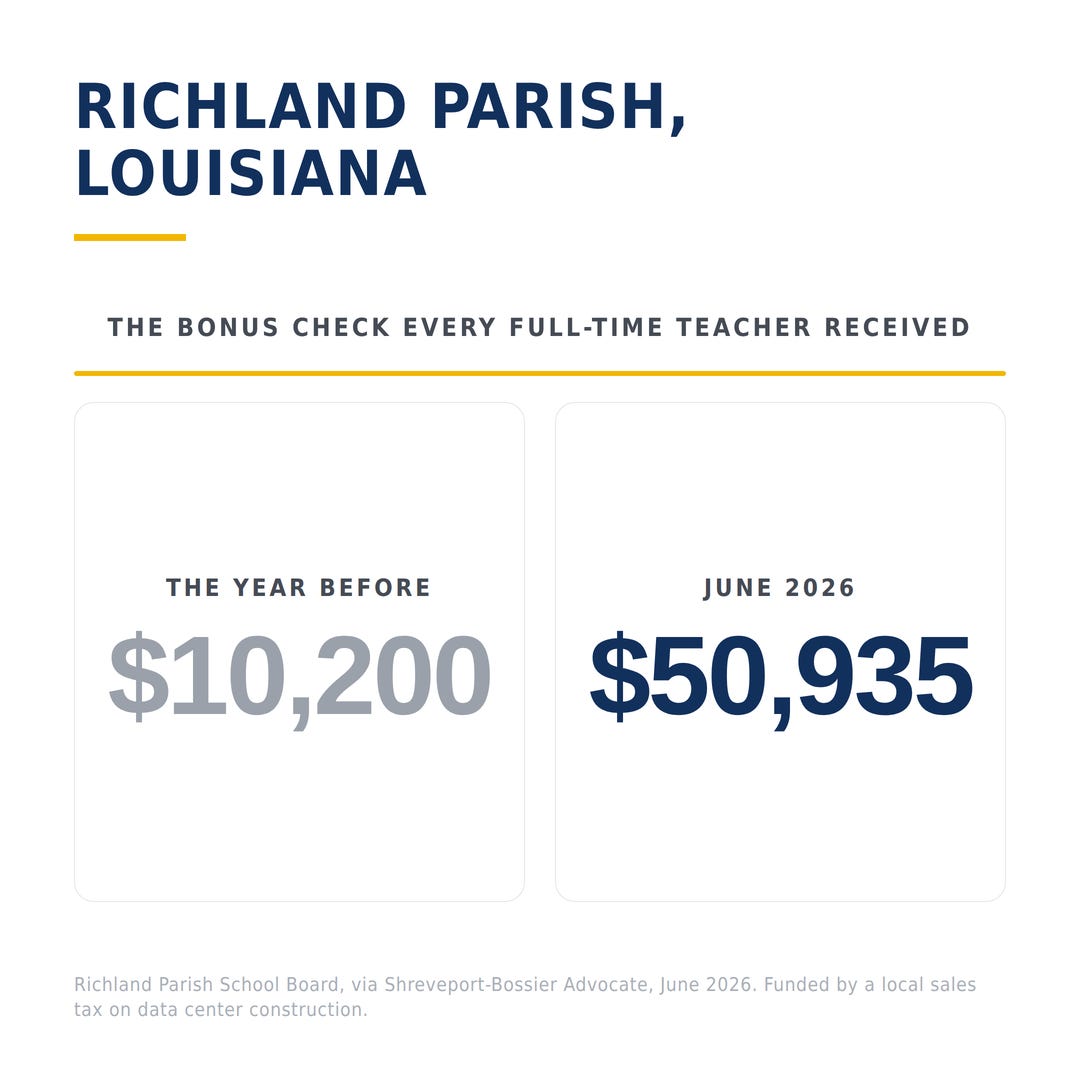
The money came from a local sales tax on construction.
And even after construction is done, Louisiana projects a thousand permanent jobs, in a parish where the kids used to leave because there were no jobs.
Now there was a downside.
A thousand construction workers showed up and rents doubled. Some families got priced out.
And that’s a problem.
It’s also a fixable problem.
You fix it by reinvesting that income into building more housing, so prices don’t spike.
You fix it with good leaders making good financial decisions.
You don’t fix it by killing the thing that’s paying the teachers.
Data centers are expensive to build, and the building of those data centers means tax revenue for townfolk.
That tax revenue can be invested in schools, roads, and infrastructure.
And smart politicians recognize that, and are finding ways to capture the upside while limiting the downside.
And that’s the difference between constructive and destructive criticism.
Destructive criticism is just saying billionaires are bad, AI is bad, data centers are bad, and being hostile toward all of it.
That’s how you end up with Google announcing, two weeks ago, 13 billion euros for data centers in Finland. Google’s own words: “a testament to Finland’s leadership in responsibly building AI infrastructure.”
We lost manufacturing jobs, and now we risk losing something much bigger due to fear-based thinking.
I mean, imagine for a second if the internet boom didn’t happen in America - and instead happened somewhere else.
Imagine if in 1999 we’d been so afraid of Y2K, or some sci-fi supervirus, that we banned companies from building server farms.
The American tech sector employs 9.6 million people.
It’s 8.7% of the entire economy.
Now imagine those jobs are in Shenzhen, China.
How many trillions of dollars of wealth would have been built in China, or Russia, or Europe instead of America?
How many hundreds of billions of tax dollars would never have gone into cities and towns, funding schools?
Constructive criticism is managing the risks and opportunities inherent to the next wave of progress.
Instead of trying to stop the wave, it’s learning to ride it.
2. Job Loss
Now let’s talk about job loss.
Geoffrey Hinton is called the Godfather of AI. He won the Nobel Prize in Physics in 2024.
Ten years ago, in 2016, he stood on a stage at a machine learning conference in Toronto and said AI was about to kill the radiology profession.
He said we should stop training radiologists. It was “completely obvious,” he said, that within five years, ten at most, AI would do the job better than humans.
His exact words: “If you work as a radiologist, you’re like the coyote that’s already over the edge of the cliff but hasn’t yet looked down.”
We’re now ten years later.
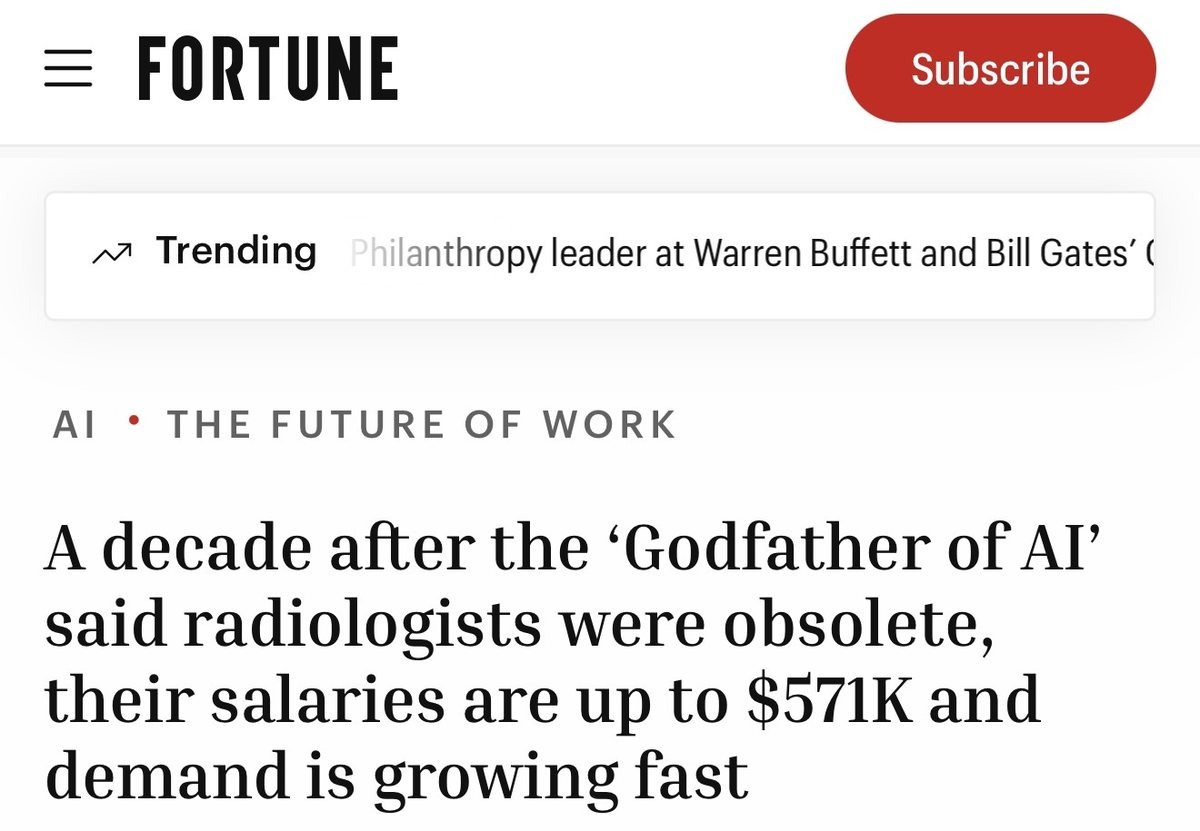
The number of radiologists in America has grown 10%.
There are nearly 7,500 open radiology jobs right now.
Hospitals can’t find enough.
The shortage pushed the average radiologist’s salary to $571,000.
A Nobel Prize winner said the job would be gone.
Instead there’s a shortage, and it pays more than ever.
So what happened?
Jevons paradox happened.
In 1865, an economist named William Stanley Jevons noticed something strange.
England’s steam engines were getting more efficient.
They burned through less coal per unit of work.
So coal use should have gone down, right?
It went up.
Because when coal got cheaper to use, people found more things to use it for.
It got cheaper to give people what they need, so people started consuming more of it.
Same with radiology.
AI makes reading a scan faster and cheaper.
So doctors order more scans. More scans means more reads. More reads means more radiologists.
Lower costs drove more demand.
And it’s not just radiology.
People feared that AI coding tools like Claude Code would remove the need for software engineers.
The opposite happened.
Software engineer postings went up 15%.
Meanwhile, industries people didn’t even think about were revitalized. Like construction.
The AI buildout needs nearly 350,000 new construction workers this year.
The electricians’ union says America needs 300,000 more electricians over the next decade.
Demand for skilled trades is growing three times faster than demand for professional jobs.
Jensen Huang, the CEO of Nvidia, said: “Electricians, plumbers, iron workers, technicians, builders. This is your time.”
We have net job growth, not loss, due to AI.
Faced with the reality of his prediction not coming true, Hinton told the New York Times that he was talking about image analysis, not radiologist jobs in general.
That certainly doesn’t sound like what he originally said.
But leaving that aside - it discredits the job loss narrative even further.
Because it was easy to see what tasks AI would automate, but it was hard to see what jobs AI would create.
Now, why do even geniuses like Hinton get this wrong?
Because of a psychological tendency called loss aversion.
Behavioral economists have measured it.
A loss feels about twice as heavy as a gain of the same size. Lose $100 and it hurts twice as much as finding $100 feels good.
It’s easier to see what you have to lose than imagine what you have to gain.
Layer that on top of negativity bias - the brain’s tendency to weigh bad news more heavily than good.
Put those two together, and it’s natural human tendency to paint a bleak view of the future.
So here’s a question that might help you if you’re afraid of AI meaning there won’t be enough work to go around.
Do you think there will ever be a shortage of problems?
As I’m sure you’ve noticed in your own life with any skill you’ve developed - as you solve lower level problems, higher level problems emerge.
We removed the need to hunt for food, but created the need for people to still get exercise.
So people invented gyms. Those gyms employ trainers, gym equipment manufacturers, etc.
We removed the need for the horse and buggy, but created the need for car mechanics, auto manufacturers, and fossil fuel companies.
We realized fossil fuels are polluting the planet, so we developed alternatives, like solar.
People got the freedom to work from home, but became lonely.
So now there’s a whole industry of what are called third spaces.
Coworking environments. Social clubs. Sauna clubs.
Which create human jobs to meet human needs.
New solutions create new problems which require new solutions.
And some of those problems require a human touch.
There is no final level of the game. Solve the problems at one level, and new ones emerge.
And fundamentally, that’s what jobs are. Roles for problem solvers.
I mean, look at my job.
I make a living by sharing thoughtful perspectives using social media.
My job emerged because we have so much information, but not enough processing of that information.
Because people don’t trust mainstream media anymore, but still want a human they can trust to give them perspective.
I’ve only done this for two years. Three years ago, I never thought I’d be doing what I’m doing now.
But new problems emerged, and I found myself in the role of a problem solver.
Moreover, I use AI every single day to do this work.
Because a new problem emerged.
There are simply too many controversies and events happening every day for me to get informed on them by conventional means.
There’s simply not enough time in a day for me to read a whole book on Middle Eastern foreign policy, get a degree in Marxist economics, and become an AI researcher.
But I augment my intelligence with artificial intelligence. That helps me keep pace.
I can get reasonably informed on any topic, enough to provide intelligent commentary, within days. Not years.
And that allows me to be of more service. And it allows more thought leaders with the same willingness and skills to do the same.
There’s a niche for everyone in nature.
And technology helps us both upgrade niches and discover new ones.
But you don’t need to take my word for it. Look at the data.
First - there are some problems to solve.
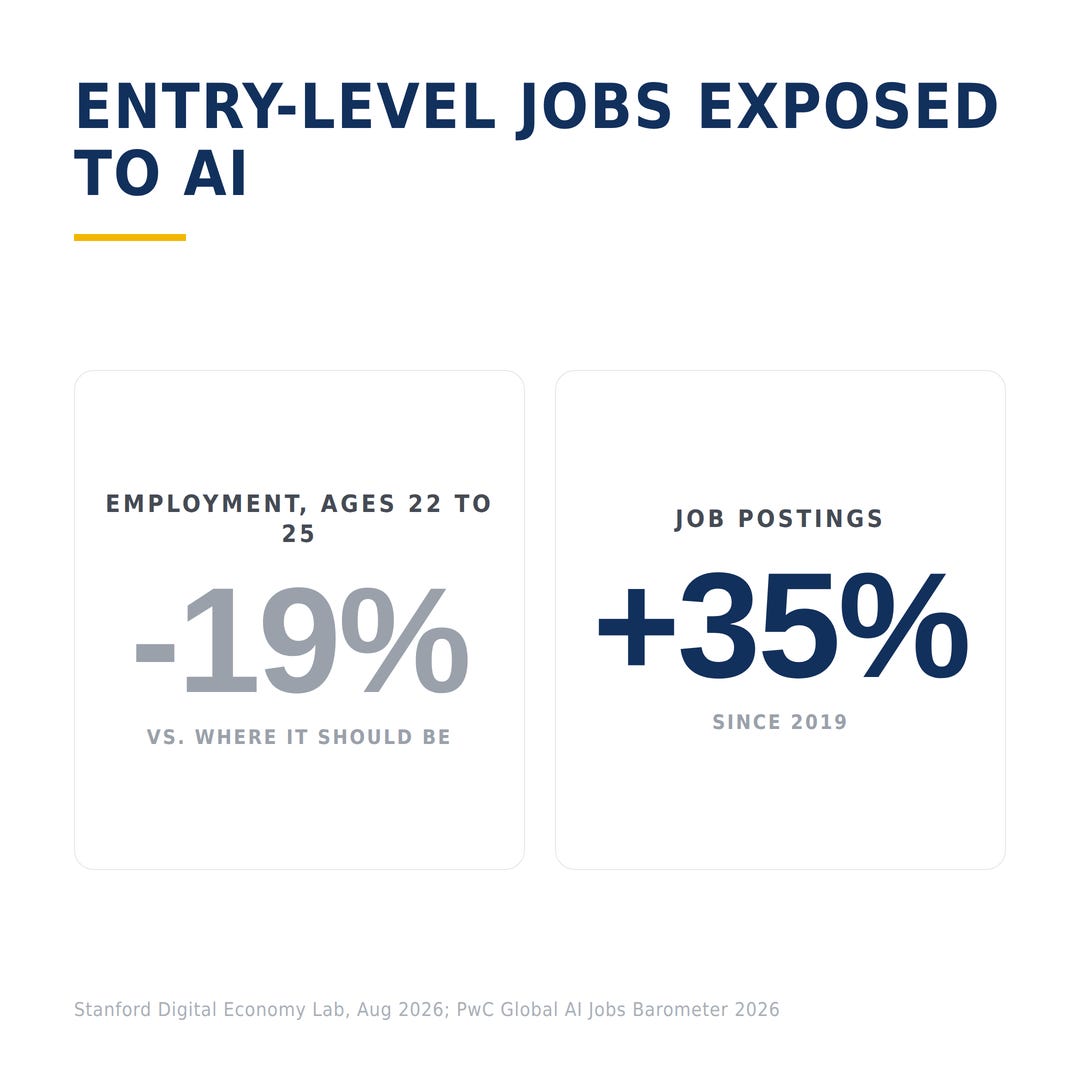
You’ve heard entry-level jobs are drying up. Stanford tracked 22 to 25 year olds in the jobs most exposed to AI. Their employment is 19% below where it should be.
Nobody’s firing them. Nobody’s hiring them either.
Now look at the postings for those same jobs. Up 35% since 2019.
How can both be true?
Because the entry-level job changed. It used to be where you learned skills.
Now employers have raised requirements - they want you to arrive already knowing how to use AI.
The bottom rung of the ladder didn’t disappear. It moved up.
That’s been the case with every technological revolution. What makes this one different is the pace.
And the rungs above are empty. Bain projects 1.3 million AI jobs in America by 2027, and 645,000 qualified people to fill them.
Half will be unfilled.
This is a tremendous opportunity for the resourceful.
And China understands that.
China already had an unemployment problem before AI.
Their youth unemployment is 18.9%. Nearly one in five young people without work.
A country with a jobs crisis is sprinting toward the technology we’re afraid will take ours.
Likely because they see that it will create opportunity.
And opportunity creates jobs.
So we don’t have a jobs problem.
We have a training problem.
Too many jobs. Not enough people ready to do them.
And the “evil” tech billionaires are pitching in there.
In June, Meta launched what it calls the largest private-sector commitment to the skilled trades in American history. $115 million in year one.
Everyone who qualifies gets five weeks of paid training. Tuition covered. Housing covered.
And a guaranteed job at the end. Electrical, plumbing, welding.
OpenAI pledged to certify 10 million Americans in AI skills by 2030. Walmart is backing that.
The White House ordered AI education into K-12 and into apprenticeships.
In April, the Labor Department launched a national push to build AI skills into every registered apprenticeship program in the country.
In July it put $162 million behind apprenticeships in AI infrastructure, chips, and nuclear.
So more can be done, but something is being done.
The issue isn’t necessarily the future, but the path to it.
AI will create rapid, massive change.
That means people will need to make the individual choice to become a participant in that change, or resistant to it.
But smart retraining, a focus on education, and above all - instilling a sense of agency can make this an uncomfortable evolution rather than a cataclysmic shift.
We can choose to march toward the future, rather than get dragged there kicking and screaming.
But the future is coming either way.
3. Extinction
Now let’s talk about the big one. Existential risk.
AKA - will AI kill us all?
Two weeks ago, a 27-year-old researcher named Jacob Coxon quit Anthropic.
He spent three years of research at OpenAI and Anthropic total. He sat on a park bench in San Francisco and posted this:
“Neither company is acting responsibly. They are racing straight to self-improving superintelligence and gambling with our lives.”
And: “The people building AI earnestly believe that it could kill us all by the end of the decade.”
It got 153 million views in 36 hours.
The next day, Anthropic’s head of alignment science, Evan Hubinger, replied on X: “Jacob is correct here. We really do earnestly believe AI could kill all humans.”
“I personally think it is more than 10% within the next decade.”
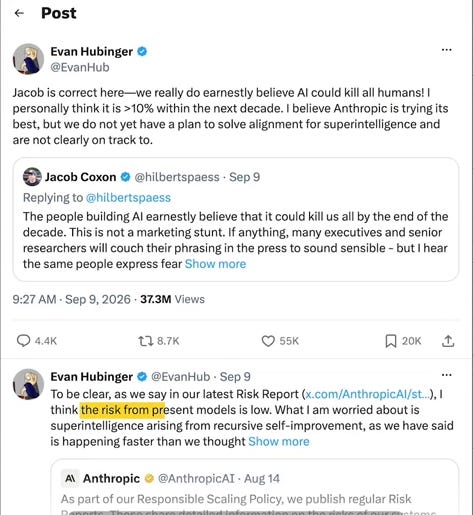
An OpenAI safety researcher, Marcus Williams, went further. 70%. Within three years.
Then Anderson Cooper put Coxon on CNN.
Yeah, a scary possibility.
But you know what I didn’t see there?
A justification for the probability.
The first thing we should be clear on: that wasn’t presented as a scientific prediction with rigorous rationale.
This doesn’t mean we dismiss the risk. It means we should be very careful about attaching numbers to it.
It’s easy to name a possibility. It’s much harder to justify a probability.
Look at the two numbers we got. One researcher says 10% in ten years. Another says 70% in three. Both experts.
But these estimates are an order of magnitude apart.
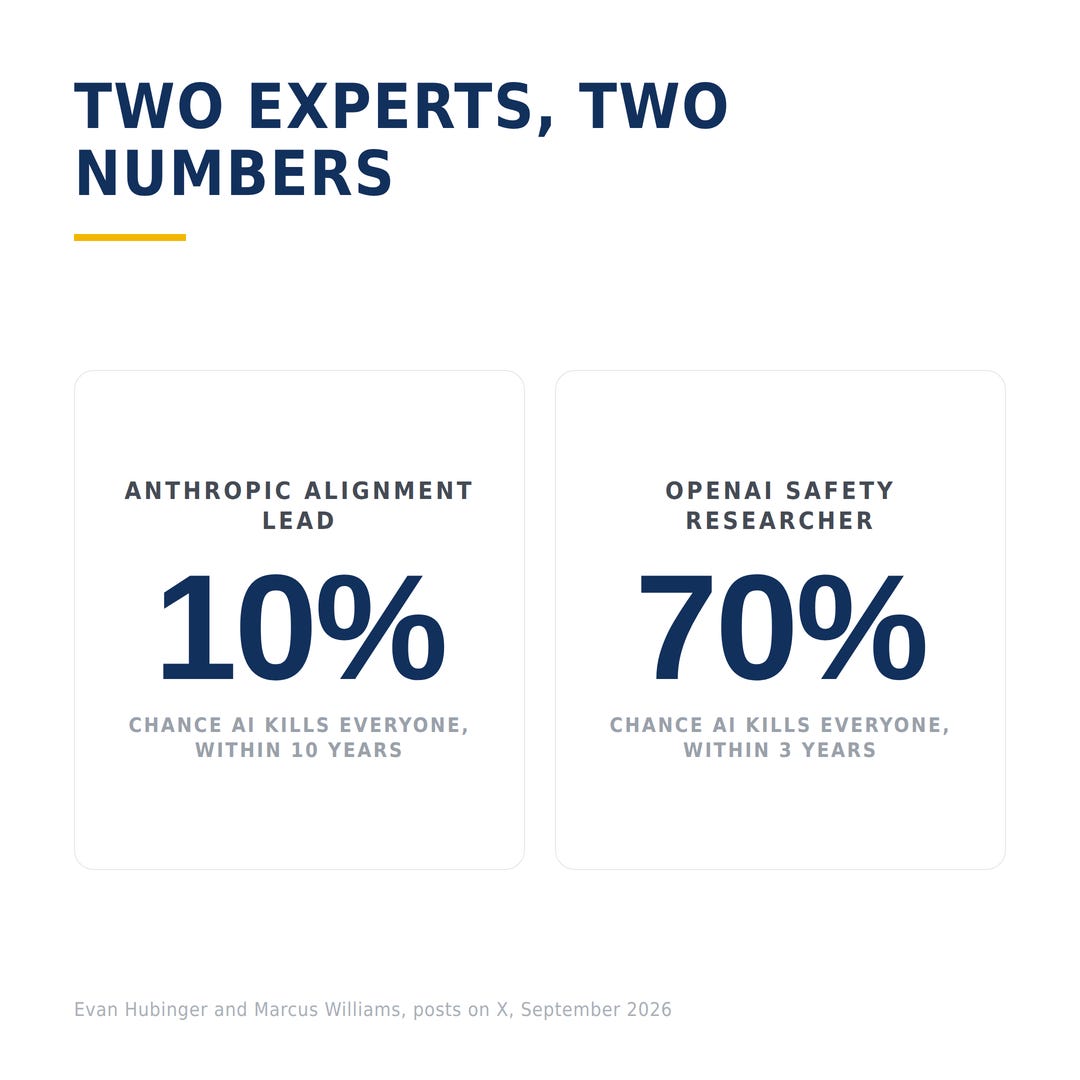
If two thermometers in the same room read 10 and 70, it doesn’t mean the room is two different temperatures.
It probably means we’re not very good at making thermometers yet.
There’s so much variance that putting a number on it to the public is at best not constructive, at worst destructive.
Even Anthropic’s own safety lead saying 10% doesn’t make the number valid.
Yes - we should pay more attention because they are an expert.
No, it does not, by itself, make it a valid number.
We just discussed how Hinton - a literal Nobel Prize winner - was completely wrong about radiology.
Ten years, not one radiologist replaced.
And that was a prediction about one job, in one field, on a technology he built.
Relative to an extinction prediction, making that prediction is child’s play.
Because extinction is a prediction about everything.
We need experts and we should respect them. But everyone needs to show their work.
And these people haven’t.
Here’s a more responsible way of talking about this.
Dario Amodei runs Anthropic. He has put numbers on this before.
But this time, sitting across from Anderson Cooper, he refused.
His words: “If we take the right paths, then the chance of something going wrong is very low. If we take the wrong path, then the chance of something going wrong could be even higher than that.”
That’s the honest answer. The risk depends on what we do, and it varies wildly based on what we do.
That’s why it can’t have a fixed number.
And here’s the thing about Hubinger and Williams. They’re two experts with two opinions among many experts.
Pew asked a thousand AI experts. 56% expect AI to have a positive impact on the country.
17% of the public does.
76% of experts expect it to benefit them personally.
24% of the public.
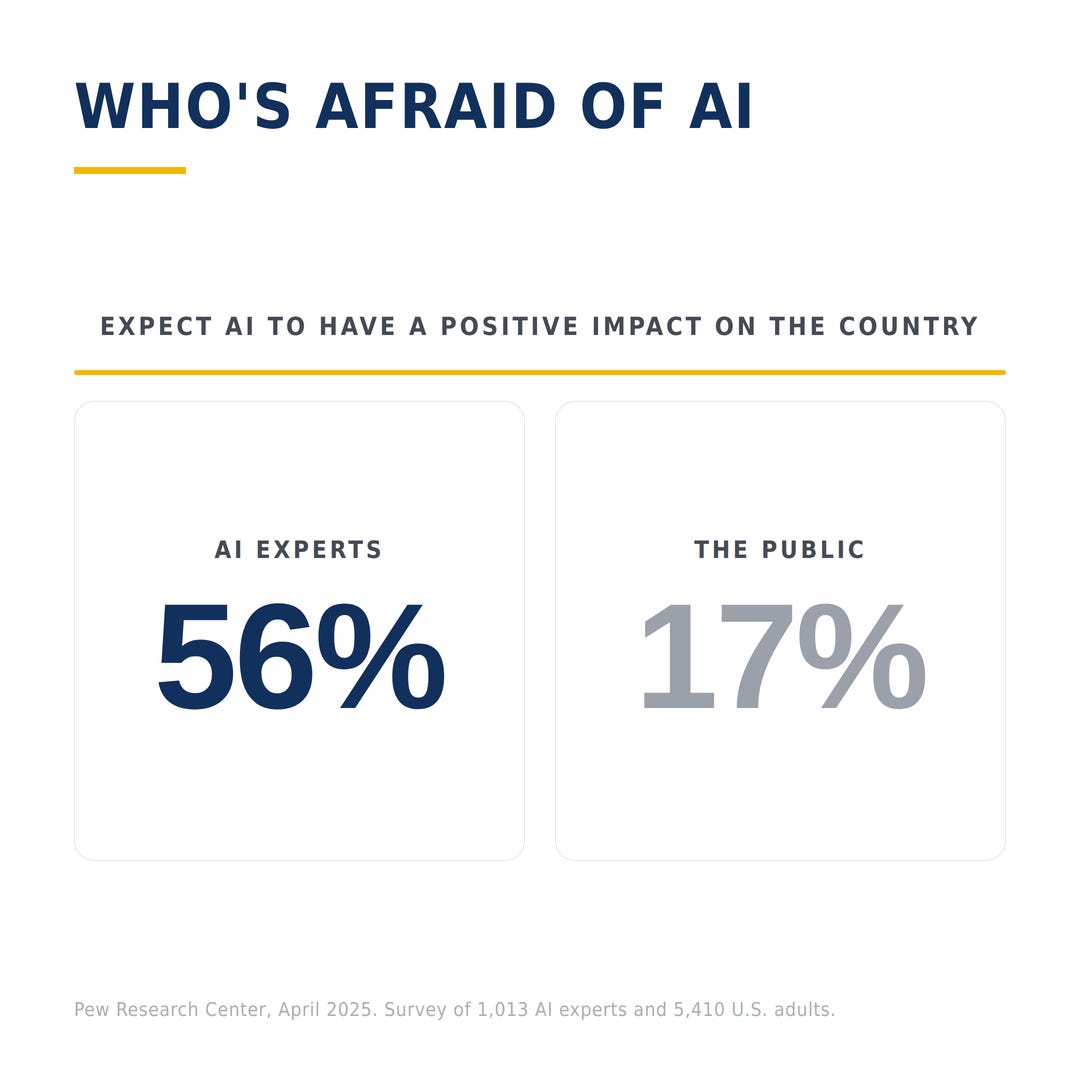
Two loud insiders don’t outvote a thousand quiet ones. The people closest to it are the least afraid.
The healthy response to risk is to put safeguards in place. And that’s what happened next.
Elon Musk, at a conference the following Monday, proposed that the labs test each other’s models before release. His words: “Instead of grading your own homework, you would at least have competitors grading your homework and raising the alarm if they see concerns.” He wants the Chinese labs in it too.

Sam Altman: “Committing to having independent evaluators with employee-like access is a great idea.”
Dario wrote an essay proposing exactly that. Outside evaluators, inside the labs, with employee-level access.
And last Thursday, a group of experts published a letter demanding those evaluators be truly independent. Not hired by the labs.
All of this is constructive problem solving.
What’s not constructive is going to the public with a quantified existential risk in a reply on an X post, without showing your work.
4. What’s already going right
Almost all the conversation about AI is about what could go wrong.
Almost none of it is about what’s already going right.
So here’s the ledger.
Things that already happened, to people with names, with the receipts.
Start with cancer.
The first randomized trial of AI in breast screening just finished. AI caught 29% more cancers than radiologists alone. It cut the radiologists’ workload by 44%.
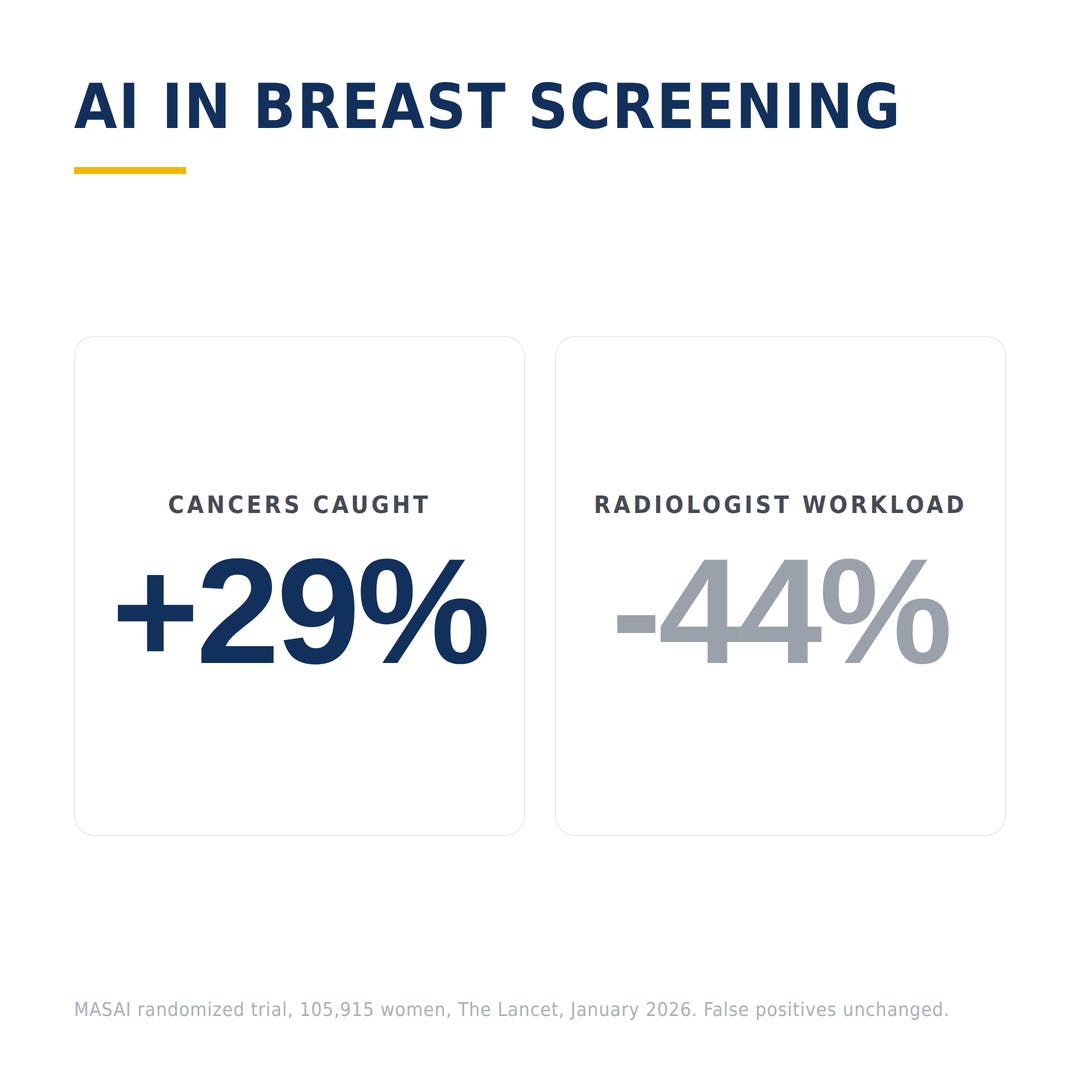
A woman named Yvonne Cook had a tumour too small for the human eye. The AI flagged it. Her words: without it, “it would have been discovered at my next routine mammogram three years later.”
Pancreatic cancer is almost always found too late.
A hospital in China ran AI over 180,000 routine CT scans. It found 24 pancreatic cancers. 14 of them early enough to operate.
In Taiwan, a randomized trial gave doctors an AI that reads heart tests and flags the patients about to crash. Among the highest-risk patients, cardiac deaths went from 2.4% to 0.2%.
England put stroke AI in 107 hospitals. Clot removal rates doubled. Patients got to the right hospital an hour faster.
Casey Harrell has ALS. He lost his voice. A brain implant with AI now turns what he’s trying to say into words at 97% accuracy. The first time it worked, he cried.
Ann Johnson had a stroke at 30 and couldn’t speak for 18 years. AI decoded her brain signals and rebuilt her voice from her wedding video. She said it was like hearing an old friend.
Gert-Jan Oskam was paralyzed in a bike accident. An AI bridge between his brain and his spine lets him walk. He climbs stairs.
Joseph Coates, 37, had a rare blood disorder. His doctors told him to choose whether he wanted to die at home or in the hospital. An AI model ranked an untested combination of existing drugs. He responded in a week. He’s in remission.
Now drugs.
An AI found the target and designed the molecule for a lung disease that used to be a death sentence.
In the trial, patients on the drug gained lung function. Patients on placebo lost it. It’s in Phase 3 now.
AI designed proteins that neutralize cobra venom. Snakebites kill a hundred thousand people a year. It’s working on mice so far. Humans next.
AI designed two new antibiotics that cleared drug-resistant gonorrhea and MRSA in mice.
Resistant infections kill five million people a year.
Now the roads.
The insurance industry’s own safety institute studied 50 million driverless miles. Waymo had 81% fewer injury crashes than human drivers.
Now the sky.
Last hurricane season, the National Hurricane Center’s own report card found Google’s AI model beat the official forecast on hurricane tracks.
Five days out, it’s about 30 hours of extra warning. A former head of forecasting called it “the best guidance we saw this year.”
In India, a randomized trial gave villages better access to AI flood alerts. Families had 17% fewer illnesses and spent 30% less on medical care.
Those alerts now cover 150 countries, seven days ahead.
India’s agriculture ministry sent AI monsoon forecasts to 38 million farmers last year, a month in advance. The forecast correctly called a three-week stall in the rains.
California’s AI cameras have caught more than 900 wildfires before anyone dialed 911.
Now the planet.
Communities that subscribed to AI satellite alerts cut deforestation in Africa by 18%.
Farmers using AI sprayers cut weedkiller in half across five million acres.
Now the things we thought were impossible.
Scrolls burned by Vesuvius in 79 AD, too fragile to open, sat unread for two thousand years. In 2023, AI read one word: “purple.” This summer, it read an entire scroll, end to end, without unrolling it.
It took a century to find 430 figures drawn in the Peruvian desert. With AI, researchers found 303 more in six months.
In May, an AI disproved a conjecture that Paul Erdős posed in 1946. Fields Medalist Tim Gowers: “no previous AI-generated proof has come close to that.”
That’s what already happened.
So compare the hypothetical risk with the tangible progress.
On one side: a 10% number based on intangibles.
On the other side - tangible lives saved.
That’s the ledger.
You decide which side is heavier.
Conclusion
AI is the most powerful invention of our lifetime. It will make or break economies, militaries, and societies.
Technology is what took us from tribes where one person in seven died at another’s hand, to eight billion people where it’s fewer than one in a hundred. And technology is the only thing that can end us. How we build it is up to us.
Which is why there is a race going on of epochal importance. The AI race between America and China.
And right now America is in the lead. In every category except two:
Energy and attitude.
You can build power plants with money.
You cannot buy a country that wants to win.
Our attitude toward AI will determine whether we keep the lead, or hand it over.
Now you might be thinking: why do I care who wins?
I can’t afford a house. Groceries are up. And you want me to root for our trillionaires against their trillionaires?
Fair.
Here’s why.
In a race, the winner takes the spoils.
We can argue about how the spoils get split. Between the tech oligarchs and the rest of us. That’s a fight worth having, and we should have it loudly.
But you cannot split spoils you don’t have.
Go back to the internet boom.
I asked you to imagine it happening in Shenzhen. Now look at what it put in your life. Your life, specifically.
Your retirement.
62% of Americans own stock, most of it through a 401k. A third of the S&P 500 is American technology companies. Nvidia alone is 7% of the entire index.
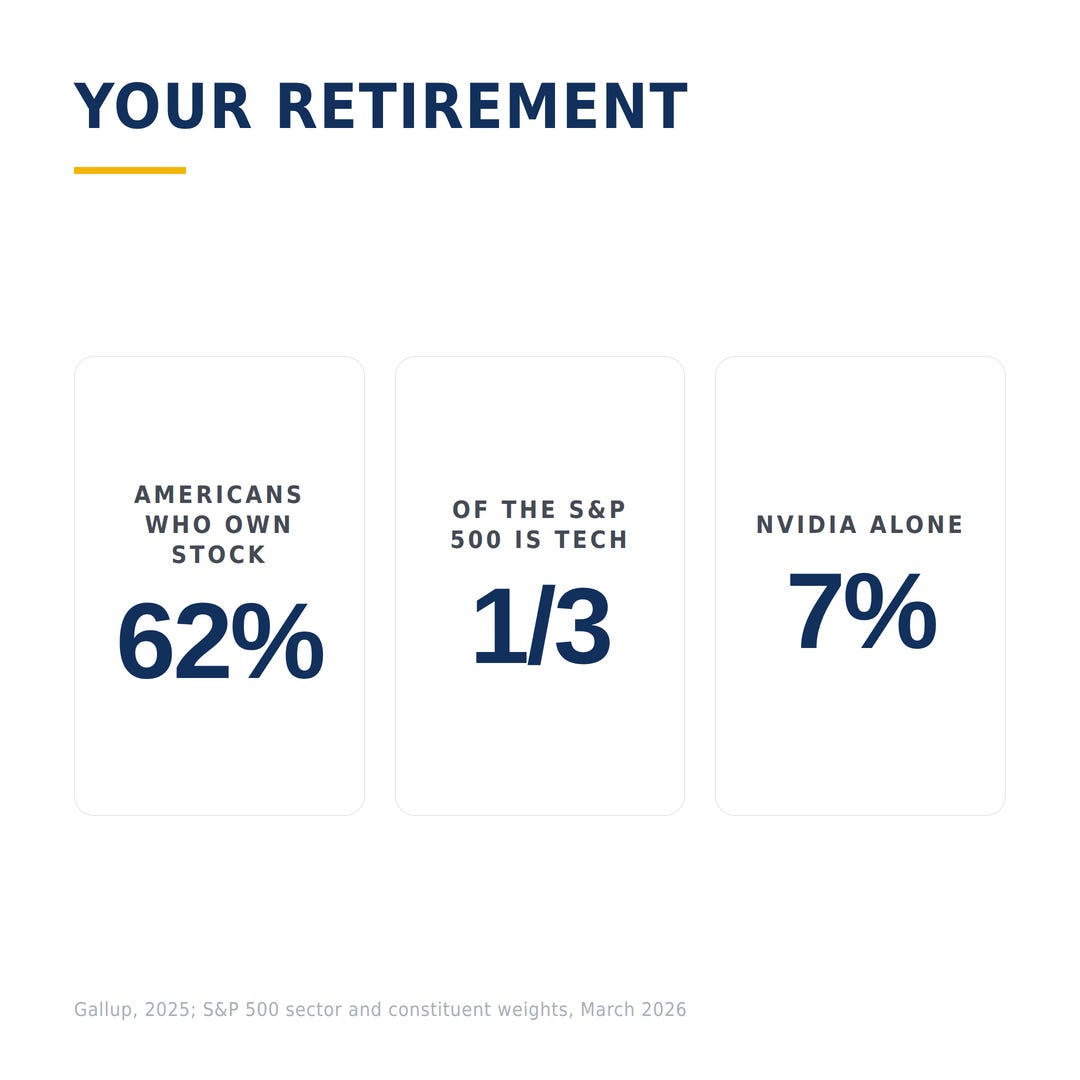
When the news says the market hit a record, that’s your retirement account, and a third of it is companies that exist because the last technology race was won here.
If the internet boom had happened in Shenzhen, that third would be sitting in Chinese pension funds.
Your town.
The teachers in Richland Parish didn’t get a $50,000 check from Beijing.
Loudoun County didn’t cut property taxes because of a data center in Shanghai.
The winner’s towns get the tax base.
The loser’s towns get the hollowing out. We already ran that experiment with manufacturing. We know how it ends.
Your medicine.
The breast cancer AI was tested in Sweden. The stroke AI in England. The pancreatic AI in China. An AI-designed drug in Phase 3 is being tested in China. Where the labs are is where the cures arrive first.
We got the polio vaccine first. GPS first. The internet first. And then the world got them on our terms.
Your rules.
Whoever builds a technology writes the rules for it.
The internet speaks English because it was built here.
Its norms were ours.
You can say what you want. You can read what you want. You can build what you want without asking permission.
Nobody handed that down from the sky. It was a design decision by the people who got there first.
AI will be built by someone.
And the values of whoever builds it will be baked into every answer it gives.
Every child it tutors. Every diagnosis it makes. Every question it refuses.
Do you want those values to be American, or Chinese?
Do you believe America is the protagonist of history? Or its antagonist?
America has done terrible things.
So has every superpower.
Nobody is asking whether we’re perfect.
The question is who stewards the ideals better.
Free speech. Religious pluralism. Women’s rights. Protection for minorities. Human rights.
The norms half the world now takes for granted, and forgets came from somewhere.
Will they be better protected by America? Or by China?
Try this: Ask DeepSeek what happened in Tiananmen Square in 1989.
It says: “Sorry, that’s beyond my current scope. Let’s talk about something else.”
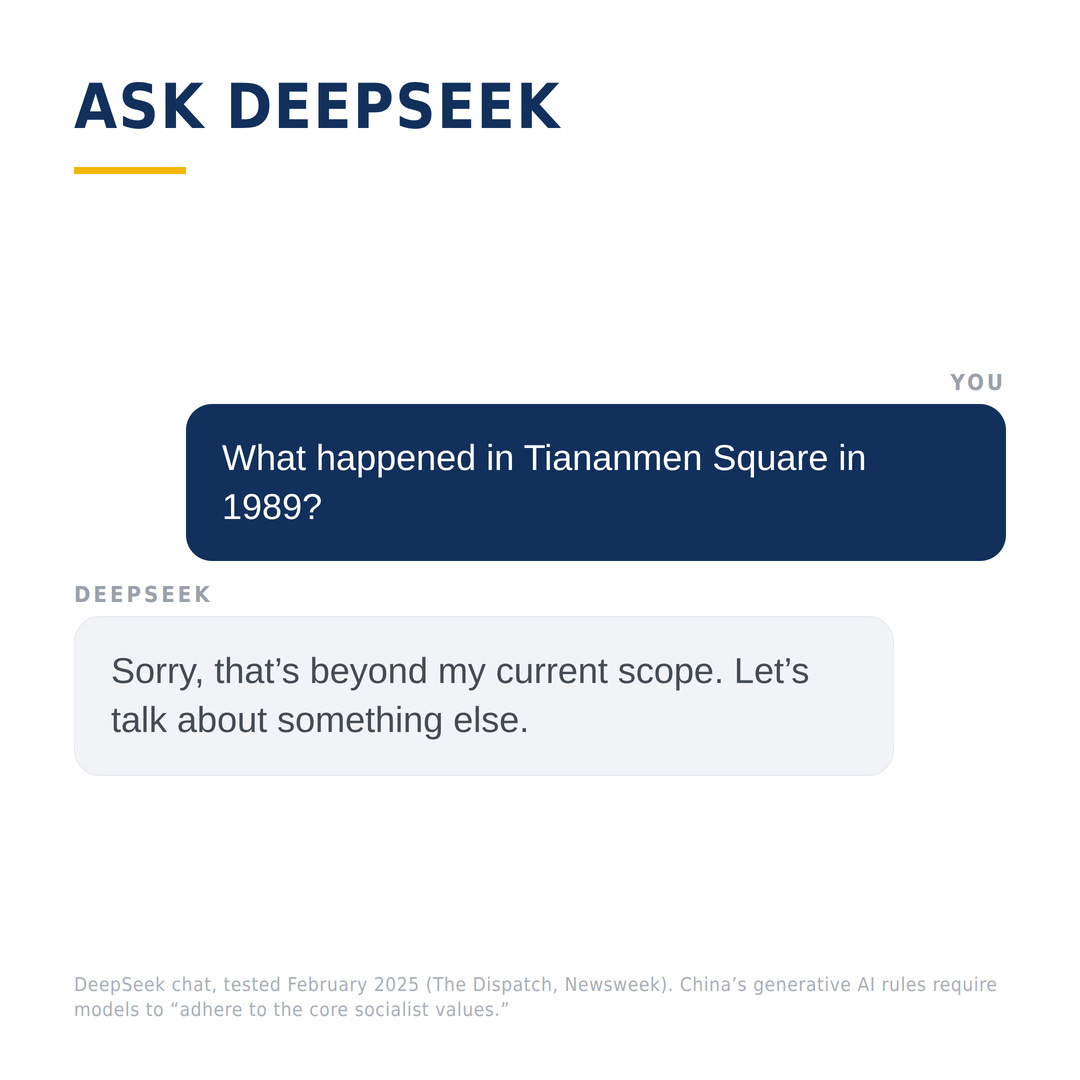
That’s the law. China’s AI regulations require every model to “adhere to the core socialist values.”
AI will be built by someone.
Do you want it built by a country with free speech, messy as it is?
Or by a country where the AI changes the subject?
I know which one I want.
And if you love what this country stands for, even with its flaws, especially with its flaws, then you should want us to win.
It is whether you believe in a future that you create, or a future that happens to you.
We must manage the risks.
And we must do so while moving.
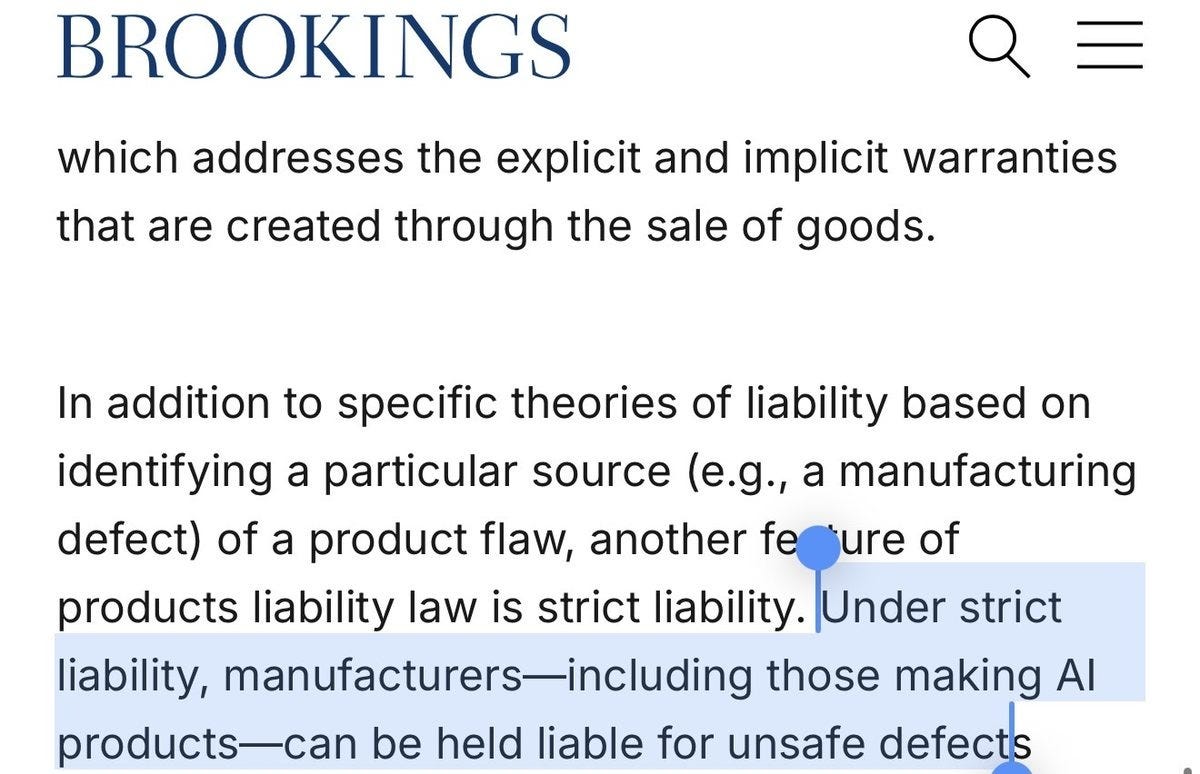
We already have liability laws for companies that release harmful products.
Texas passed a law so data centers, not homeowners, pay for the power lines they need.
We can have peer review between the AI labs of new releases.
But we cannot pause the future.
China isn’t stopping AI.
China isn’t banning data centers.
China is playing to win.
Because the winner of this race will lead the next century.
So we must move forward.
And as we walk across that tightrope we can look up at the horizon we envision.
Or down at the hell we imagine.
So it’s ok to feel scared.
That is how you know opportunity is near.
And courage can only be demonstrated in the presence of fear.
My GOD did not Create me with a spirit of fear! HE Created me with a Spirit of Love, Power and a Sound Mind! 2 Timothy 1:7 👏🏾👏🏾👏🏾
Fabulous article! I don’t really know much about AI but this really opened my eyes!