


This letter is part of my ongoing series on socialism and capitalism. The last entry: South America Just Rejected the Ideology Mamdani Is Selling. So Why Is North America Buying It?
A few days ago I made a video about the fact that most Americans don’t know what socialism is.
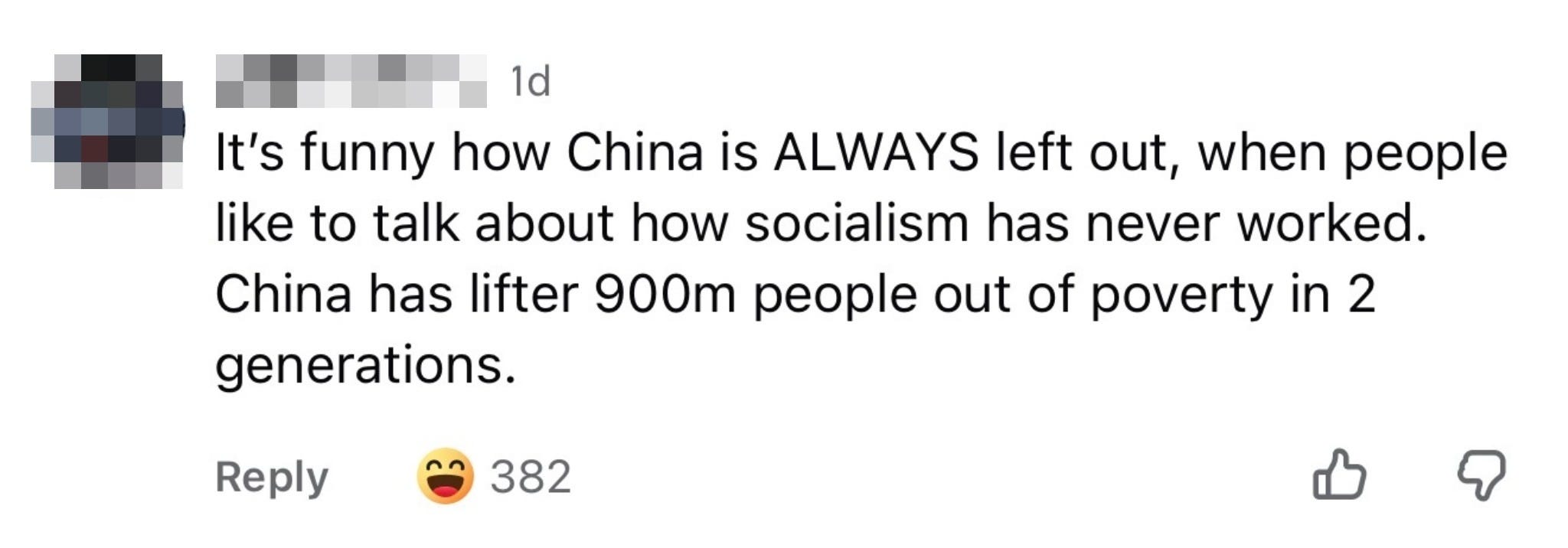
This was one of the top comments.
Man. What are we teaching people in schools?
The comment is right about the 900 million people being lifted out of poverty.
And wrong about everything else.
This letter is about that comment.
Because it shows the biggest problem with the discourse around socialism.
We have a massive education problem in America, and it has left us vulnerable to bad ideas.
It’s virulent in both lower and higher education.
It’s showing up in the belief that socialism is universal healthcare - which is false.
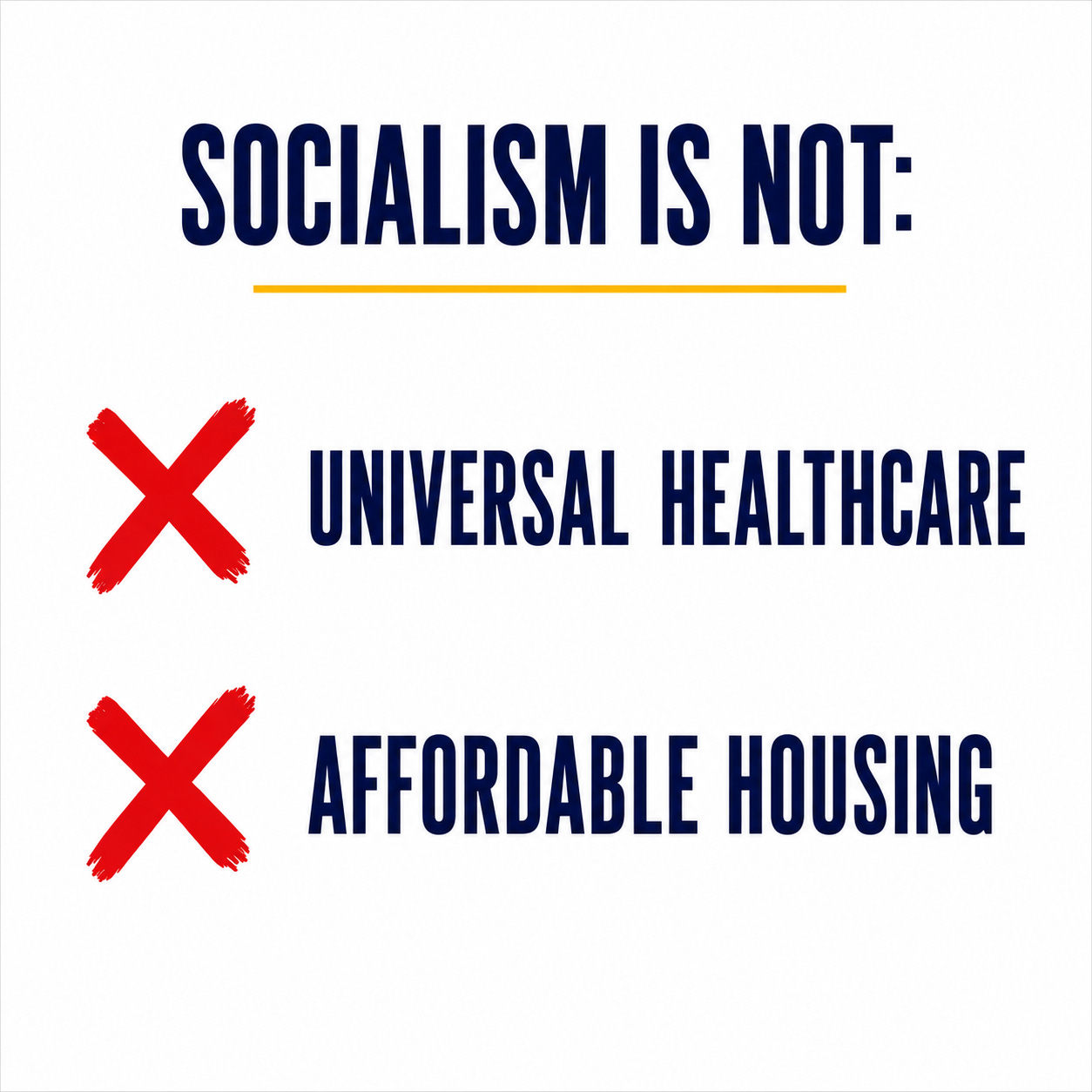
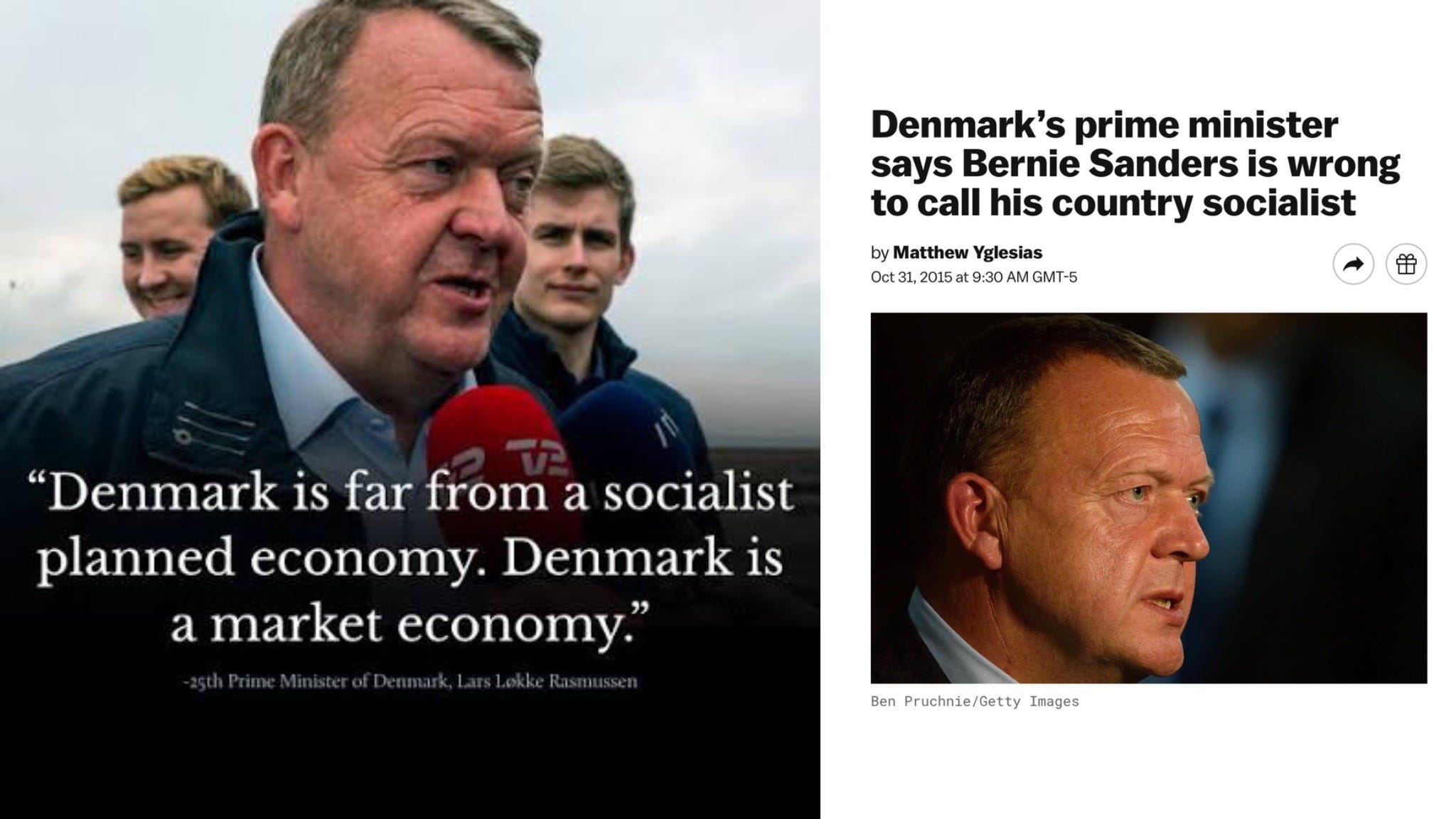
That it’s what Finland, Norway, Sweden, and Denmark have - false again.
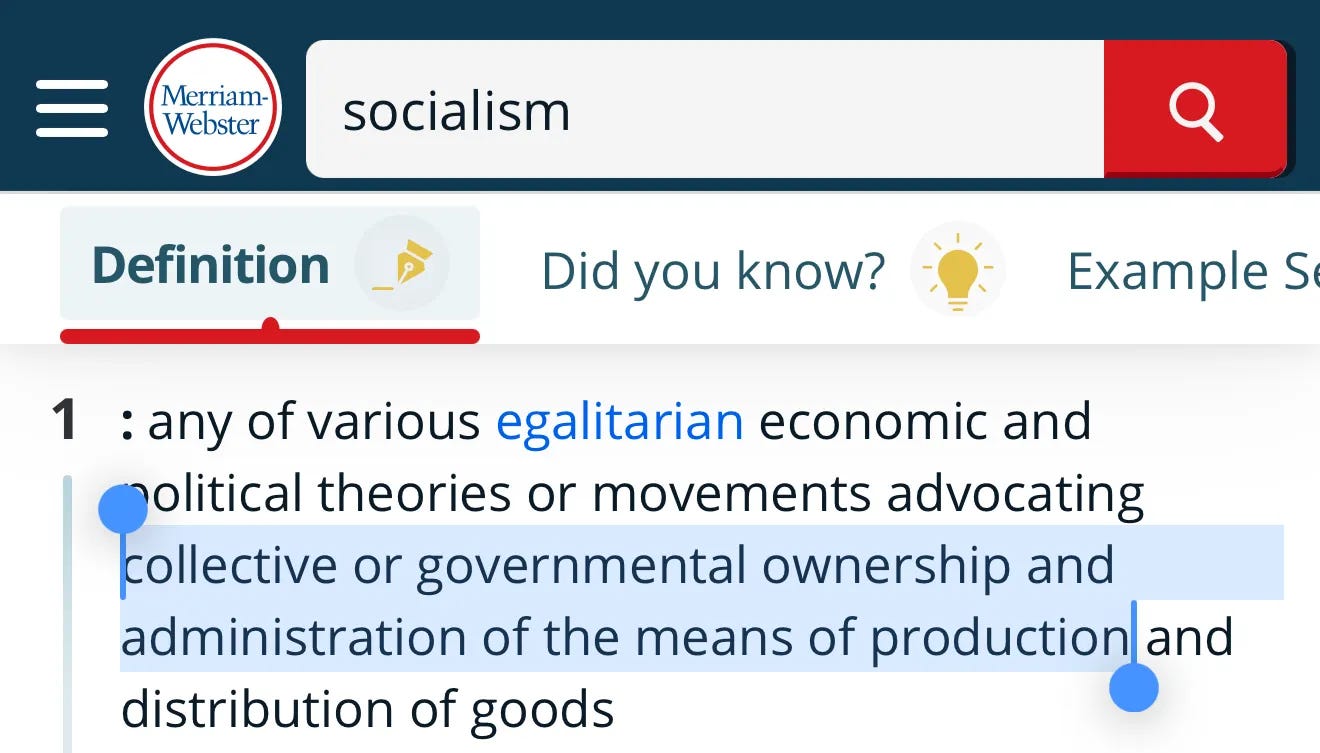
Socialism is defined by one primary economic feature - a collective (e.g. the government) owning the means of production - aka the farms, factories, and companies.
Americans are confused on this point.
According to a Gallup poll from 2018, only 17% of Americans were able to identify socialism as defined by government ownership or control of the economy.
And that confusion is making socialism appeal to those who never lived it.
While people in countries who have lived under socialism are rejecting it.
Before talking about the larger problem, let’s correct the comment.
Because the mistake inside it is the same mistake driving socialism’s rise in America right now.
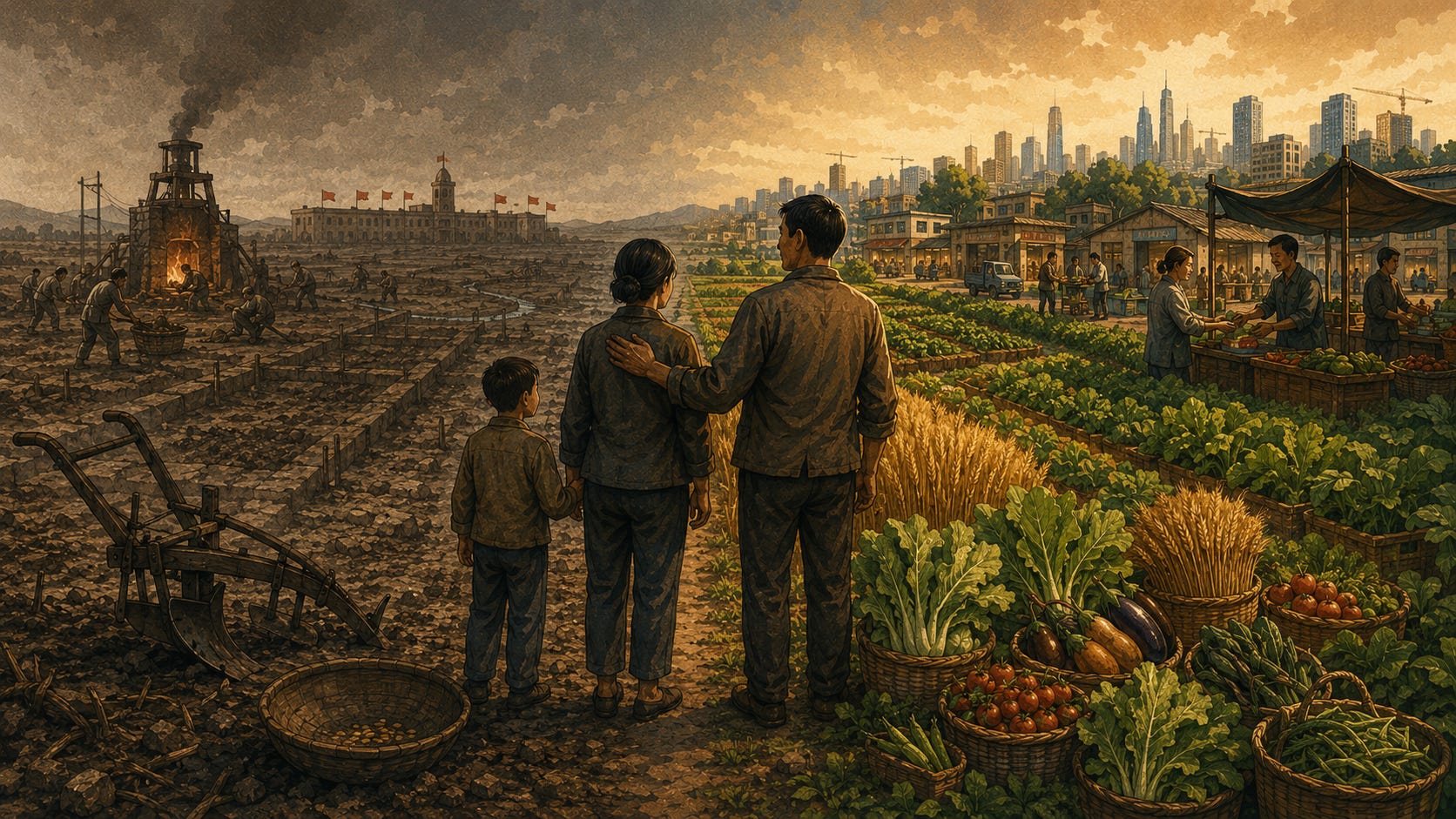
China is not socialist.
China is not a socialist country.
China is not a communist country.
It’s understandable why people think that it is.
After all, China’s ruling political party brands itself the “Chinese Communist Party.”
And the Party’s official doctrine is “socialism with Chinese characteristics” - a phrase Deng coined in 1982 that Xi still repeats today.
But the condition for whether a country’s system is socialist is not what its leadership self-identifies as.
It’s what the leadership actually does.
Socialism always requires that a collective - usually the government - own the means of production.
This is a necessary condition.
If that condition is not met, the country is not socialist.
Private firms contribute approximately 60% of China’s GDP, 70% of its innovative capacity, 80% of urban employment and 90% of new jobs.
That’s according to China’s own business federation - All-China Federation of Industry and Commerce.
The confusion on this point likely arises from 3 sources:
China’s ruling political party calls itself the Chinese Communist Party
China is less capitalistic than America, in the sense that more of America’s GDP comes from the private sector
China has an authoritarian political system, not a democracy - and people are equating authoritarian with socialist.
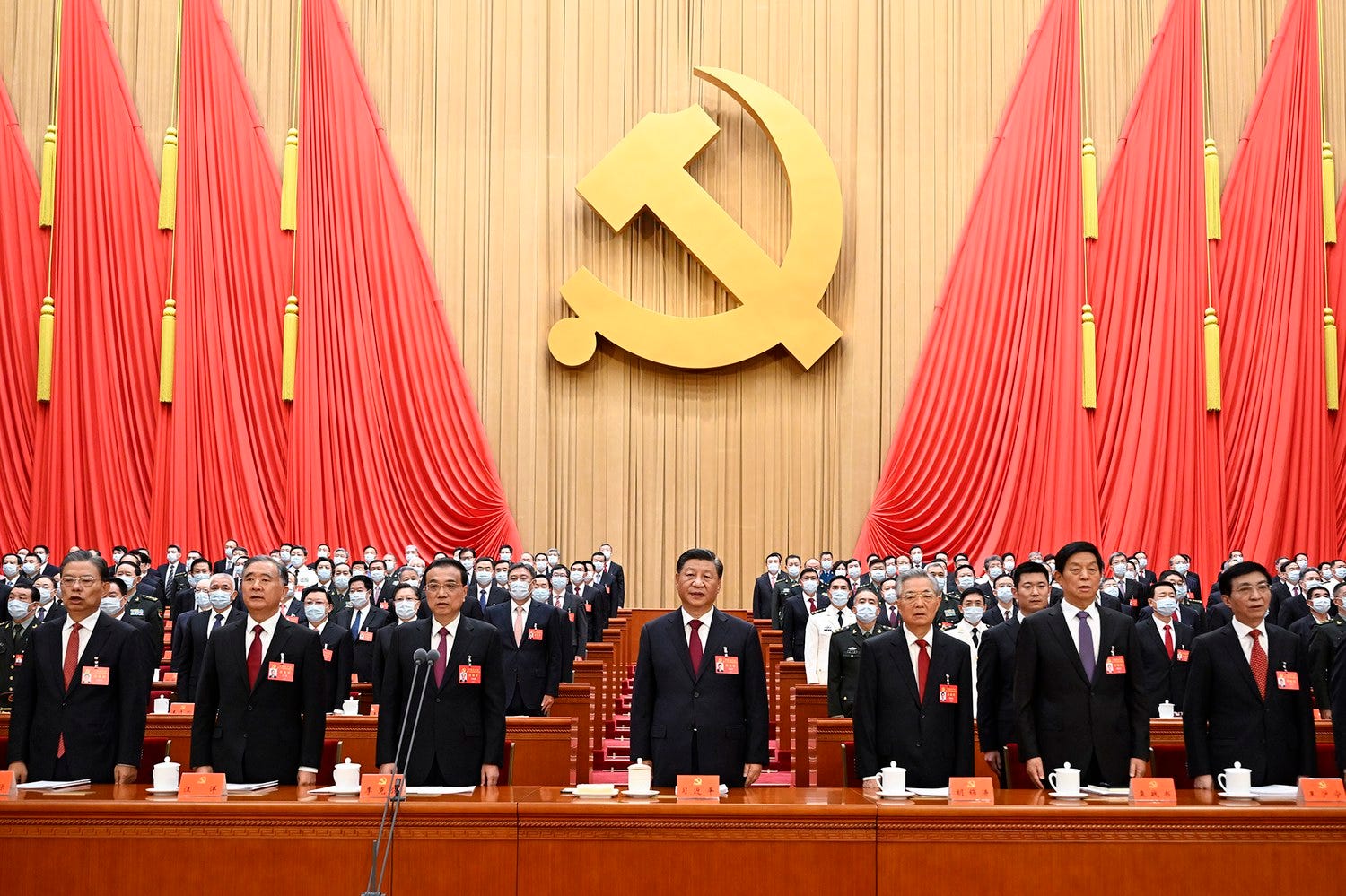
But intuitively, it’s understandable why calling America and China capitalist in the same breath feels incomplete.
Surely the people who think China is socialist or communist aren’t completely wrong.
Surely there’s a term that expresses the legitimate differences between America’s economic system and China’s?
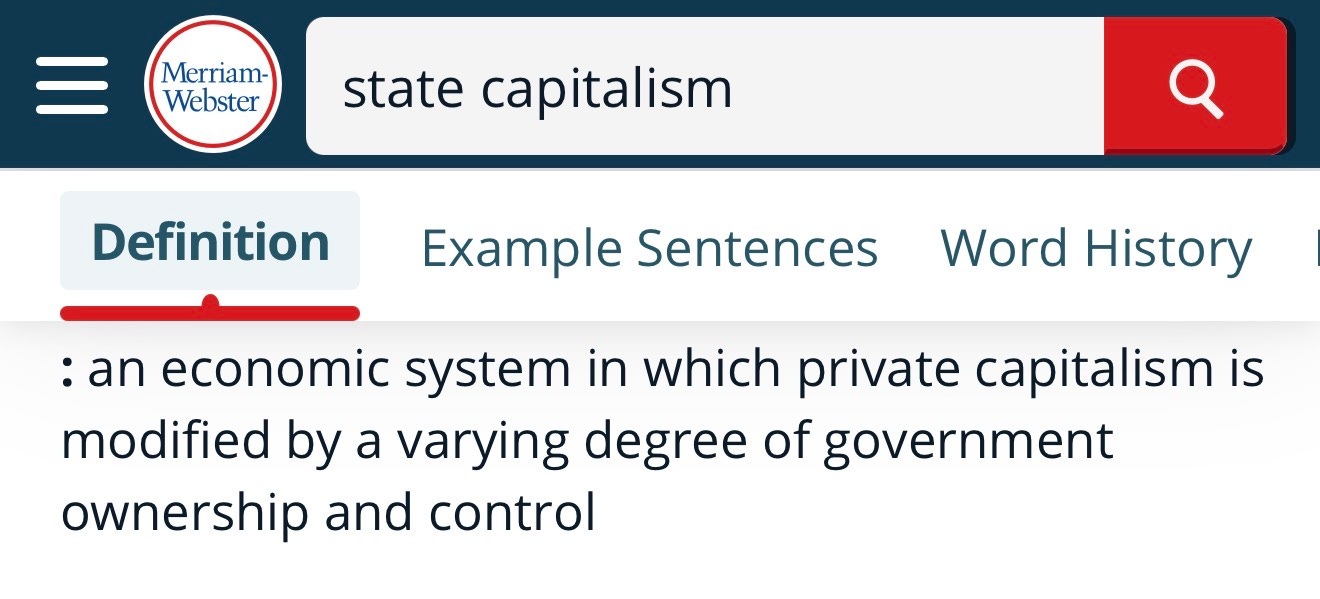
There is. That term is “state capitalism.”
Cambridge University Press published a full volume titled The State and Capitalism in China in 2023.
Branko Milanovic, the former lead economist at the World Bank, wrote an entire book for Harvard University Press called Capitalism, Alone. His thesis is that capitalism is now the only economic system on earth, and that it comes in two varieties: the liberal capitalism of the West, and the political capitalism of China.
The Economist ran a special issue on state capitalism in 2012, focused on China.
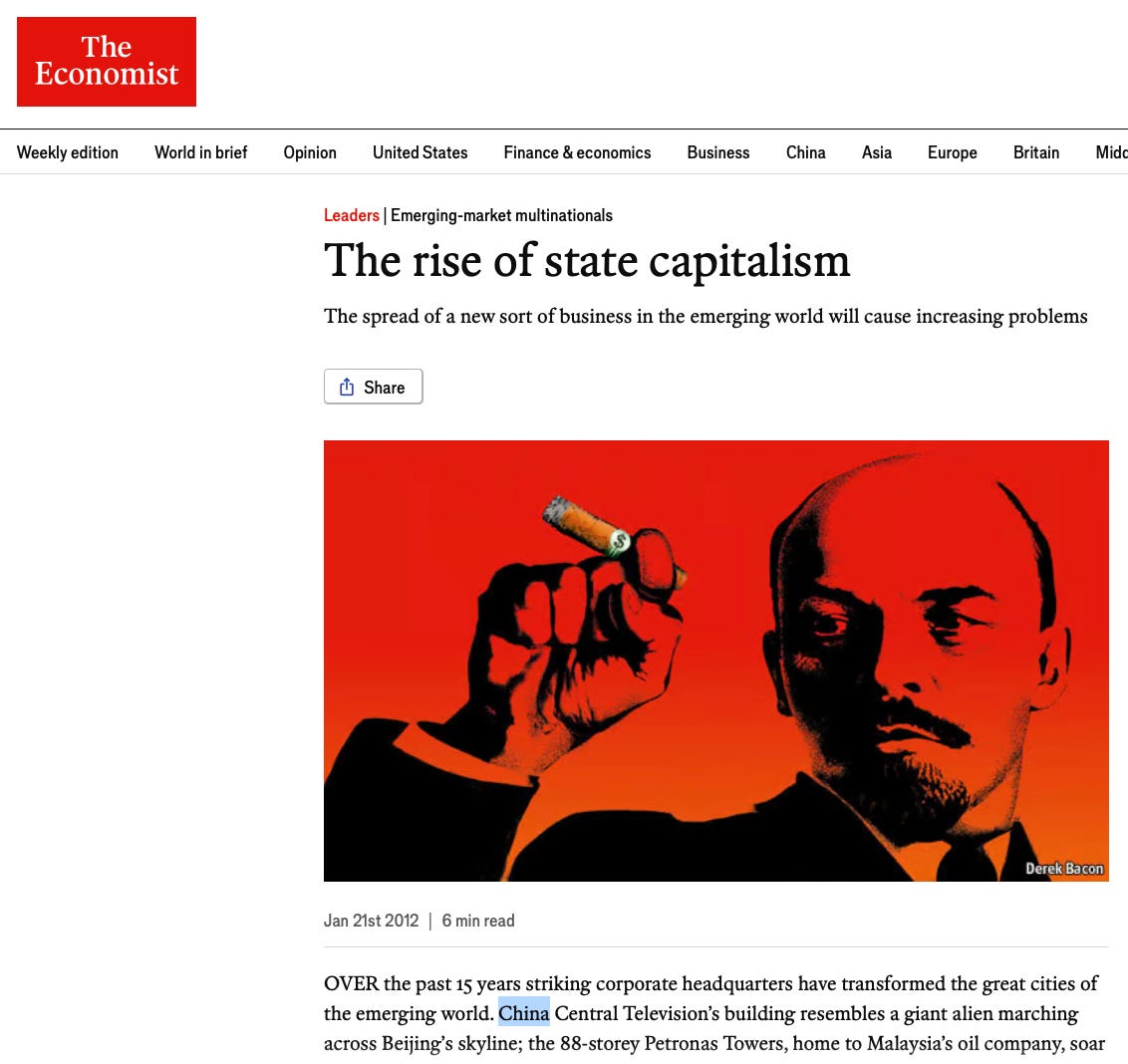
The term is well-established in the literature.
There is some debate regarding the term.
“State capitalism” is a standard academic term but not universally agreed upon.
Some economists argue the category is incoherent and China is simply a mixed economy.
What is overwhelmingly agreed is the underlying fact: private firms drive the economy.
Whatever you want to call that, it isn’t socialism. Because socialism means the public owns production - and in China, it doesn’t.
A quick note on terminology, because I’ll use both words.
In Marxist theory, socialism and communism are closely related. Socialism is the stage where the state owns production. Communism is the theoretical endpoint - stateless, classless. No country has ever made it to full communism.
Communists often use socialism as a transitional state to communism. Not all socialists are necessarily communists, but all communists utilize socialism.
So communist parties governed socialist economies.
That’s why the Soviet Union was called the Union of Soviet Socialist Republics while being run by the Communist Party.
The party name described the destination.
The country name described the system actually in place.
Mao’s China was the same. Communist Party, socialist economy.
But China WAS Socialist. And It Was A Disaster.
For about thirty years. 1949 to 1978.
Do you want to know what happened during the years China was actually socialist?
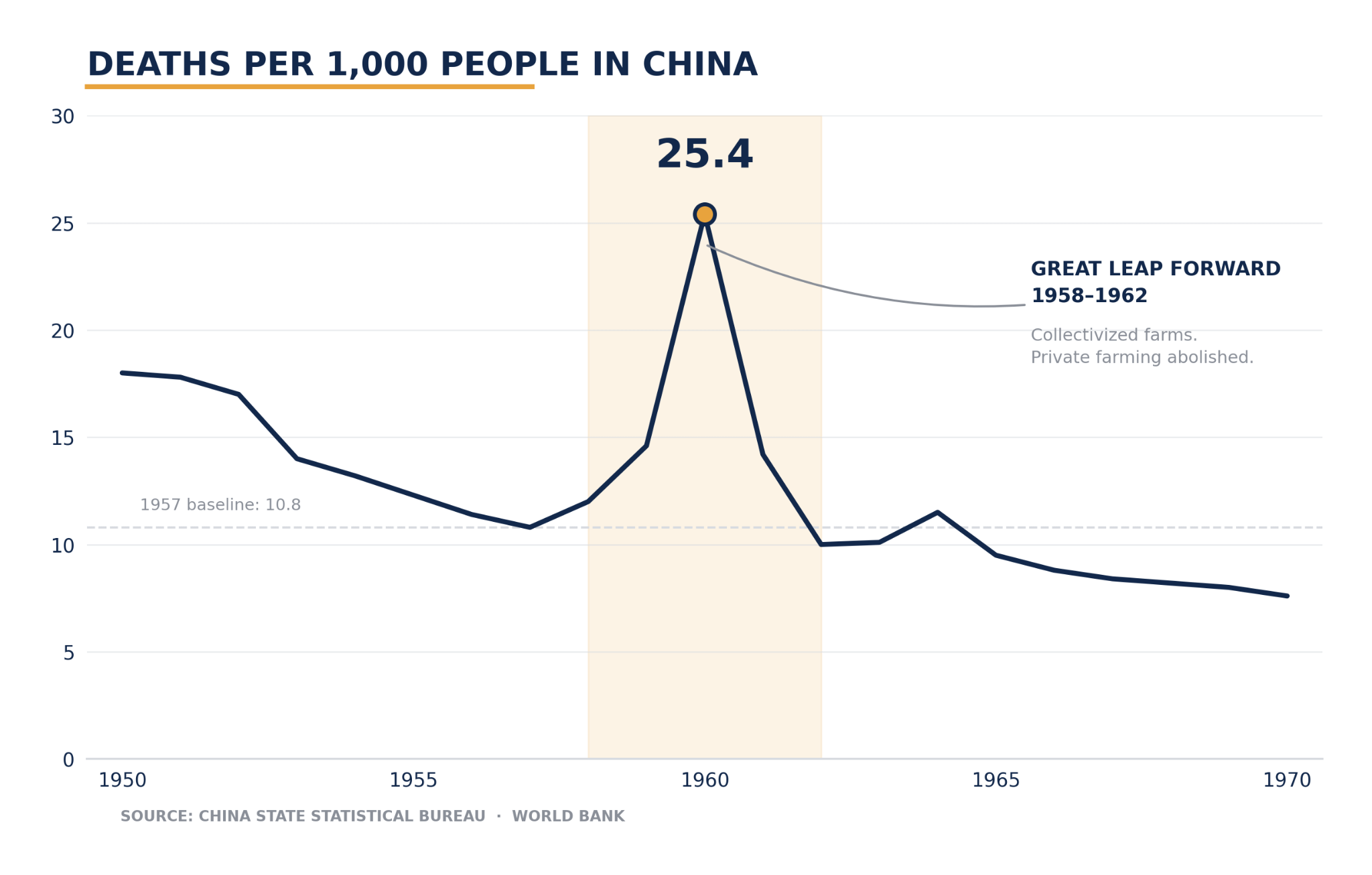
That’s the death rate in China through the middle of the 20th century.
You see that spike?
That was the Great Leap Forward. 1958 to 1962.
In 1958, China adopted a policy called the Great Leap Forward, under Communist dictator Mao Zedong.
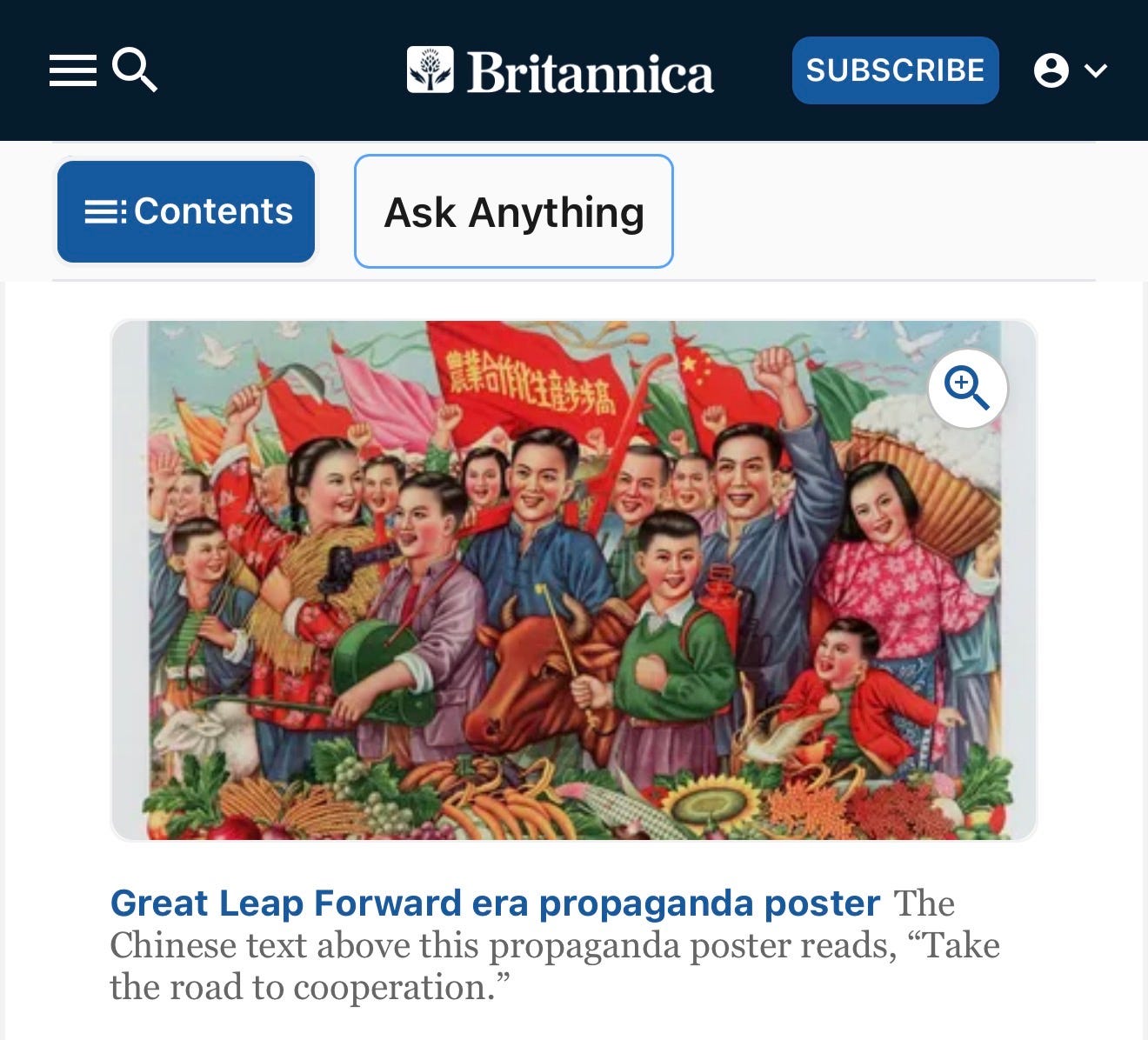
During the Great Leap Forward, the government collectivized farms and abolished private farming. Pulled farmers off the land to make steel in their backyards.
AKA, seized the means of production.
Grain production collapsed.
And peasants were forbidden from leaving their villages to find food.
Around 20 to 30 million people starved to death. Some estimates go as high as 55 million.
The national death rate more than doubled, from 10.8 per thousand to 25.4.
By the end of 1960, China’s population was 10 million lower than the year before.
That’s the most populous country on Earth shrinking.
In peacetime.
Because of policy.
China’s own statistics bureau confirms it. When the population declined again in 2022, it was reported everywhere as the first drop since 1961.
The Failed Experiment Was Run Twice.
The Great Leap Forward was abandoned in 1962.
Private farming came back and output began recovering almost immediately.
Then Mao reversed it.
In 1966 he launched the Cultural Revolution, purging the officials he called “capitalist roaders” - the ones who had allowed those small market reforms.
Universities closed.
The economy stagnated for a decade.
So what is it that turned China from a place where tens of millions of people starved and languished in poverty?
Capitalism.
Socialism Crushed China. Capitalism Saved It.
Mao died in 1976.
Two years later, Deng Xiaoping took power.
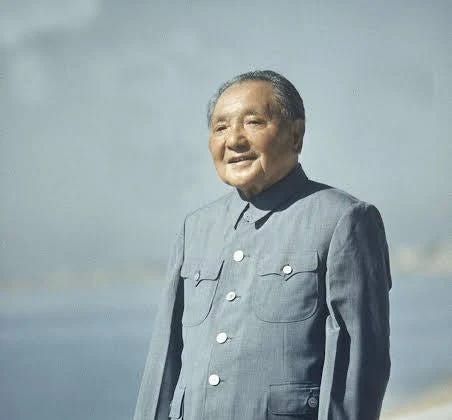
And Deng did a bunch of capitalist things.
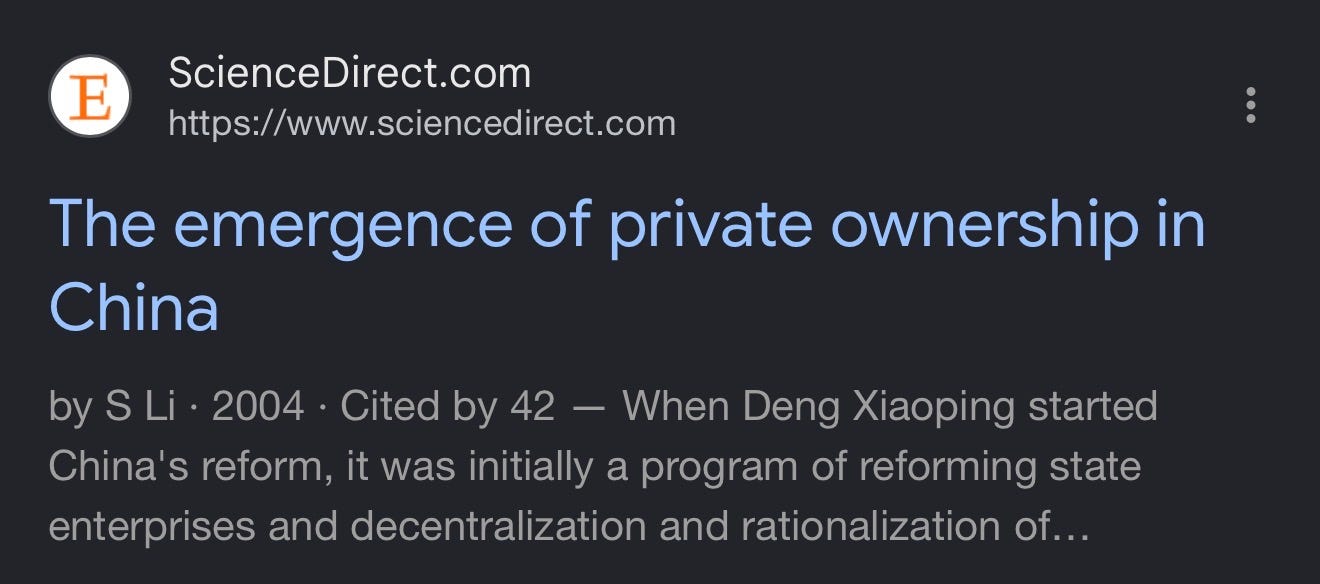
He broke up the collective farms.
Every family got its own plot.
Grow a quota for the state, keep the rest, sell it for profit.
AKA - private property.
He legalized private business.
In 1978, having a private company in China was a crime.
Today, China has more than 50 million of them.
He opened the country to foreign investment.
Coca-Cola came back in 1979. Boeing and Volkswagen followed.
And he created Special Economic Zones - cities where market rules applied.
The first was Shenzhen, a fishing town of about 30,000 people.
Today Shenzhen has 17 million people and makes your iPhone.
Deng summed up his whole philosophy in one line: “It doesn’t matter whether a cat is black or white, as long as it catches mice.”
Translation: I don’t care about ideology. I care about what works.
He wasn’t committed to communism, socialism or capitalism.
But it just so happens that the reforms he made were what we’d call capitalism.
And it worked.
In 1981, 88% of China lived in extreme poverty.
By 2015: 0.7%.
By 2019: 0.2%.
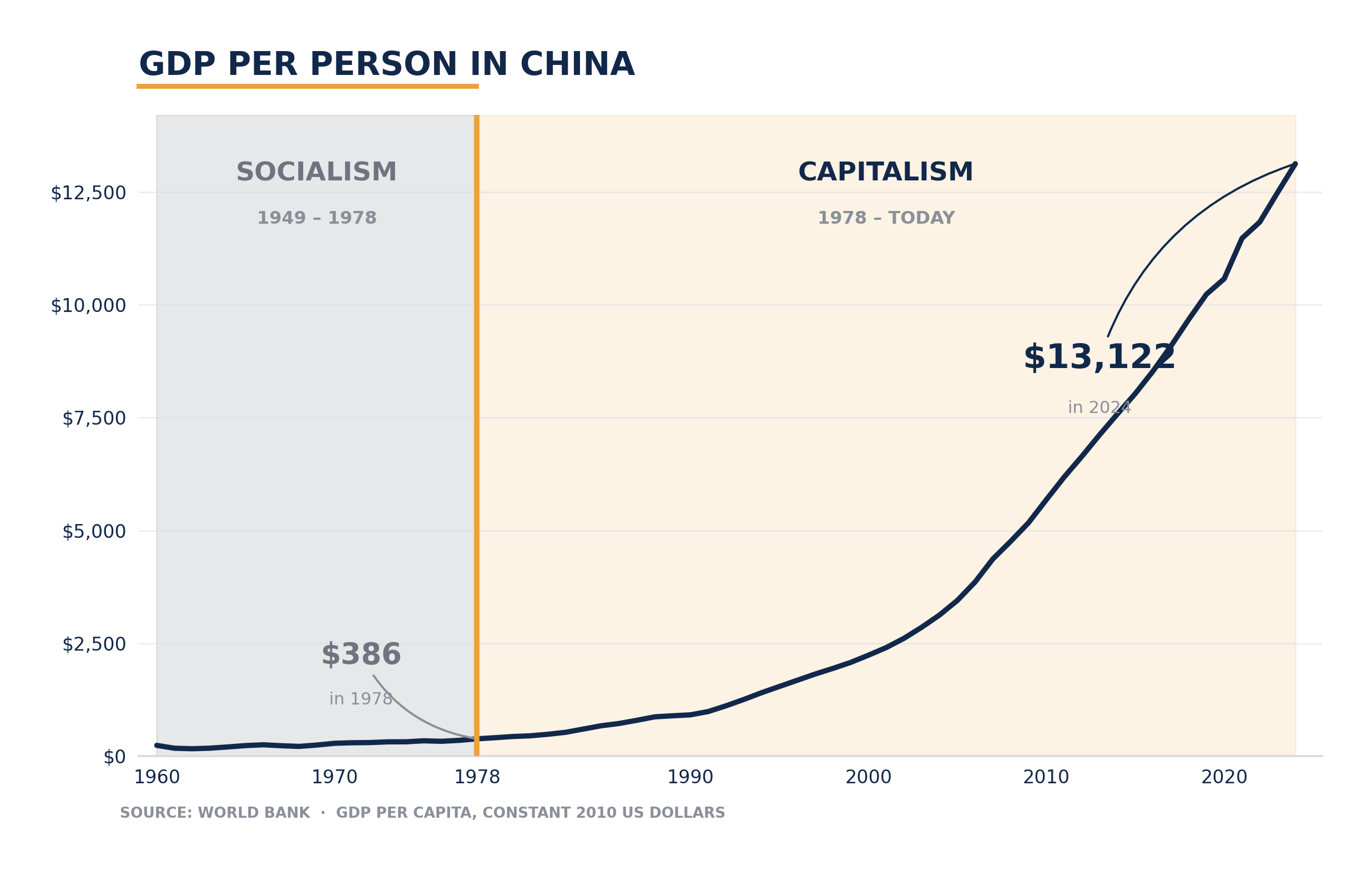
That’s roughly 800 million people out of poverty.
The largest and fastest escape from poverty in human history.
Now, did the socialist era leave anything useful behind?
Yes. Literacy improved. So did basic rural health.
But those things existed in 1978 too - when 88% of the country was still in extreme poverty.
The decisive change was the move toward capitalism.
The poverty didn’t end while the state owned the farms and the factories.
It ended when families, entrepreneurs, and businesses got to own things again - and keep what they produced.
Socialism starved China.
Capitalism fed it.
The Strongest Counterarguments
Two objections worth taking seriously.
Objection one: “China’s state sector is growing.”
True.
State-owned enterprises went from about 10% of GDP in the mid-1990s to roughly a quarter today.
That’s significant.
And it’s a quarter. The other three quarters is private industry competing in markets.
Now, this is a good place to be honest about something.
No country is 100% anything.
America isn’t 100% capitalist - our government produces about 12% of GDP.
China isn’t 100% capitalist either - its state produces about 25%.
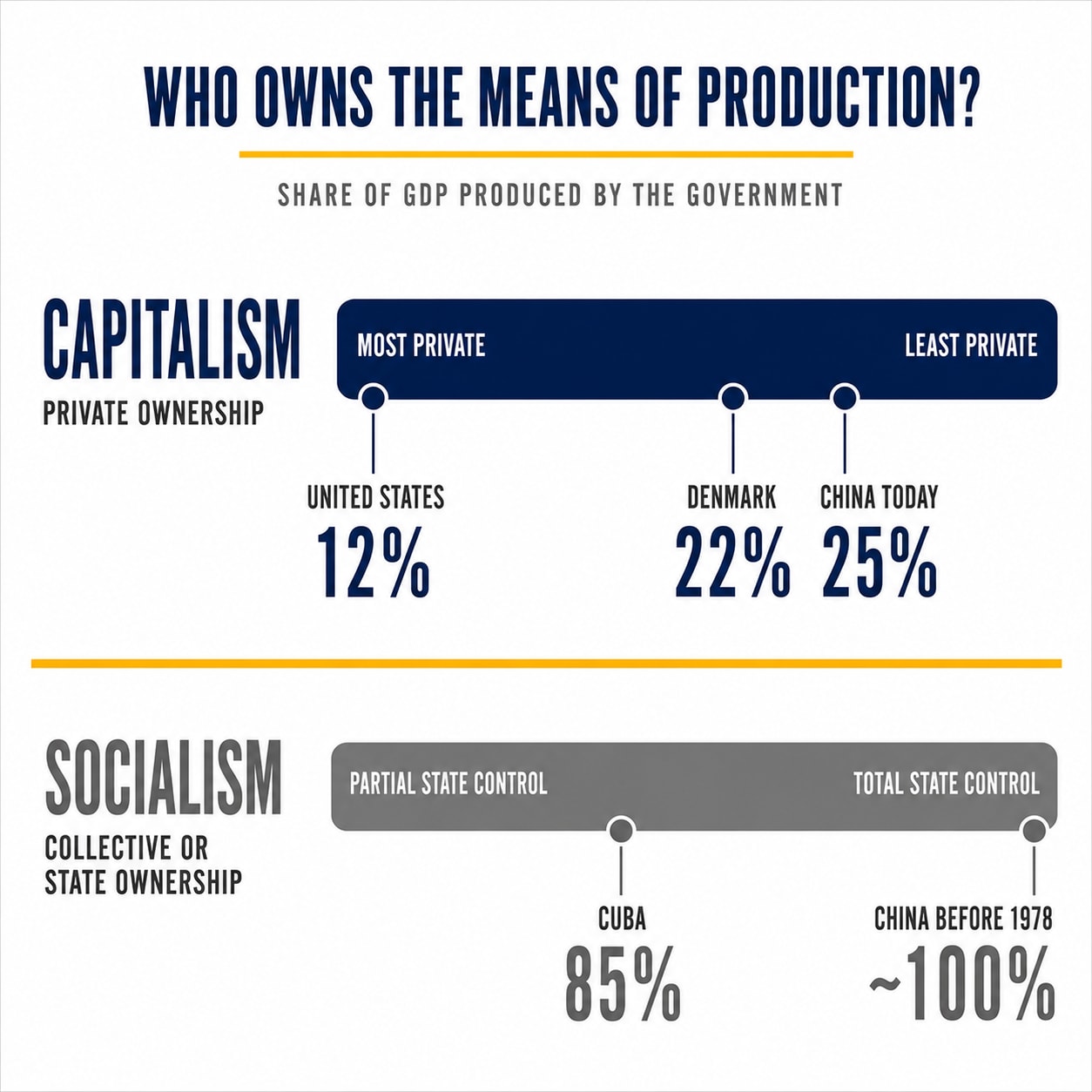
Capitalism and socialism describe what characterizes an economy - who owns most of the means of production.
Draw the dividing line at 50% if that makes you feel better.
China sits at roughly 25% state ownership.
There is no world in which China is socialist.
You could argue that China is now driving in a more socialist direction - and we’ll see how that fares in the coming decades.
But that’s a different claim than saying China is a successful example of socialism.
Objection two: “America has gone too far toward capitalism.”
Now this is a conversation worth having.
I don’t think the issue is that we’re “too capitalist.”
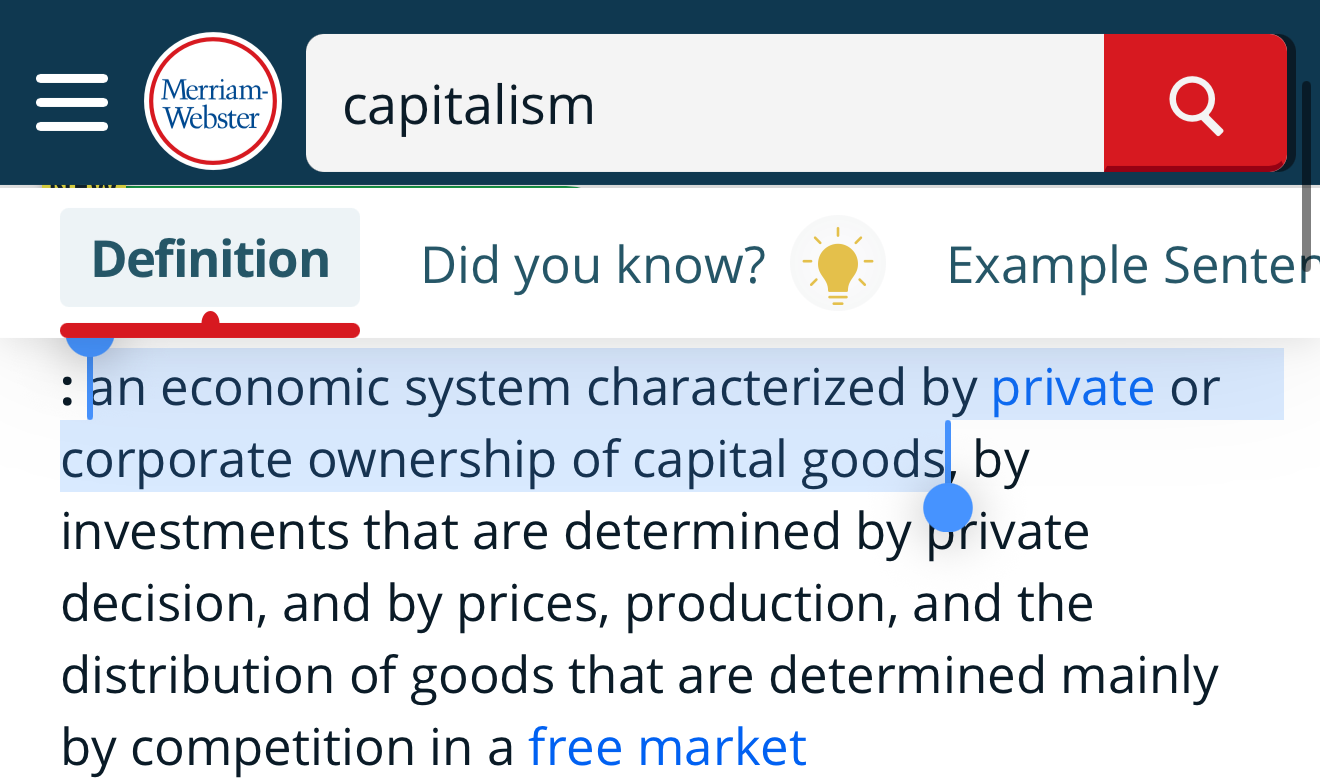
Again - definitions determine decisions.
Capitalism is defined by private ownership of the means of production.
Not billionaires and corporations having too much influence over politics.
Not unaffordable housing.
Not unaffordable healthcare.
I agree that all of those are issues.
But they are not a problem of “too much capitalism”.
We don’t need to be “less capitalistic” - that would mean nationalizing industries and putting them under government ownership.
Our problem is that the regulations are designed to help companies - because companies are lobbying the Congresspeople who write them, and paying for their political campaigns.
They are issues of bad incentives, bad regulations, and bad influences on our politicians.
The solution to that is not companies, farms and factories being owned by the government.
The solution is to return to the Founding Fathers’ vision - a country that is regulated by laws that represent the people instead of the corporations.
Regulating a company and owning a company are two different things.
The first is about fixing our politics.
The second is socialism.
And that experiment has been run.
Tens of millions of people paid for the results.
Quick note before we go further.
Notice what I just did in that section. I gave the other side their strongest argument before I answered it.
That’s called steelmanning.
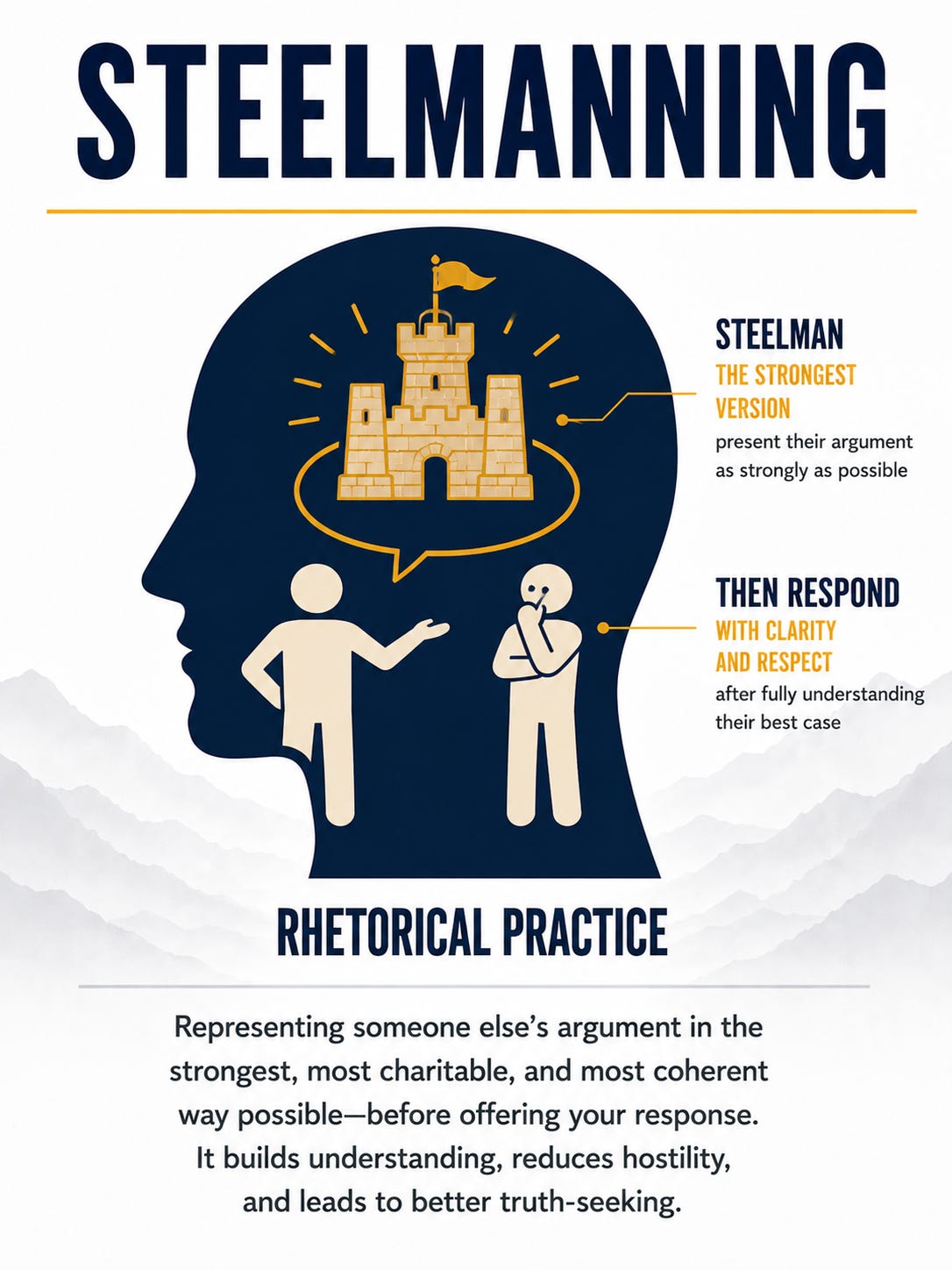
Steelmanning does more than just make my arguments better.
It also makes people more open to listening to my arguments because it shows that I understand what they think and that I’m taking them seriously.
This is a conversational technique that, when mastered, will completely transform how you converse with others.
Not just about politics, but about any topic.
You’ll become better at changing both minds and hearts - and that’s the key to having these conversations without losing loved ones.
It’s easy to understand conceptually.
It’s hard to do when you’re discussing socialism with your son and he just won’t listen to you.
That’s what Clear Thinker Academy exists to fix.
It’s a dojo for having rational conversations about difficult topics, without losing relationships.
You get live practice sessions with me, plus a course on seeing through the bias in mainstream and social media.
Words Have Precise Definitions, And Precision Matters.
Socialism always requires collective or government ownership of the means of production - the farms, the factories, the companies that make things.
That is the necessary condition. Not high taxes. Not a big welfare state. Not universal healthcare.
If that condition is not met, the country is not socialist.
Socialism is not healthcare for all.
It’s not affordable housing.
It’s not a synonym for “all the things I want but am not getting in my capitalist country.”
It’s not a “vibe.”
It’s about collective or government ownership of the means of production.
But people believing it means all those other things is exactly why it’s winning.
62% of Americans under 30 have a favorable view of socialism.
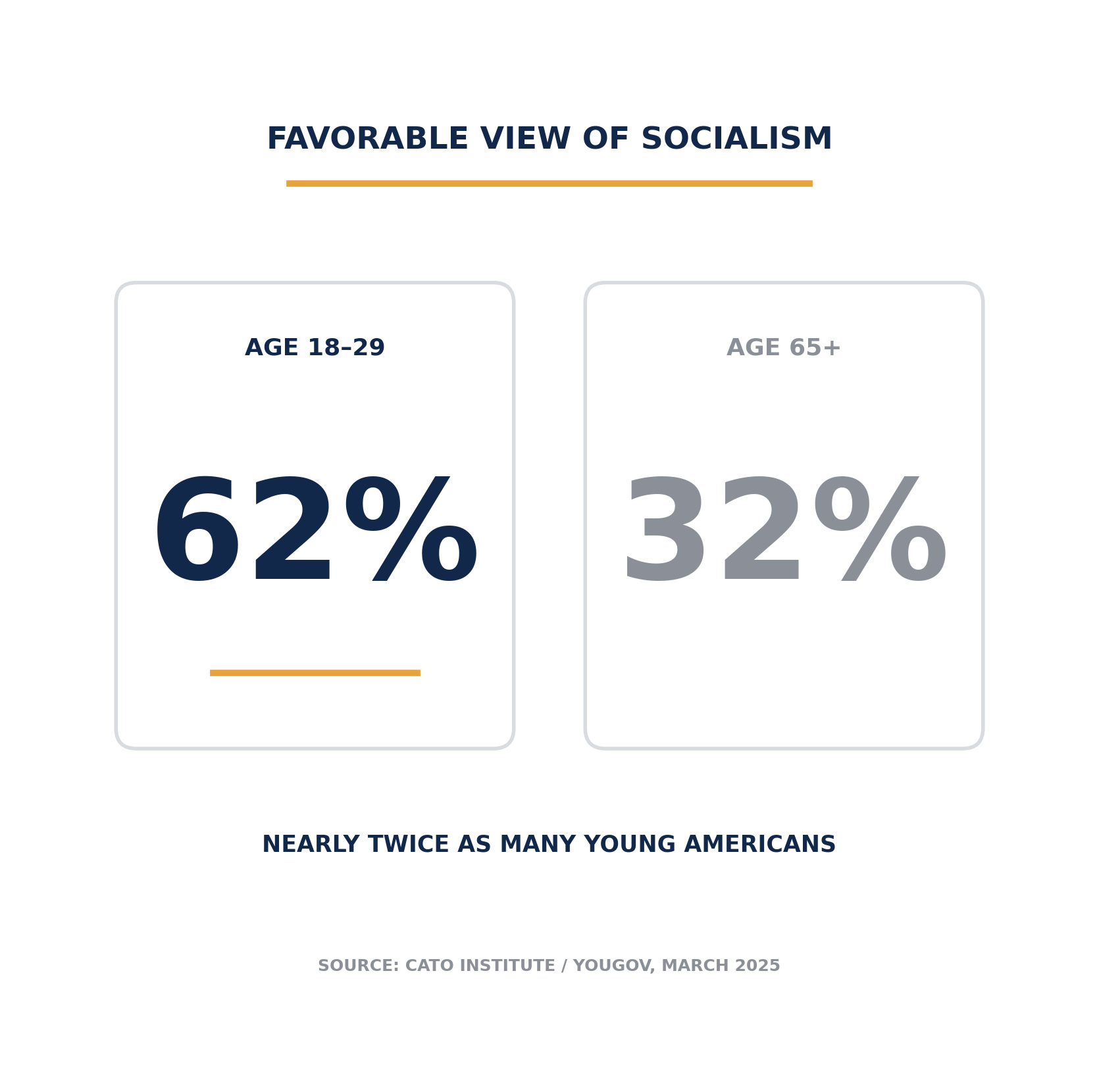
66% of Democrats view it positively.
And among Americans aged 18 to 34, socialism now polls better than capitalism - 49% to 43%.
China is not socialist.
The Nordic countries are not socialist.
And the belief that these countries are socialist is a large part of what is making socialism appealing.
Which brings me to the real problem - the one underneath the comment sections.
The voters are confused about what socialism is.
The socialists are not.
In the second half of this letter, I’ll show you Zohran Mamdani defining socialism two different ways.
One version when he’s talking to the general public.
One version when he’s talking to other socialists.
They are not the same.
And there’s a name for that rhetorical tactic. I’ll teach it to you, so you can spot it every time someone runs it on you.
Plus: why this confusion is a threat no military can defend against, why democracies are uniquely exposed to it, and what we actually do about it.
Below the paywall, five more analyses:
The three-sentence definition of socialism that ends the Denmark argument — and why Danish officials keep saying it themselves
What actually pulled hundreds of millions of Chinese out of poverty — the year the policy changed, what replaced it, and why the timeline is the whole argument
Motte and Bailey in the wild — how to catch the swap in real time, and the exact phrases that signal it’s happening
The response to “that wasn’t real socialism” — what to concede, what not to, and where the conversation actually turns
Why the failures weren’t accidents — the mechanism that produces the same outcome in Venezuela, Cuba, and the USSR regardless of who’s running it
