


This letter is part of my ongoing series on socialism. The last entry: Actually, China Was Destroyed By Socialism - And Saved By Capitalism.
Seize the means of production?
What does that mean??
Well, that’s what socialism is.
It’s not universal healthcare.
Or free childcare.
It’s not what Nordic countries are.
It’s not what China is.
It’s not even what his “city-run” grocery stores are (more on that later).
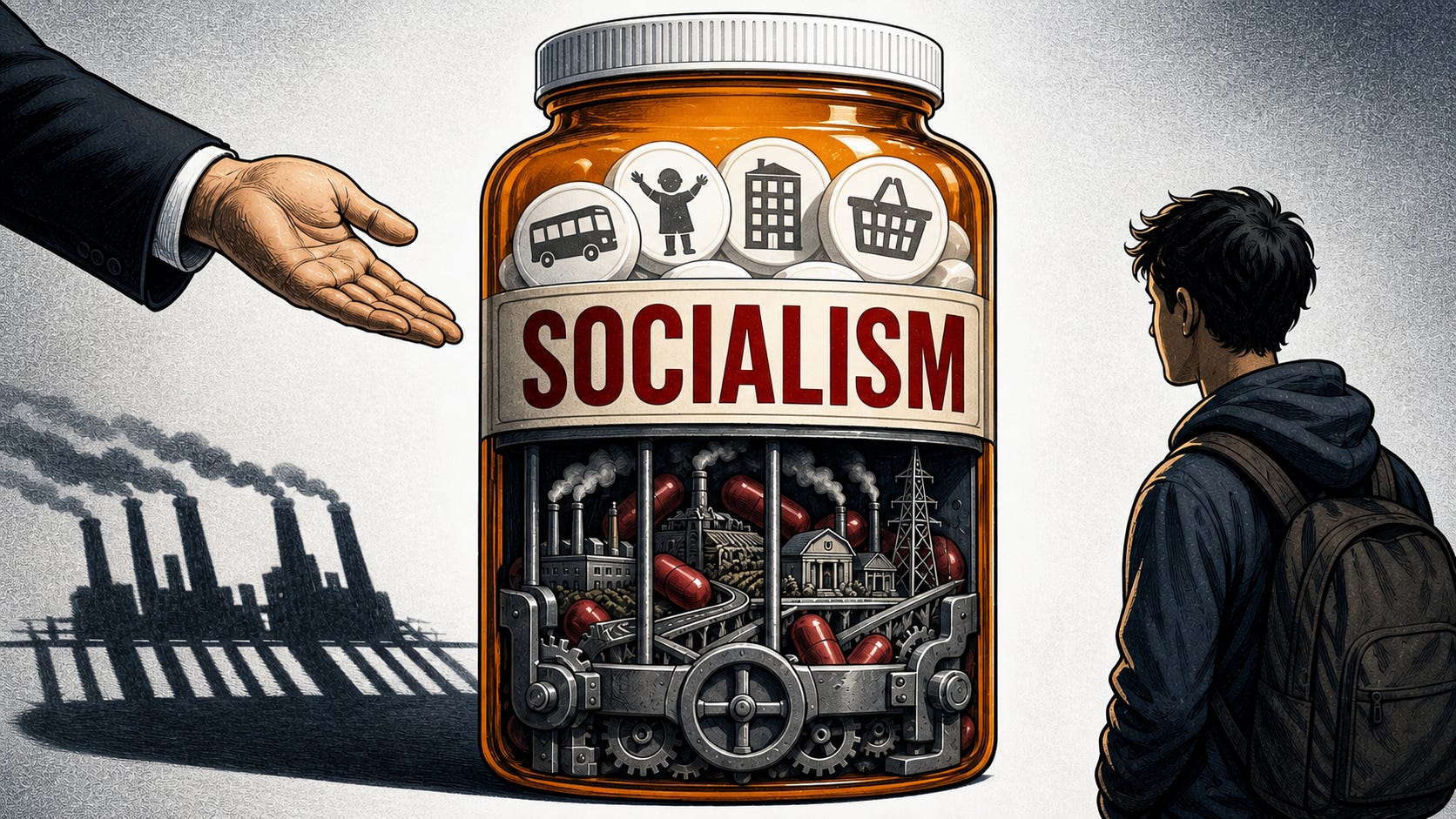
Socialism is an economic system characterized by collective ownership of the means of production.
AKA, the government owning the farms, factories, and companies.
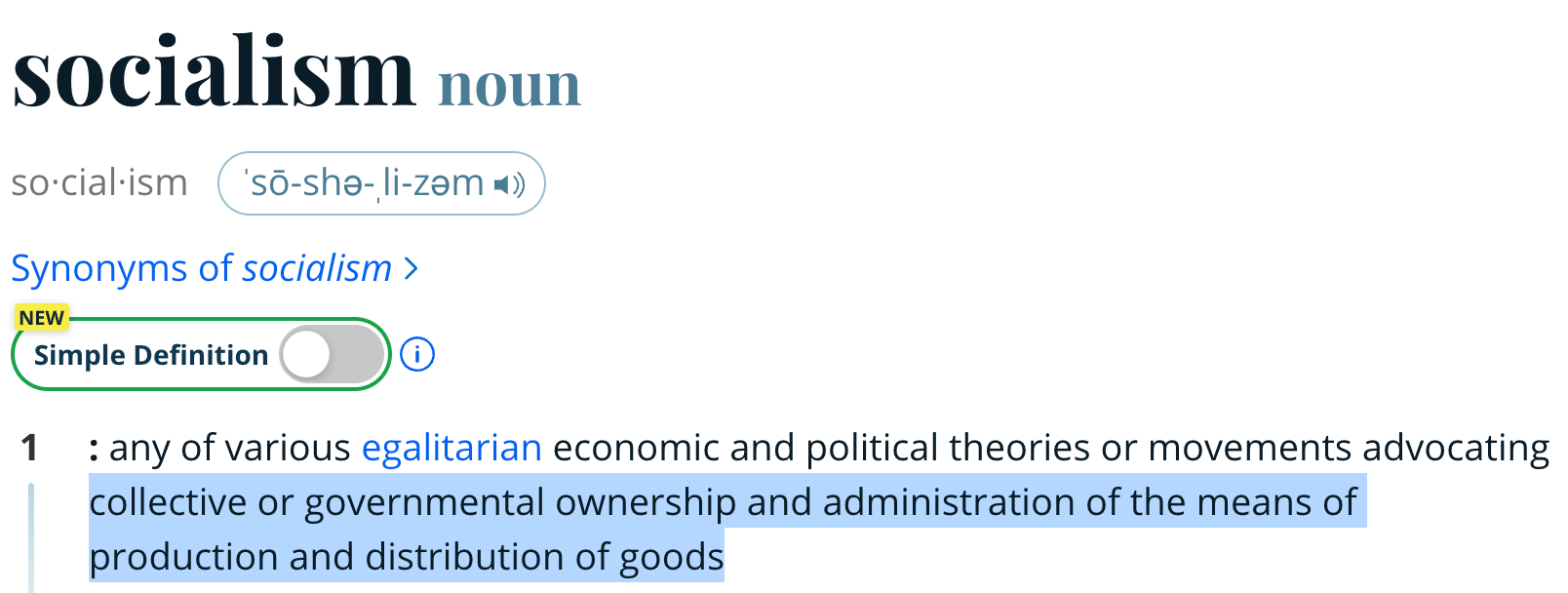
(You’ve seen me hammer this definition in several letters now. I’m going to keep hammering it, because definitions determine decisions.)
62% of Americans aged 18 to 29 have a favorable view of socialism.
But as of 2018, only 17% of all Americans could correctly define it.
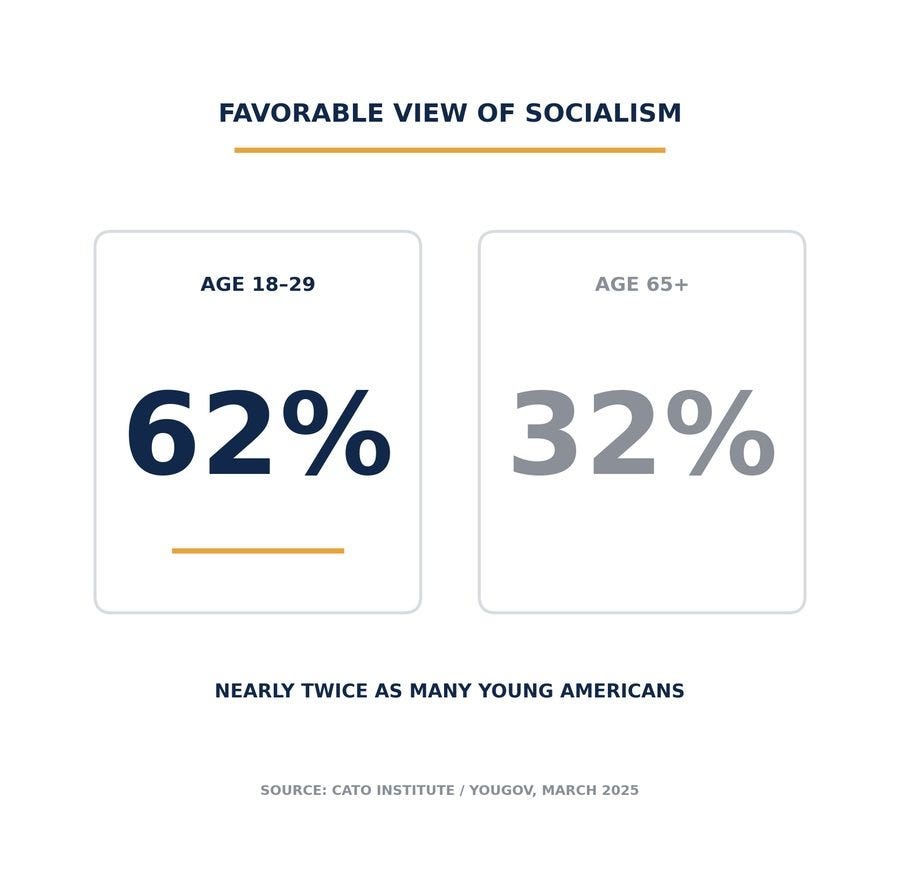
Most Americans are confused about what socialism is.
Mamdani is not.
He is advertising socialism, and selling it with something else.
Before I go further, I want to be clear about something.
This isn’t a piece about Zohran Mamdani.
I’ve listened to hours of his long-form interviews. He’s sharp. He understands the practical problems better than most of his critics do. He is a generational political talent.
If he called himself a social democrat, I’d have almost nothing to say.
But he isn’t one man.
Alexandria Ocasio-Cortez rejoined the Democratic Socialists of America this month, after her membership had quietly lapsed for seven years.
As of this writing, prediction markets have her as the favorite for the 2028 Democratic nomination.
This is a movement with a written end goal.
Mamdani is just its most talented marketer.
The Word He Didn't Choose
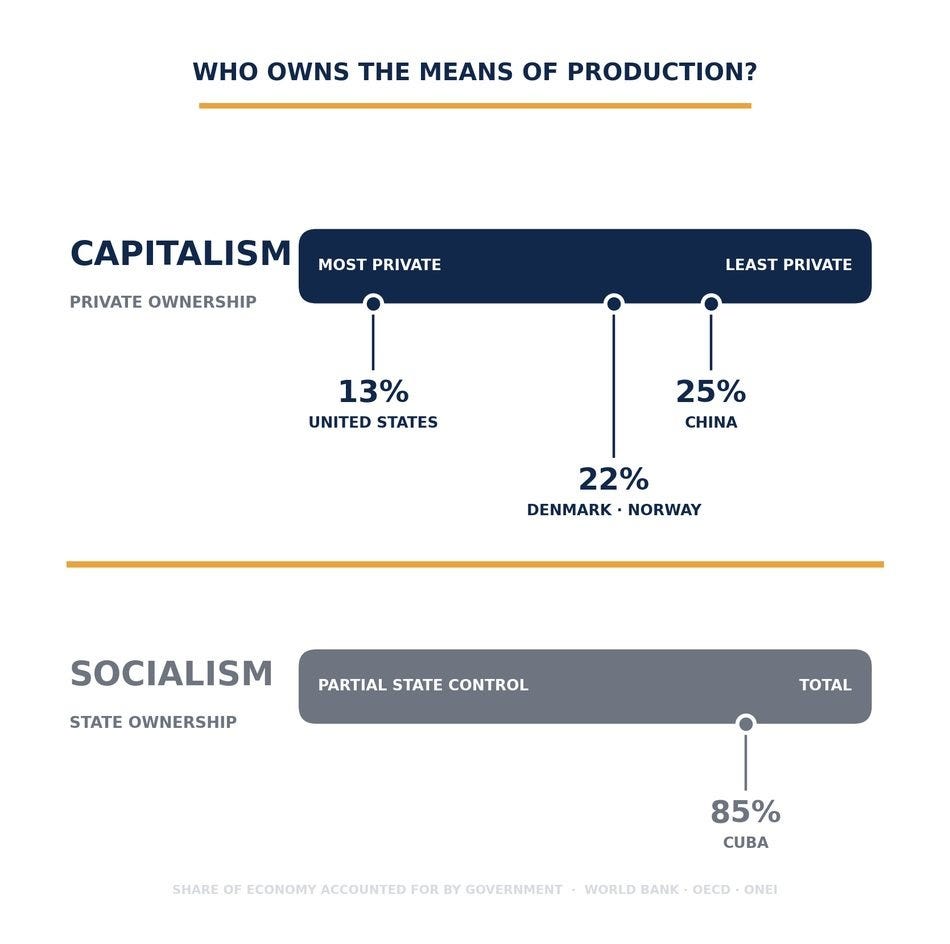
Under socialism, the government owns the farms, factories, and companies that produce things.
Cuba, where the state still produces about 85% of output, is socialist.
China, where state-owned companies produce about 25% of GDP, is not.
Denmark and Norway sit near 22%. America is at 13%.
But those numbers are measuring two different things.
In Denmark, the government runs the hospitals and the schools.
In Cuba, the government runs the hospitals and the schools - and the farms, and the factories, and the stores, and the hotels, and the banks.
That’s the difference between a welfare state and socialism.
There is a word that describes almost everything Mamdani is actually selling.
Free buses. Universal childcare. A rent freeze. Higher taxes on corporations.
That word is social democrat.
Social democracy is somewhere between capitalism and socialism. The best way to think of a social democracy is as a welfare state.
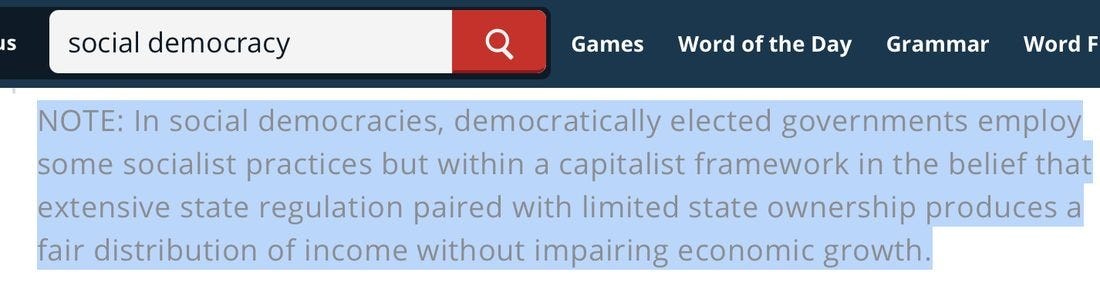
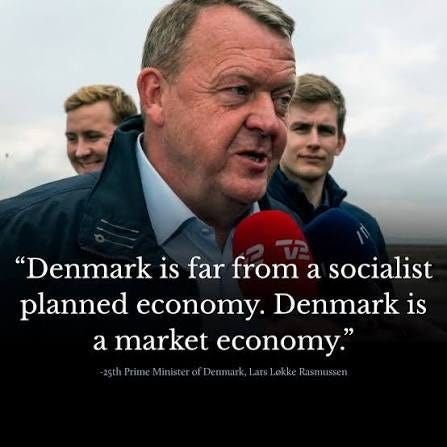
It describes Denmark. It describes Norway.
It describes a mainstream position inside the Democratic Party.
It is not controversial.
But Zohran doesn’t identify as a social democrat.
He picked democratic socialist.
Those two words are not synonyms.
They differ on exactly one thing: who ends up owning the farms, the factories, and the companies.
A social democrat taxes private companies and spends the money on people.
A socialist wants the public to own the companies.
A social democrat wants to exist within a capitalist framework, with limited state ownership.
A socialist wants to abolish a capitalist framework, with total state ownership.
The similarity of the terms is a point of confusion for a lot of people online.
This is not a minor semantic quibble - it’s a hugely important point.
Because if you sell people something they like, but brand it as something different, they start to like both the thing you’re selling and the brand - even if the two are totally different.
Think of it this way.
Imagine someone gives you a bottle labeled OxyContin.
Inside is Tylenol.
You take it for a headache. It works. You feel good.
Now you have a positive association with the brand OxyContin, not knowing it’s Tylenol.
Then one day the same person gives you a bottle that actually contains Oxy - and you take it the same way you took the last one.
Too much Tylenol gives you a stomachache.
Too much Oxy stops your breathing.
We can argue about whether you needed Tylenol.
There’s a legitimate argument for it, and it has a strong track record of having worked before.
But it’s much harder to justify Oxy.
Especially when Oxy has destroyed so many people’s lives in Cuba, Venezuela, China before 1978, the Soviet Union, and many other countries.
Zohran Mamdani and the Democratic Socialists of America are advertising OxyContin and selling Tylenol.
But their end goal is that we take Oxy.
That is a deliberate choice - they are not confused about what socialism is - even though most Americans are.
The Democratic Socialists of America say they want social ownership of ALL major industry and infrastructure.
They have chosen the socialist label.
They have chosen the socialist end goal - seizing the means of production.
And they are relying on social democracy and the successes of capitalism to make socialism more appealing.
Socialism’s Stolen Virtue
Mamdani keeps using capitalism to solve problems and calling it socialism.
1. The Budget
The promise:
He said he didn’t close the gap on the backs of working people.
He branded it as a win for democratic socialism.
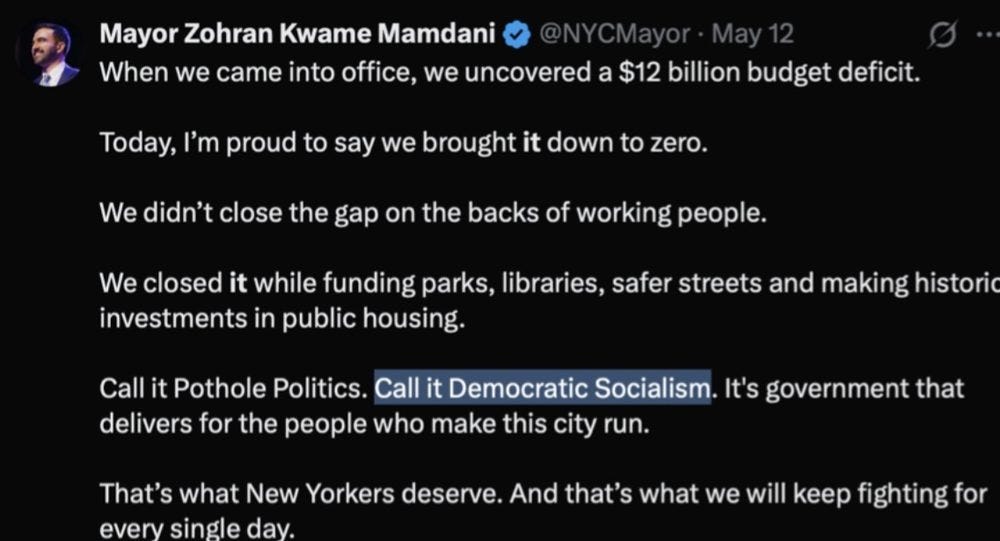
That second claim is false.
The reality:
Even if we stretch the definition of socialism to mean taxing the rich:
In reality, about 5% of the budget gap was closed by taxing the rich.
About 53% was mostly by taking money from people who don’t live in New York City, and future taxpayers - most of whom are working people.
So for example - I was born in the Bronx, which is in New York City, and when I was 10 I moved to Rockland County, a suburb in New York State.
If I still lived in Rockland, my tax money would be going to cover New York City’s tax deficit.
And about 35% of the budget gap was closed by predicting strong future performance from Wall Street - the capitalist center of the world.
(These are approximations. Budget rounds overlap across reporting periods, so the components don’t total to exactly 100%.)
But look at what that means.
They were counting on the revenues of companies that they want to eventually seize, to solve New York City’s financial problems.
And that might not sound like such a bad idea - after all, if they’re producing wealth, it’s not like that wealth will go away under socialism. The wealth will just go to the people who need it, right?
Well, we’ll talk about that in a moment.
But in summary, no, the budget deficit was not closed by socialism.
Unless you want to focus on the 5% of it that was closed by taxing the rich, and ignore the other 95%.
Mamdani is counting on the success of capitalists, taking taxpayer money meant to serve other parts of New York, and calling this a win for socialism.
2. City-Owned Grocery Stores
The promise:
A network of city-owned grocery stores. “A public option for produce.”
In his campaign video he said: “These stores will operate without a profit motive, or having to pay property taxes or rent, and will pass on those savings to you.”
The reality:
In July, the details came out.
The city owns the land, pays for construction, and covers rent and property taxes.
A private, for-profit grocery company runs the stores.
So the program built to prove that removing the profit motive lowers prices is being operated by a company that only exists because of the profit motive.
Which isn’t inherently a problem - that’s called a public-private partnership, and there are plenty of examples of them.
But remember - in socialism, there are no public-private partnerships. There’s just the public.
So he’s advertising something as socialist, but it relies on the productivity of capitalism.
And as I discussed in a previous newsletter - it’s pretty much the most inefficient model possible for creating savings for poor and working-class people. You can find a link to that letter here.
So he’s hiring capitalists to run the store, subsidizing them with taxpayer money, and yet again - claiming it as a win for socialism.
Mamdani’s city-owned grocery store project is perhaps the most inefficient way to help the poor, and unscalable.
It’s only optimal for one thing: marketing socialism.
But under true socialism - which is his goal - even the private companies he’s relying on cannot exist. Because the government owns the companies.
And that is the thing that is difficult for people to see.
There is a difference between redistributing the money generated by companies and the government owning the companies.
The first redistributes the wealth.
The second destroys the same source of wealth that you want to redistribute from - because the government is not good at creating wealth.
Here’s an example of what I mean.
Venezuela sits on the largest proven oil reserves on earth.
In the 1990s they opened those reserves to private investment. ExxonMobil, Chevron, BP and others put in billions and added more than a million barrels a day of capacity.
The state oil company already existed - Venezuela nationalized oil back in 1976.
But it was run by career professionals, working alongside private partners, and it worked.
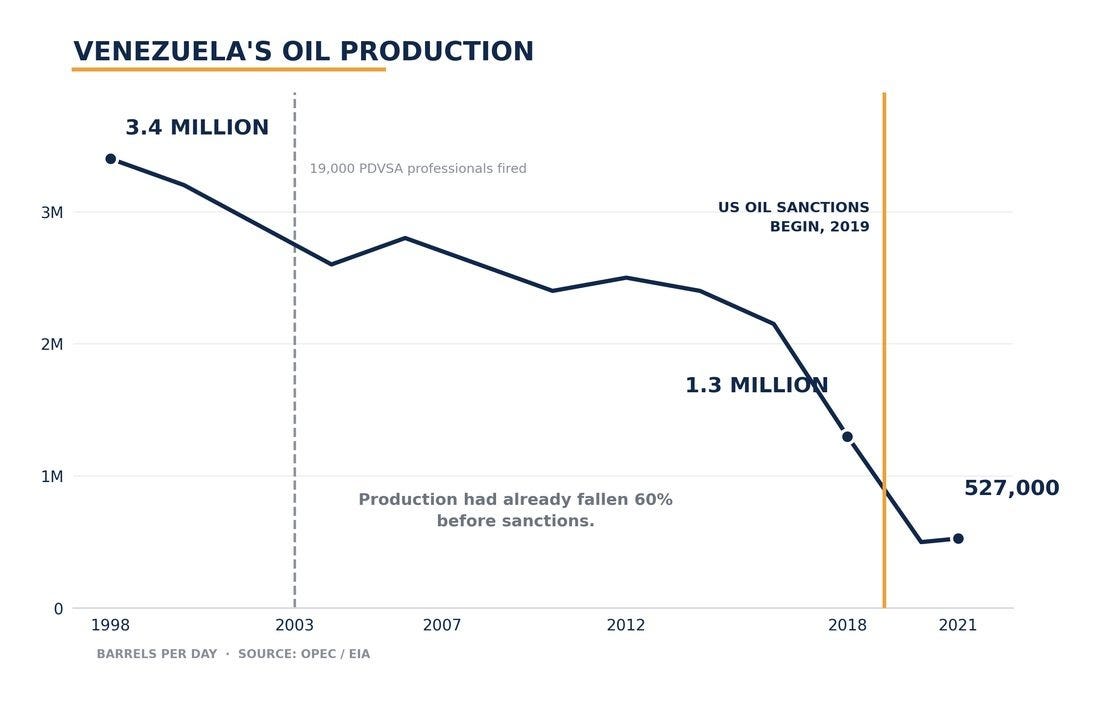
In 1998 the country pumped 3.4 million barrels a day.
Then in 2002 and 2003, Hugo Chávez fired 19,000 of those professionals and replaced them with political loyalists.
In 2007 he seized the private stakes too - and they went from a public-private partnership to fully public.
By 2018 production had fallen to 1.3 million barrels a day.
And that was before a single US sanction hit the oil sector. Those didn’t start until 2019.
By 2021 Venezuela was pumping around 527,000 barrels a day.
Oil export revenue went from $73 billion in 2011 to $22 billion in 2016.
Some of that was the oil price crash.
And some of it was that they were producing a lot less oil.
Between 2013 and 2021 the economy shrank by 80%.
Venezuelans lost two-thirds of their wealth per person.
They went from one of the richest countries in Latin America to one of the poorest.
The oil never went anywhere. The people who knew how to get it out did.
3. Free Buses, Childcare, Rent Freeze
Free buses. Universal childcare. A rent freeze.
These aren’t examples of socialism. They are wealth transfers.
And some of them are defensible as transfers. Reasonable people can argue about whether a city should subsidize buses or childcare.
But none of them are socialism. And branding them as socialism is the tell.
Because every dollar of it comes from taxing people and private companies.
Which is fine - until you get what you asked for.
Because the goal of socialism is for the government to own those companies.
And a lot more often than not - when the government has taken over a profitable industry, it has stopped being profitable.
So what exactly funds the free buses after you seize the bus manufacturers?
What funds universal childcare when Wall Street is a state agency?
And this is the problem with socialism.
It puts management of wealth under people who don’t know how to create wealth.
It’s the political version of a founder who’s brilliant at raising money and bad at building anything.
The PowerPoint deck is beautiful. The story is compelling. Investors keep writing checks every round.
But he’s spending other people’s money, and eventually there isn’t any more to raise.
The philosophy is clear. Rich people have money. Poor people don’t. So take from the rich and give to the poor - fine.
Then what?
At some point somebody has to create new wealth.
And socialist ownership has a terrible record of preserving the wealth it wants to redistribute.
The socialists are marketing an agenda financed entirely by the thing they’ve promised to abolish.
They are funding a marketing campaign for socialism with capitalism.
What The Label Does To The Policies
So now you understand how Mamdani isn’t actually implementing socialism - he’s implementing social democracy, or relying on capitalism, while building public support for socialism.
If the socialists actually had power, their goal of seizing the means of production is fundamentally incompatible with the reforms Mamdani is producing.
So what is this strategy?
There’s a term for it in socialist strategy - “non-reformist reforms.”
It’s the centerpiece of the democratic socialist playbook: advertise socialism, deliver capitalism, and use the credit to eventually abolish capitalism.
It’s the same sequence Fidel Castro, Hugo Chávez, and Mao Zedong each used to take power.
And we need to study it.
Because those who don’t know history are doomed to repeat it.
In the second half of this letter: how big this movement actually is, how we can have a socialist president in 2028, and the exact timeline each of those three men followed - including the quote where Castro explains, in his own words, why he lied about being a communist for 32 months.
From here, you’ll learn:
The difference between social democracy and socialism, and why it comes down to who owns the farms, factories, and companies
How Mamdani’s budget, city-owned grocery stores, free buses, and childcare plans rely on capitalism while being marketed as socialism
The problem with funding socialist promises through the companies socialists ultimately want the government to own
The strategy known as “non-reformist reforms,” and how the Democratic Socialists of America use popular reforms to build support for a complete break with capitalism
The sequence Castro, Chávez, and Mao each followed
