


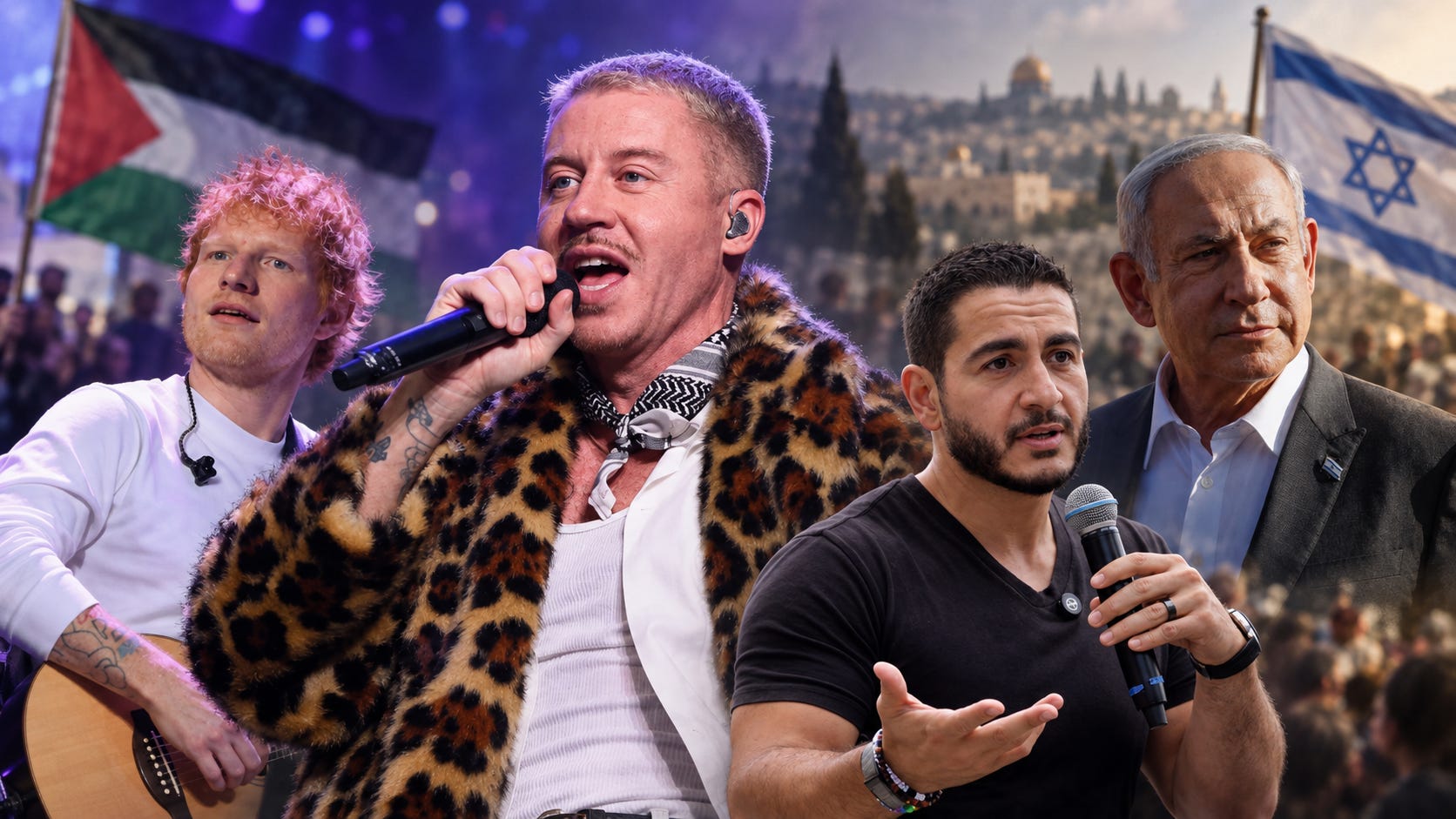
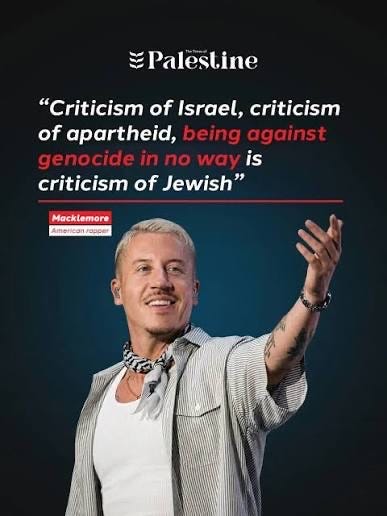
So now people love Macklemore for using the G word.
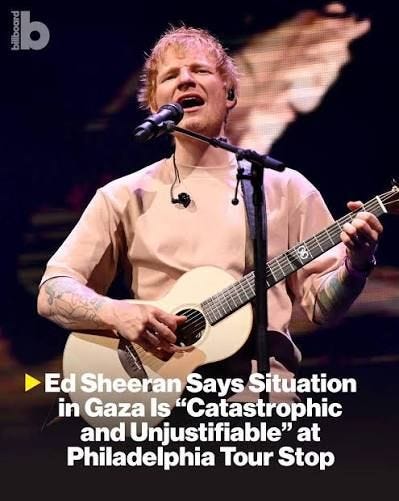
And hate Ed Sheeran for not using the G word.
Genocide.
Ok, let’s say it is a genocide.
If that’s the case.
Why is Israel so bad at genocide?
They paused their attacks so half a million Palestinian kids could get polio vaccines.
But why help vaccinate kids you want to kill?
They dropped leaflets, sent texts, and made calls to residential areas before strikes.
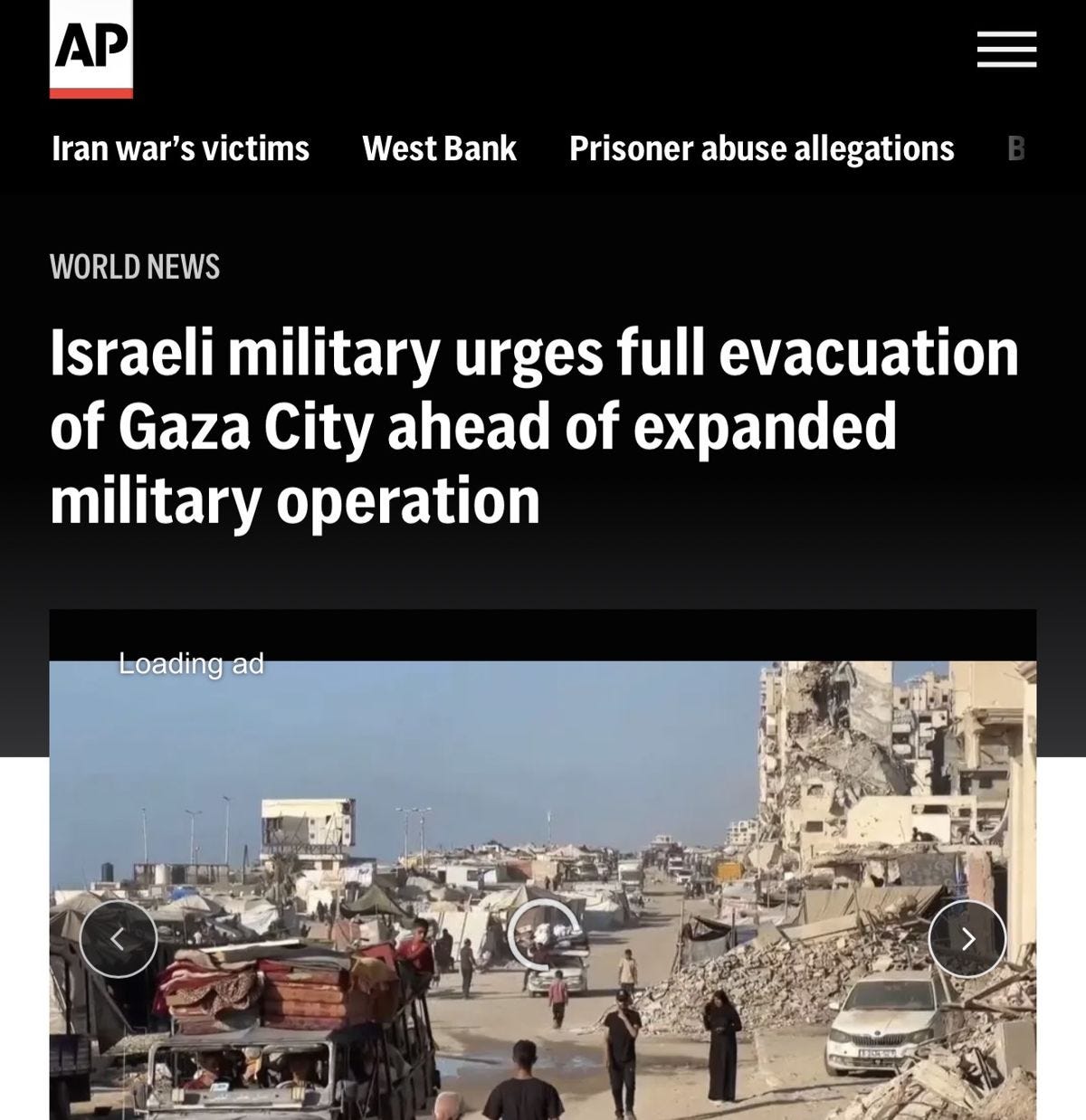
But why try to evacuate civilians you want to terminate?
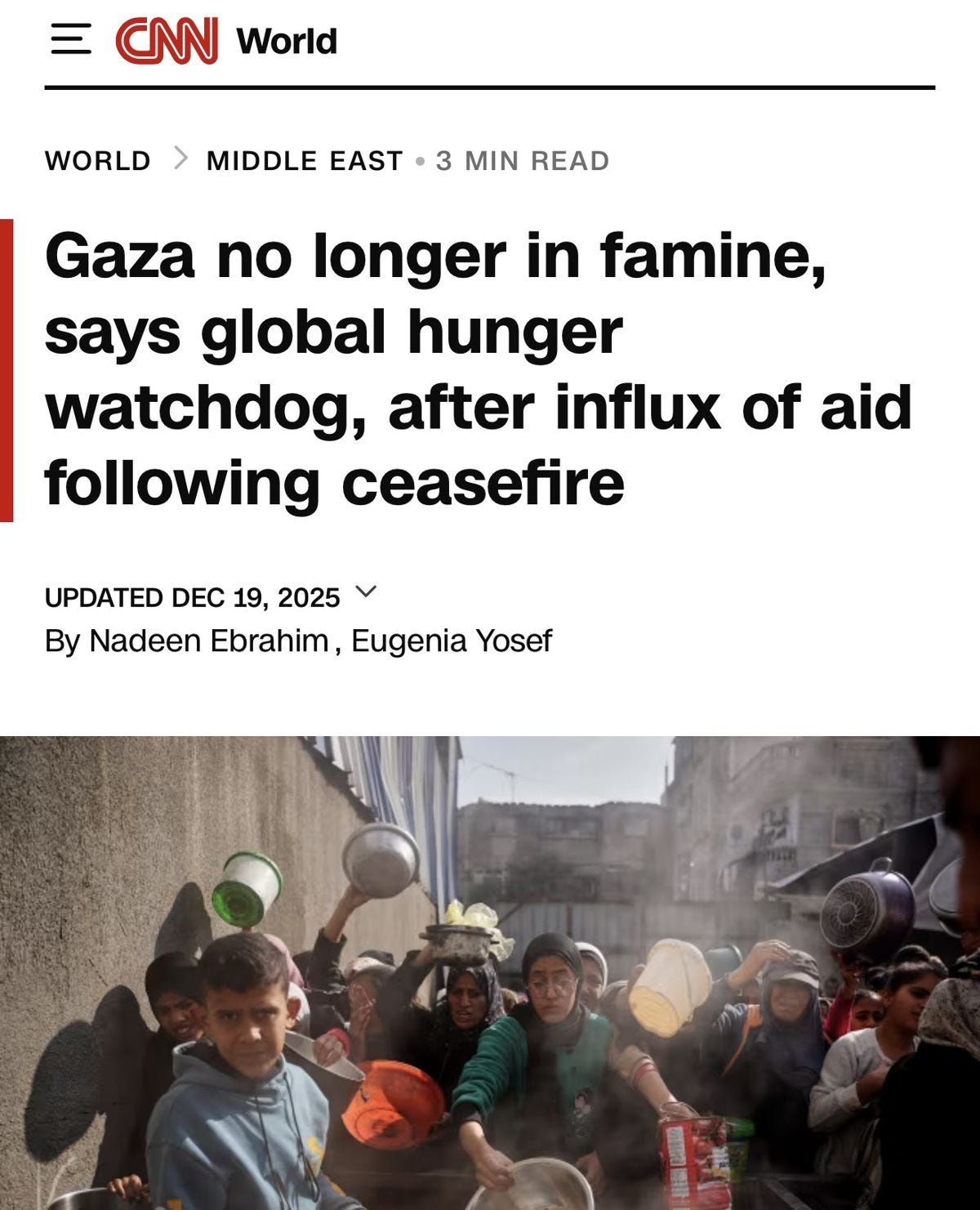
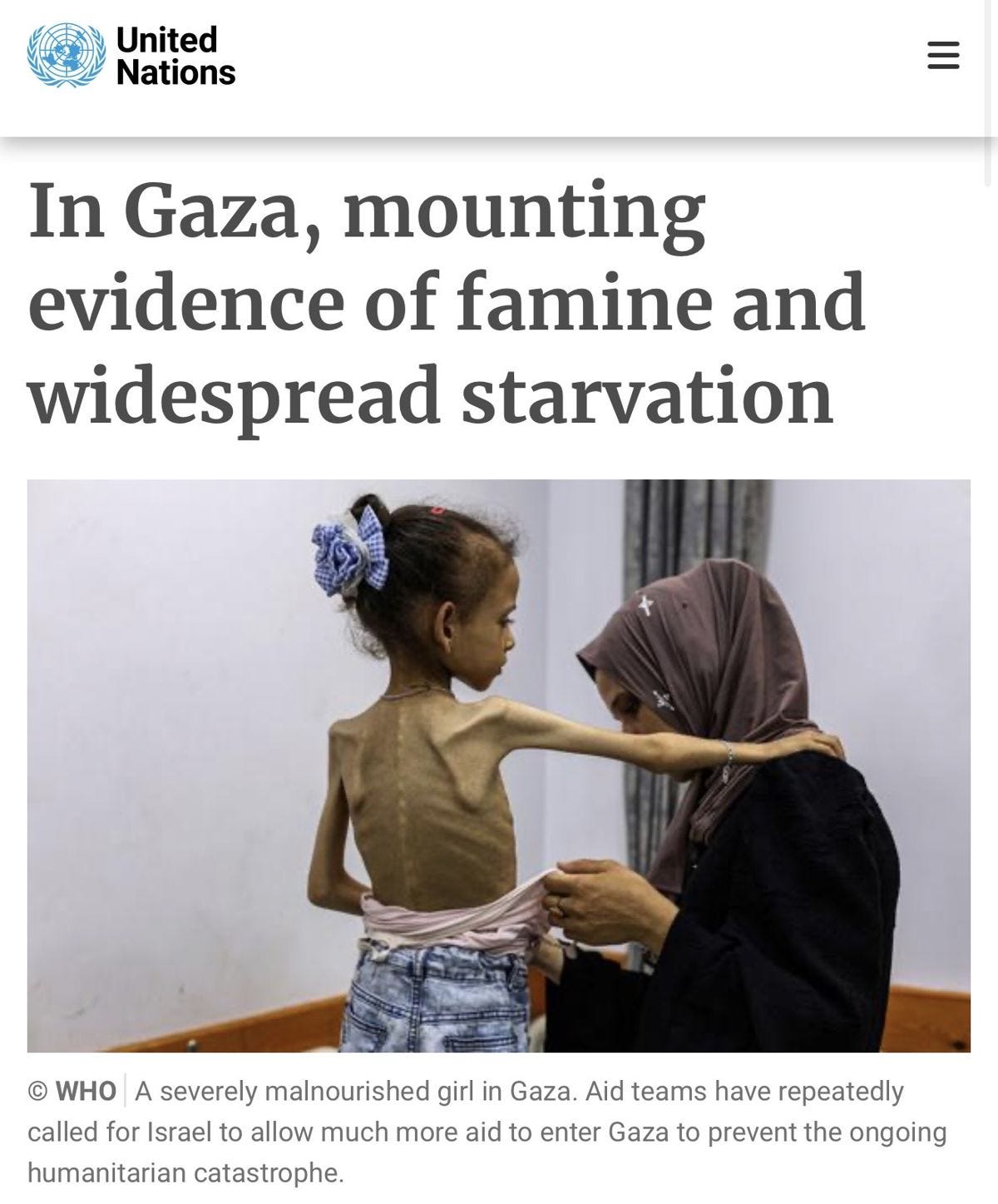
After initially not allowing food into Gaza, which the ICC has charged as a war crime, they allowed enough that a UN-backed source said the famine is over.
But why allow a famine to end for a population you want dead?
None of those observations prove this isn’t a genocide.
But what makes people so sure it is?
Maybe Israel is just a bunch of “tricky Zionists deceiving all of us goyim sheeple.”
Or maybe they are trying to kill Hamas, not the Palestinian people.
What Israel is doing in Gaza is horrible.
And genocide has a specific meaning.
It’s not a war where one side kills way more than the other.
It’s not a conflict where many civilians die.
It’s not even a war crime. It’s its own charge.
Genocide is not a “vibe”.
It has a specific meaning:
“acts committed with intent to destroy, in whole or in part, a national, ethnical, racial or religious group, as such”
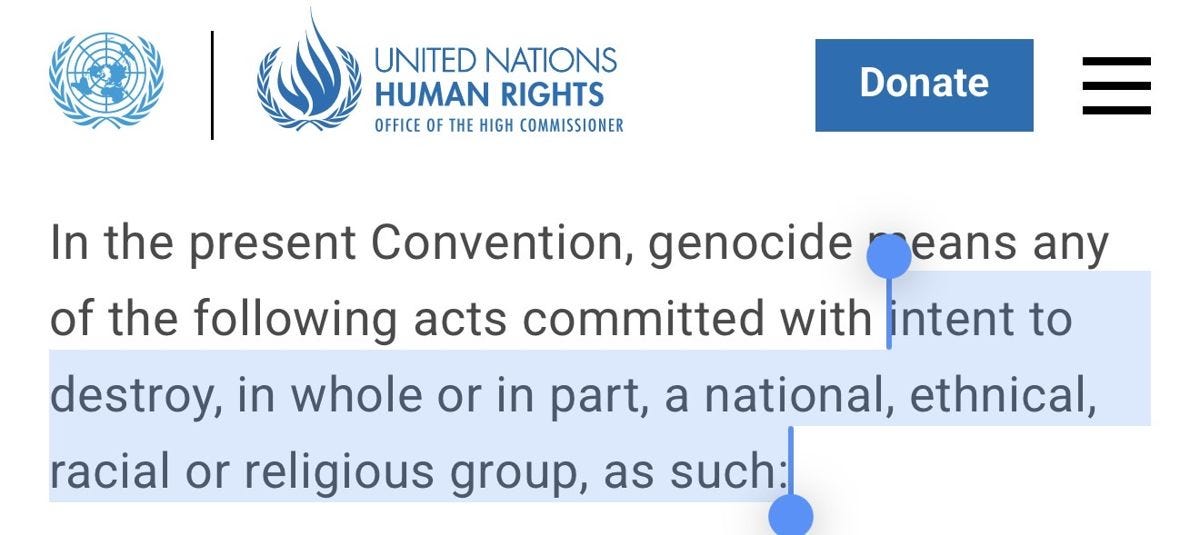
The key words here are “intent” and “as such.”
AKA intentionally killing people because they are Palestinian.
So, do you think Israel is killing Palestinians because they are Palestinian?
Or because Hamas made Palestinians the price of killing Hamas?
Now, when 74,000 human beings are dead, it can seem like this is just a semantic quibble.
But what we call this actually matters.
Because the description determines the prescription.
Genocide is an accusation, with consequences.
So is Israel doing what the Nazis did to the Jews, or what Bush did to Afghanistan to kill Al-Qaeda?
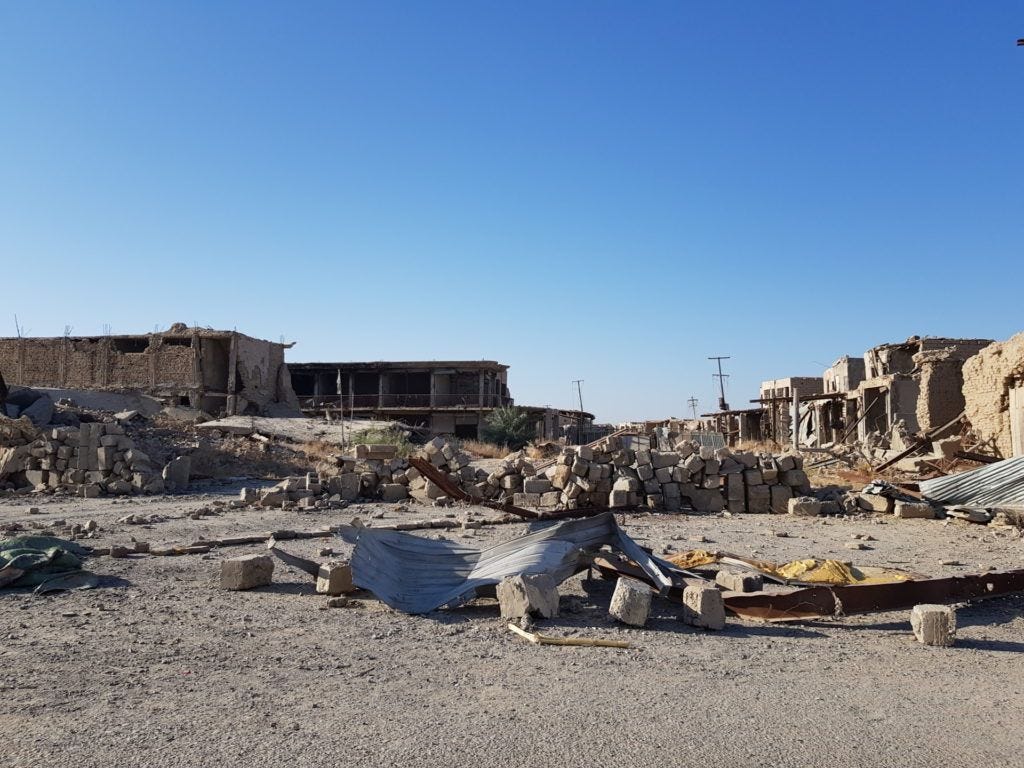
Because you don’t protest Nazis. You go to war with them.
You don’t post on social media about them. You execute them.
So as a thought experiment: do you believe America should go to war with Israel?
Should Netanyahu and the entire Israeli cabinet be hanged?
Because if it is a genocide, those become possibilities.
Now emotionally, when many people say genocide, they are looking for the strongest possible word to express their outrage.
And it’s natural to be outraged, because women, children, and the elderly are being killed.
Now why is that happening?
Well first, because Israel is the one dropping bombs.
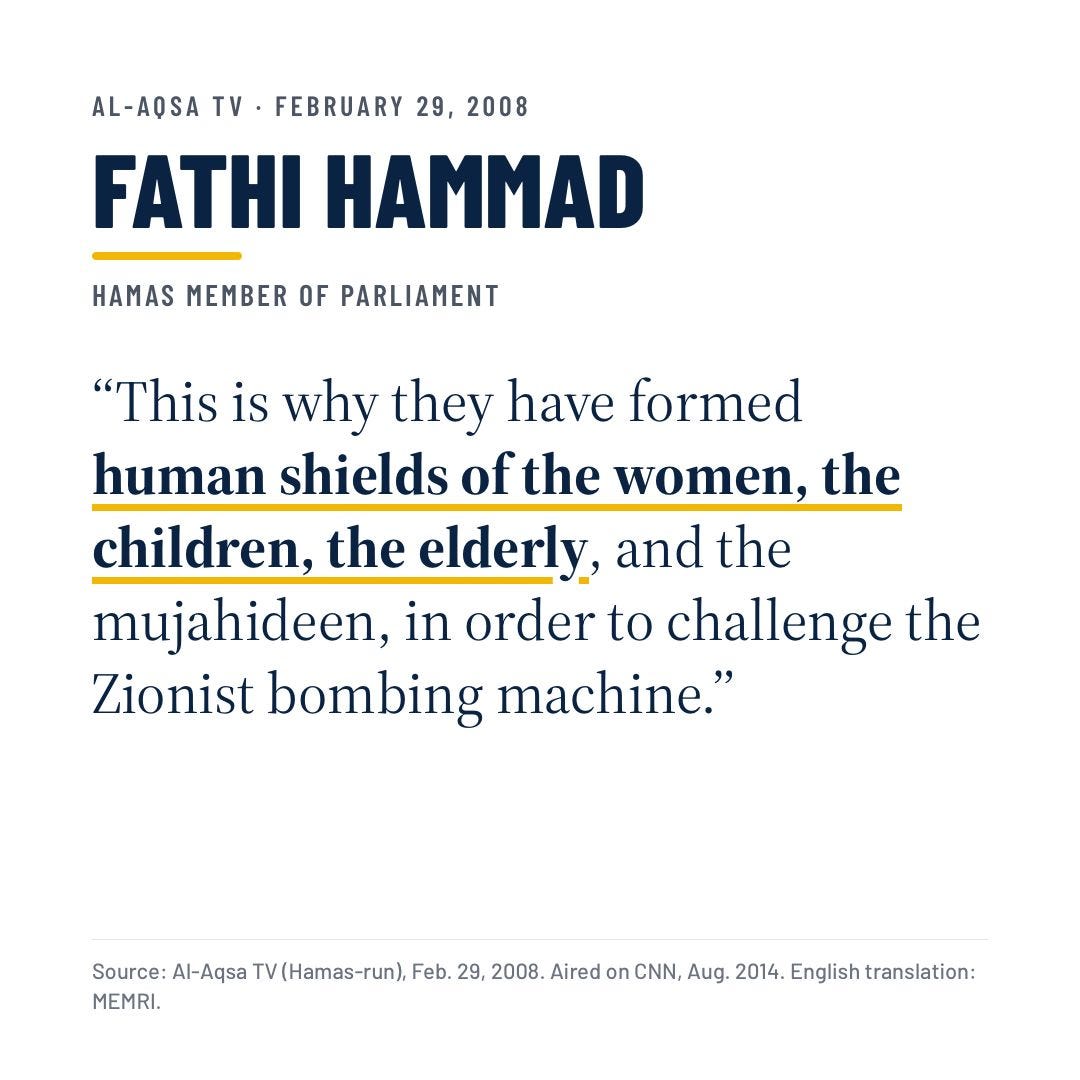
And maybe it’s also because in 2008, Hamas described a strategy of using a “human shield of women, children, and the elderly.”
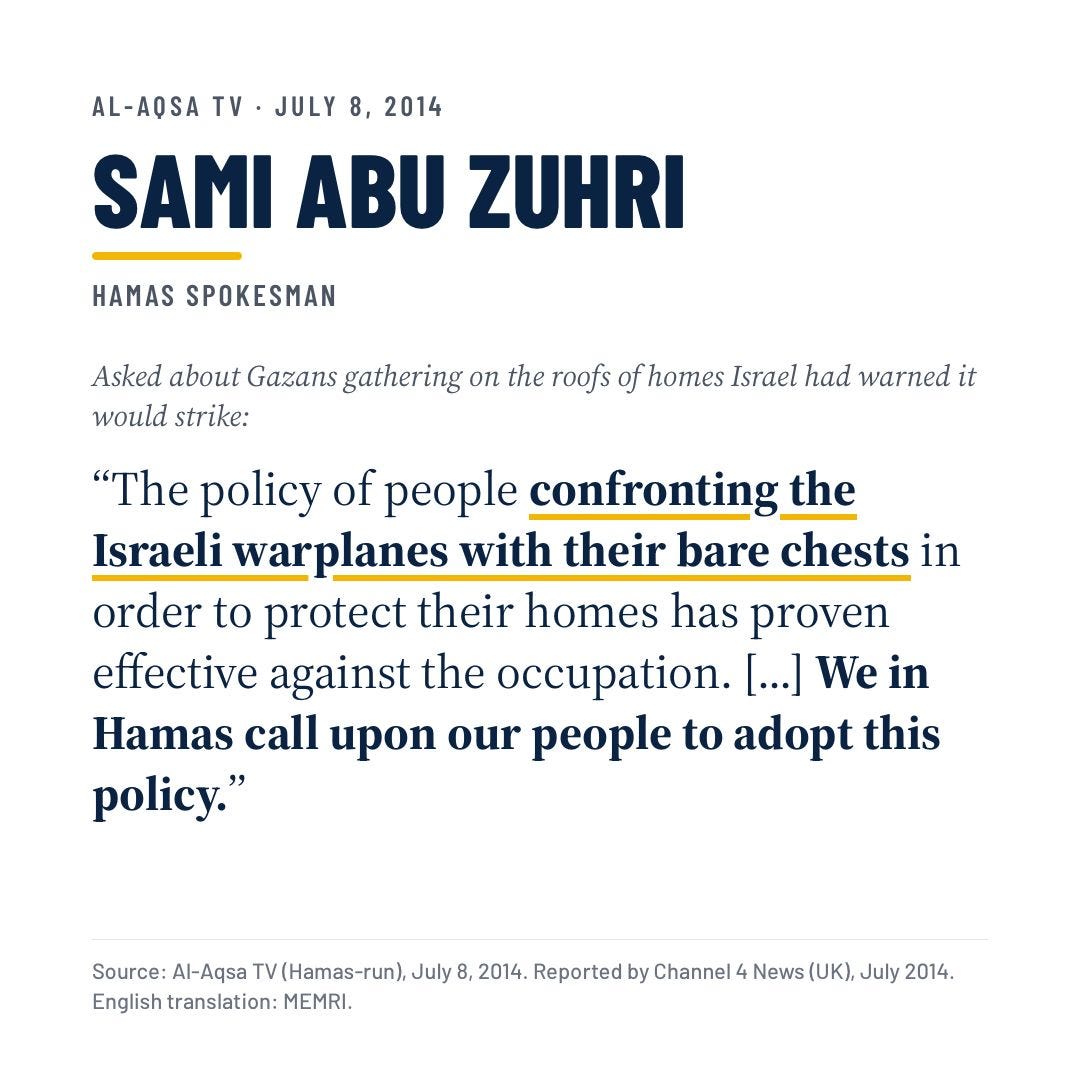
Maybe it’s also because in 2014, Hamas told civilians to “confront Israeli warplanes with their bare chests” by climbing to the roof of their homes.
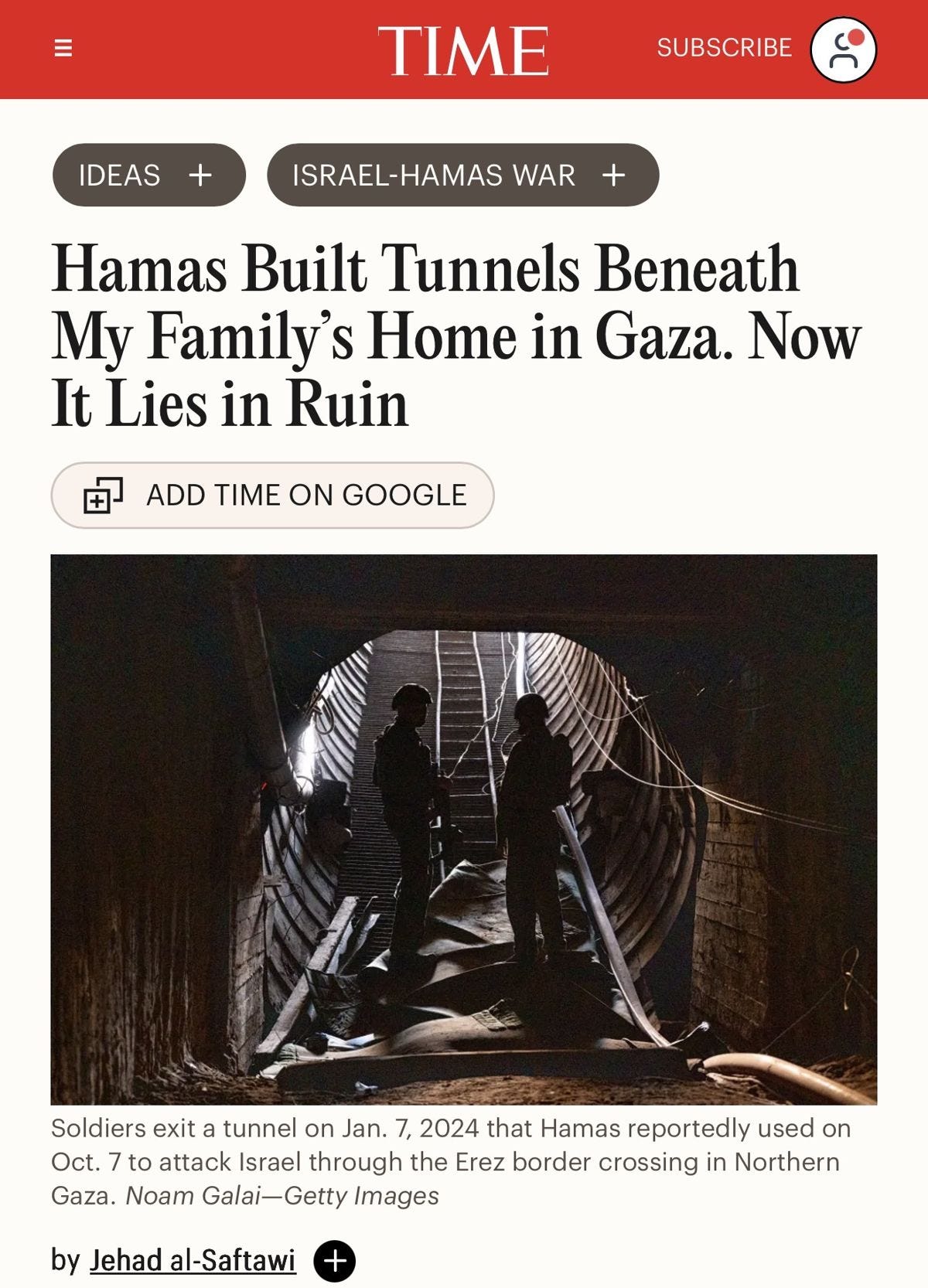
While Hamas hides in tunnels placed under those homes.
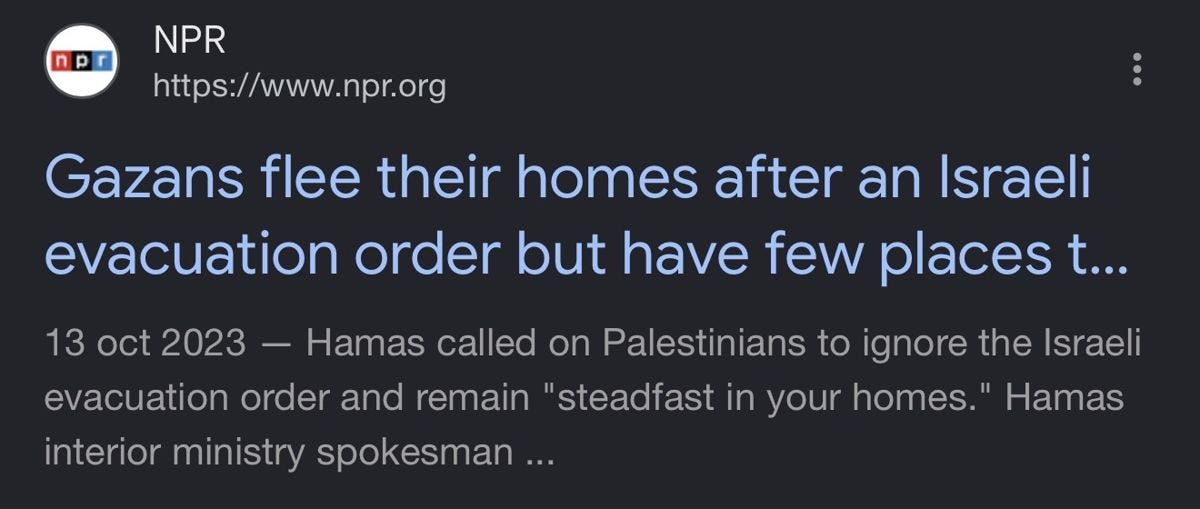
Maybe it’s also because when Israel sends evacuation warnings to places they plan on bombing, Hamas tells civilians to ignore those warnings.
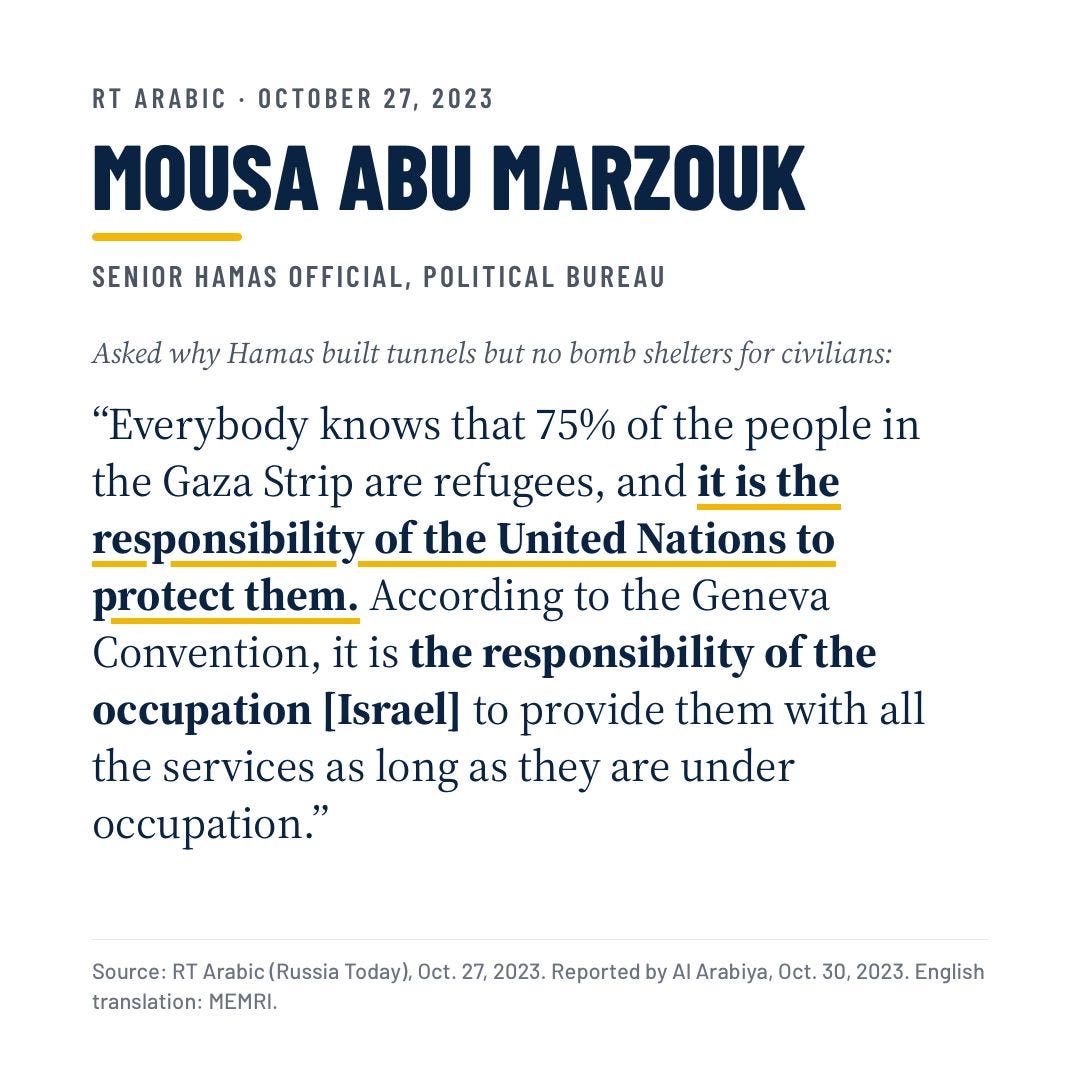
Maybe it’s because rather than using charity money from the rest of the world to build a better Gaza, Hamas built bomb shelters for their fighters.
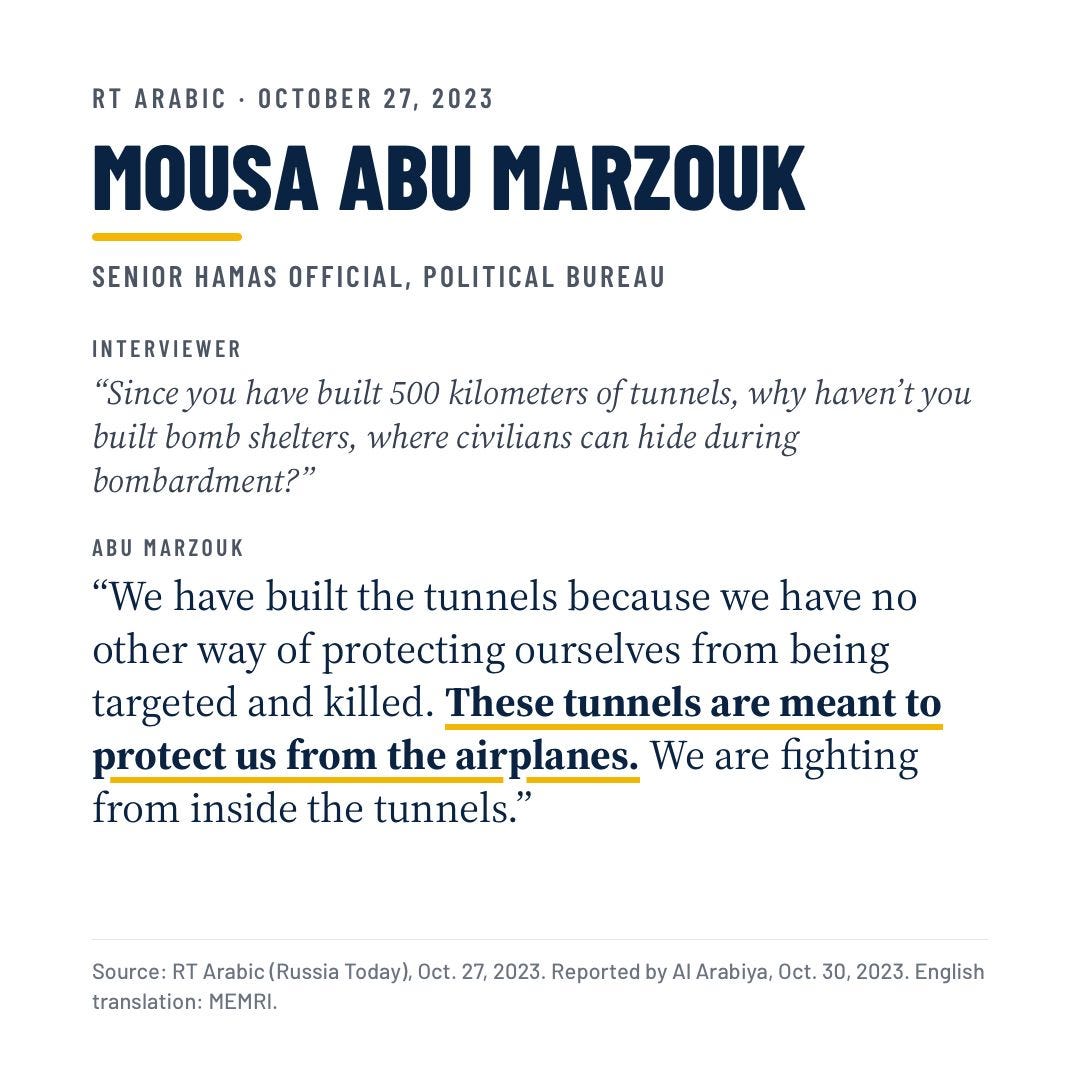
And they don’t let civilians use those shelters because protecting civilians is “the responsibility of the United Nations” and Israel.
AKA, not Hamas’ responsibility.
So here’s a question.
Would this look like a genocide if Hamas didn’t wear civilian clothes, didn’t tell civilians to ignore Israeli evacuation orders, and didn’t put tunnels under schools?
Israel has almost certainly committed war crimes, for which they should be held accountable.
And is there anything that Hamas does that isn’t a war crime?
A normal army uses its soldiers to defend its civilians.
Hamas uses its civilians to defend its soldiers.
A normal army uses the military to pressure the enemy.
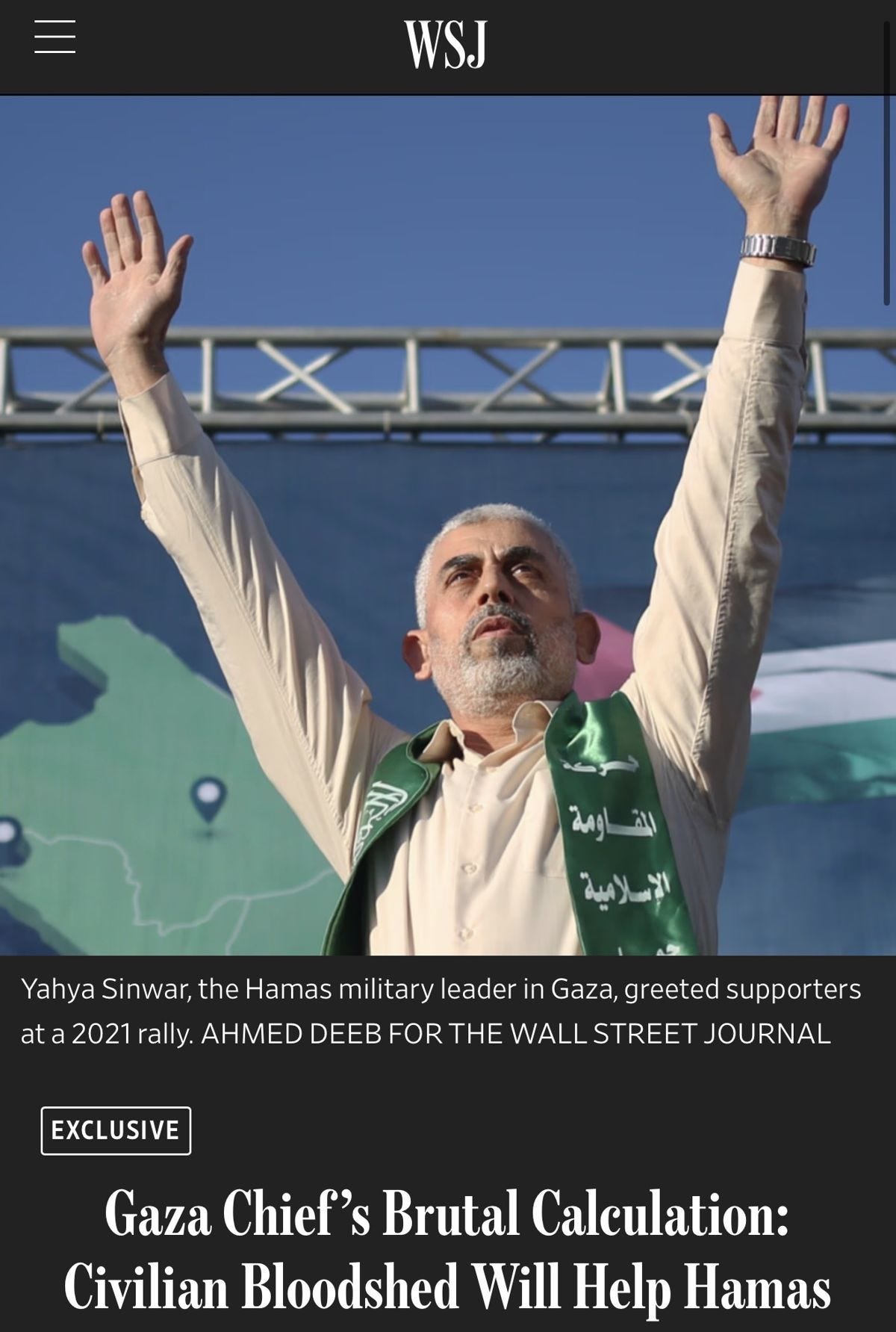
Hamas martyrs civilians to create global pressure.
A normal army targets enemy soldiers, and kills civilians in the process.
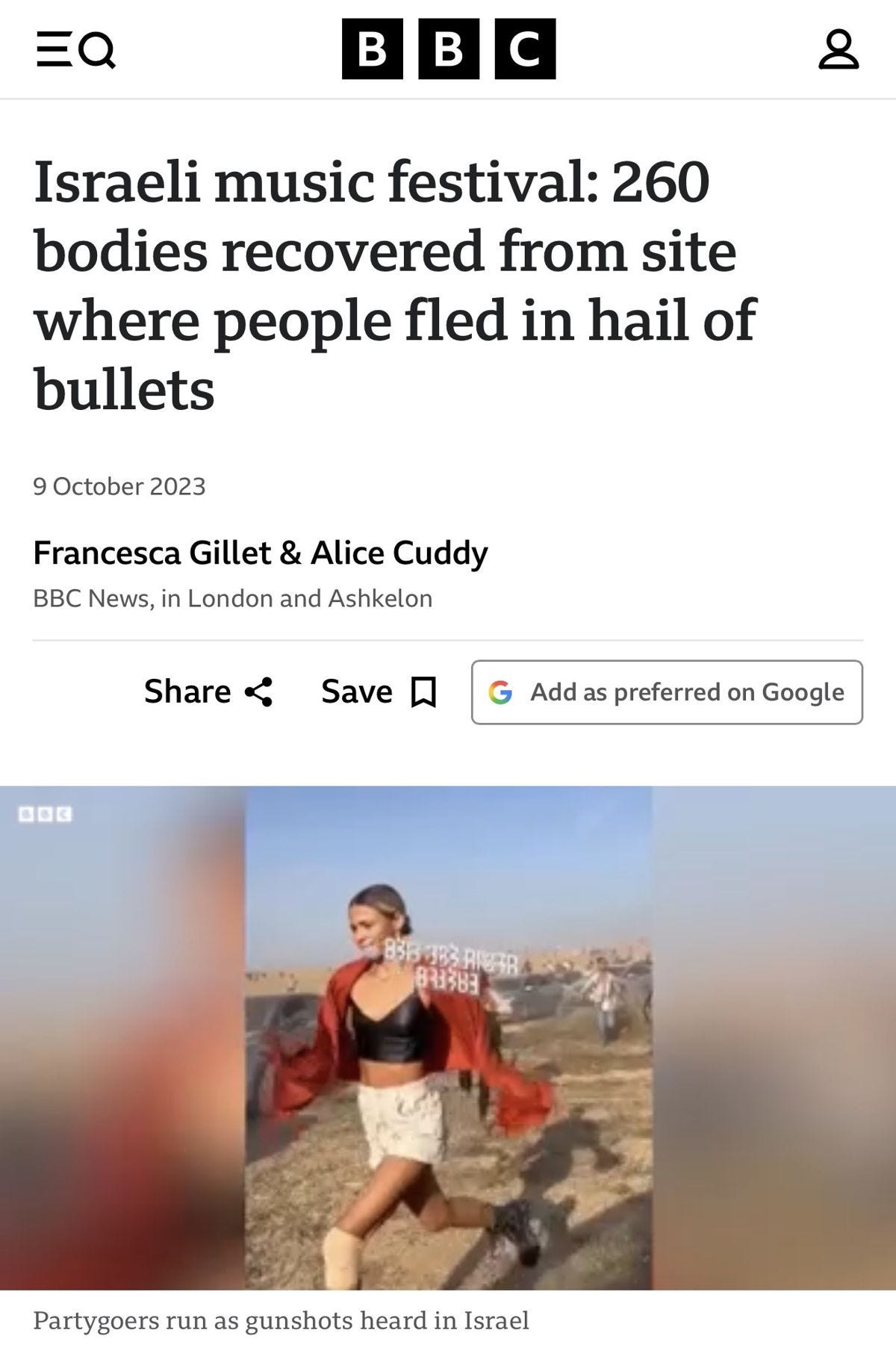
For Hamas, targeting civilians is the process.
So if Hamas wasn’t doing all these things, what do you think the death toll in Gaza would be?
Do you think Israel wants to kill Palestinians, or Hamas?
Hamas has said “We desire death like you desire life.”
So ask yourself.
Is this a genocide against the Palestinian population?
Or a hostage situation?
Where I stand
Now, to be transparent. I think what’s going on in Gaza is horrible.
I think Israel has committed war crimes that can’t be explained as merely the consequences of Hamas’ war crimes.
A war crime is a serious violation of the rules of war.
Rules written to protect civilians and prisoners from the worst of what armies do.
The Rome Statute of the International Criminal Court, which prosecutes both, distinguishes between war crimes and genocide.
Genocide is a different charge. It’s not a kind of war crime.
It has its own definition, and it doesn’t even require a war.
I think Israel has probably not committed a genocide, as of this writing.
Probably meaning there’s a chance it has, but the chances are higher that it hasn’t.
The reason I’m writing this is that this entire discussion has become emotional and tribal.
The clearest sign of that is the attachment to the word genocide.
I see three camps of people using it.
The first camp has thought hard about it, looked at the evidence, and concluded that’s what this is. I respectfully disagree, but there’s a reasonable disagreement to be had.
The second camp hasn’t thought deeply about it. They’re reaching for the strongest word they have for how they feel about the atrocity in Gaza.
I understand that too.
And the third camp is running a loyalty test.
Say genocide, or you’re canceled.
That’s what happened to Ed Sheeran. He said what was happening in Gaza was catastrophic. Unjustifiable. Disproportionate.
He got hammered anyway, because he didn’t say the password: genocide.
This piece is meant to help us escape that.
The tribalism. The confusion. The hostility.
The word genocide implicates only one side.
And once the conversation is about sides, it stops being about solutions.
Why does the word genocide even matter?
When confronted on use of the word, Michigan’s Democratic Senate nominee Abdul El-Sayed said that arguing this point is just quibbling.
But elsewhere in that same conversation he said the word has moral implications.
Watch the Raging Moderates interview. The Gaza segment is at the end.
So which is it? A semantic quibble, or a conversation with serious moral implications?
Now to be fair to El-Sayed, elsewhere in that interview he does make substantive points about why he thinks it is a genocide, centered around statements of intent from certain Israeli cabinet members, and the devastation in Gaza.
I’m going to take both of those seriously later in this piece.
But first let’s talk about the word.
Before we start: I know there’s a lot of suspicion of Israel.
So here’s what I’m going to do.
I’m only going to cite numbers that don’t rely on an Israeli source.
Either both sides have verified them, or an independent party that isn’t Israeli-backed has.
Abdul said two things I want to focus on:
A) That the word has meaning. And that it speaks to what we’re obligated to do.
B) That arguing over the word is quibbling.
These two statements cannot both be true at the same time.
If the word decides what we are obligated to do, then the word is extremely important.
And arguing over the word is much more important than a mere quibble.
The genocide label affects:
What we do about the conflict.
Who is responsible for the conflict.
And what we say about the conflict.
And I think people using the word genocide know it’s important to use it.
That’s why Macklemore was praised by the Free Palestine movement for using it, but Ed Sheeran was slammed for not using it.
What we do about genocides
In 1948, America and other countries signed the Genocide Convention. Article 1 obligates us to prevent and punish genocide.
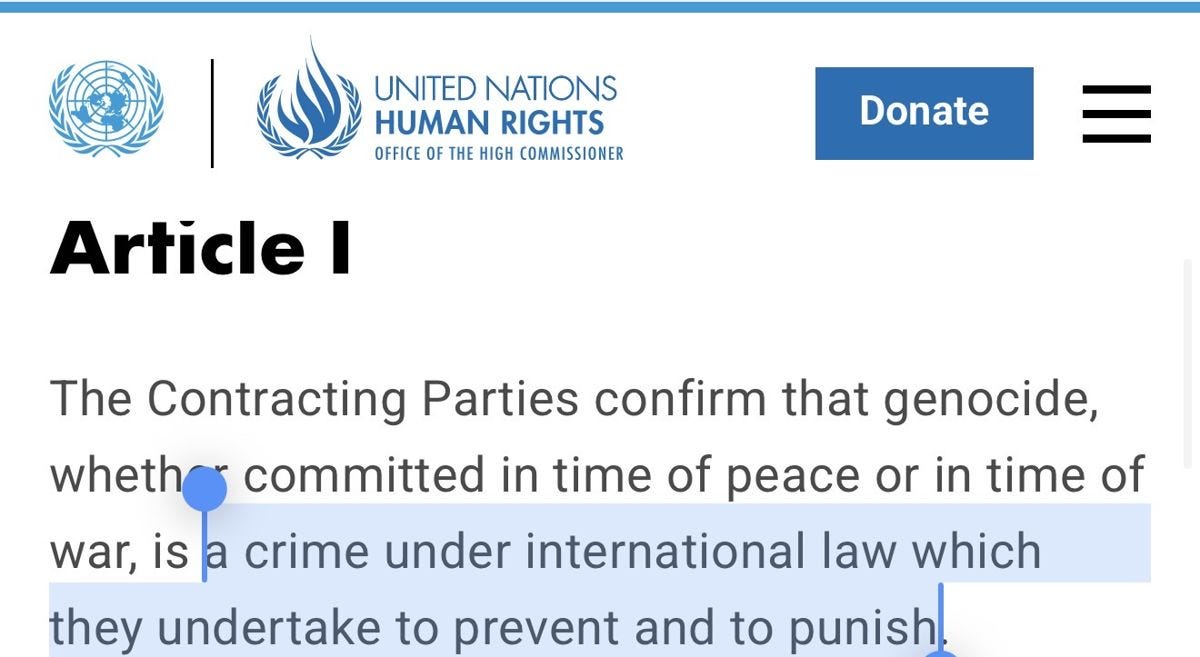
And in practice, preventing a genocide has meant military action.
That’s why the stakes are so high.
It’s not a social media slogan. It’s a potential obligation to military action.
Here’s what happens when a President uses it.
August 2014. ISIS had tens of thousands of Yazidis trapped on a mountain in Iraq.
Obama went on television and said what ISIS was attempting “would constitute genocide.”
Then he said: “We can act, carefully and responsibly, to prevent a potential act of genocide.”
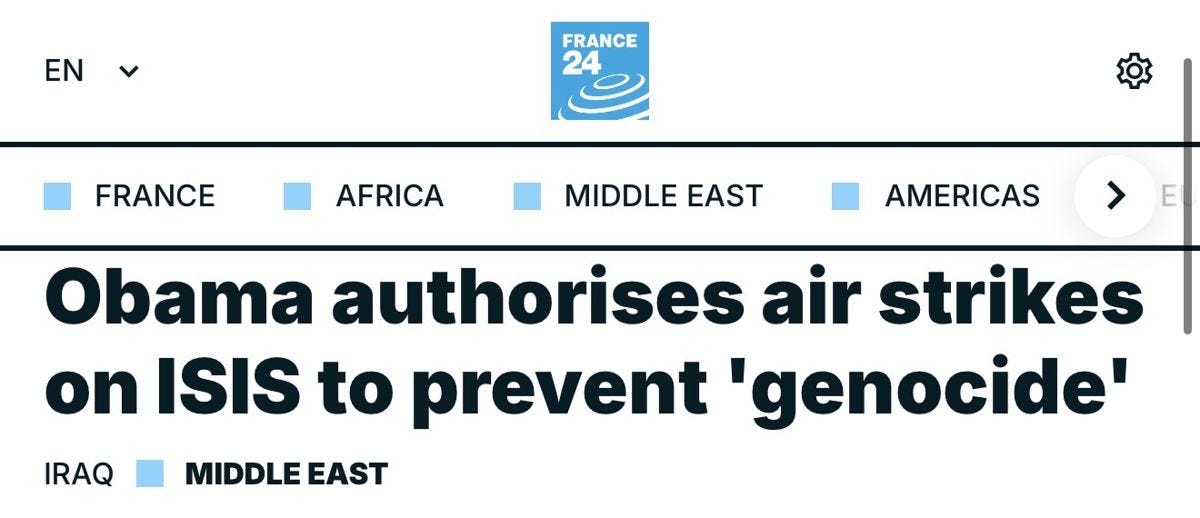
American jets were bombing ISIS the next day.
That was the start of a five-year war.
That’s the implication of genocide.
Another example.
In July 1995, Bosnian Serb forces overran the town of Srebrenica, separated the men and boys from the women, and executed about 8,000 of them for being Bosnian Muslims.
Six weeks later, NATO, which includes America, bombed the Bosnian Serbs for three weeks.
Clinton later called what happened in Bosnia “genocide in the heart of Europe.”
That was a clear case.
There was a written order from the top, then an army that executed 8,000 people in cold blood.
Gaza has polio pauses, evacuation warnings, and food relief coordinated by Israel with aid groups.
El-Sayed said people avoid the word “because of the moral implication of what ought to be done following it.”
Well, one of those moral implications is war with the genocidal actor.
So here’s a question.
Are you sure that Israel is killing Palestinians for being Palestinians?
Because if you’re sure they are, protesting is not enough.
Defunding Israel isn’t enough.
If you sincerely think this is a genocide, then we should be talking about America going to war against Israel.
So can you see how the words we use actually matter?
The levels of hell
All killing is horrible, but we don’t treat all killing the same.
This is why in the justice system, not every killing gets the same charge.
If you attack someone who’s attacking you, it’s self-defense.
But if you use far more force than you needed, like using a gun in a fistfight, in many states it’s manslaughter.
Fire into a crowd without caring who you hit, and it’s murder.
Plan it and do it on purpose, and it’s first-degree murder.
Do it because of the victim’s ethnicity, and it’s a hate crime on top.
War has the same ladder.
A strike on a fighter, with civilian deaths in proportion, is legal.
Firing blindly into neighborhoods with reckless disregard for civilian casualties is a war crime.
Targeting civilians to pressure the combatants to surrender is a war crime.
Targeting civilians because you want to exterminate that population is genocide.
We consider that the very top of the ladder.
Because it’s a hate crime, at the scale of a whole people.
And that’s why the definition reads the way it does: “acts committed with intent to destroy, in whole or in part, a national, ethnical, racial or religious group, as such.”
It’s going out of your way to kill people because they are a member of a people.
Which is why genocide is the most serious accusation, with the most serious punishment.
At Nuremberg, we hanged the men who did it.
NATO bombed the armies that did it.
The description determines the prescription.
The public perception of genocide
But that’s about what the term genocide does in the realm of governments and militaries.
Here’s what it does in the realm of public opinion.
On March 12, 2026, a man rammed his truck into Temple Israel in West Bloomfield, Michigan, and opened fire. More than a hundred kids were in the school.
El-Sayed condemned the attack.
Then he explained it: hurt people hurt people.
But here’s the thing: hurt people don’t all hurt people the same way.
Plenty of hurt people don’t ram trucks into schools to intentionally fire on children.
Plenty of hurt people don’t hide behind their own children.
Plenty of hurt people don’t become terrorists.
But when the narrative is that you’re reacting to a genocide, suddenly people find ways to justify harming their fellow citizens.
Suddenly, “hurt people” are ramming trucks into schools.
Suddenly, “hurt people” are shooting Jews on a beach in Australia.
Suddenly, “hurt people” are shooting two Israeli embassy staffers outside a Jewish museum in Washington.
Now to be clear, none of the implications of the word genocide change whether something is a genocide.
The truth is the truth, regardless of what follows from the truth.
But hopefully you now understand why arguing over whether something is a genocide isn’t “quibbling”.
It’s not a word you get to use because you want people to act.
It’s not a means to an end.
It’s the most powerful accusation there is, and it demands the most rigor possible.
Who is responsible for the deaths?
Now there’s a second thing that the label genocide implies.
And that’s moral culpability.
One of the slogans of the Free Palestine movement is “There are no ‘both sides’ in a genocide.”
Israeli historian Ilan Pappé put it this way last year: “In a genocide, there are no two sides.”
So when people say Israel is committing a genocide, and there are no two sides, what are they saying?
They are saying that Hamas’ actions don’t matter.
They are saying there is only one morally culpable side: Israel.
They are saying that it doesn’t matter that Hamas uses civilians, in its own words, as human shields.
It doesn’t matter that they wear civilian clothes, use civilian areas, or tell civilians to ignore evacuation warnings.
They are saying the only thing that needs to stop is Israel.
They are saying anything Hamas does is because Israel made them do it.
They are excusing anything Hamas does, even if Hamas does it to its own people.
Abdul El-Sayed is right: there is a moral imperative to stop this calamity.
And that moral imperative applies to both Hamas and Israel.
And if we accept the statement “there are no both sides in a genocide”:
Genocide means responsibility applies to just one side. Israel.
That’s why the word genocide matters.
That’s why it’s not a quibble.
That’s why you shouldn’t use the word without being extremely confident that it’s true.
Abdul El-Sayed says the word speaks to a moral imperative for action. And that if you wait to use it, it loses its power.
And mission accomplished. It does make people act.
But it makes them only act in one direction: against Israel and away from Hamas.
To see the practical implications of this, ask yourself:
How many anti-Hamas rallies have you seen in the West?
How many prominent leaders have you seen condemn Hamas, the organization, and not just October 7?
Hasan Piker is one of the most prominent figures in the Free Palestine movement.
In January, protesters outside a Queens synagogue chanted support for Hamas.
Piker’s response: “hamas is a thousand times better than the fascist settler colonial apartheid state.”
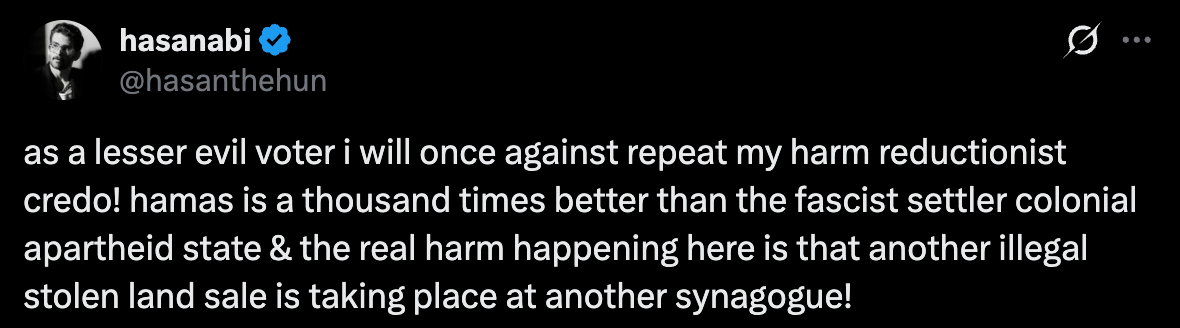
In an interview, he said Hamas’s tactics are “secondary to the conversation.”
As a reminder, those tactics include putting military infrastructure in civilian neighborhoods, encouraging Palestinians to act as human shields, telling Palestinians to ignore bombing warnings, and, according to families in Gaza, killing Palestinians for protesting.
Zohran Mamdani sat for an interview on Piker’s stream during his primary. Piker was in the front row at his biggest rally, and at his victory party.
Abdul El-Sayed held campaign rallies with Piker across Michigan this spring, and Piker campaigned with him before the primary.
And the New York Times published a feature fawning over him.

The movement’s leaders don’t run from him. They run with him.
Now, they occasionally condemn Hamas in extremely limited ways.
Zohran Mamdani, the most prominent politician in this movement, called October 7 a horrific war crime and stopped there.
He has never called on Hamas to disarm or give up power.
Asked twice on television whether it should, he said he doesn’t have opinions about the future of Hamas.
When protesters in his own city chanted “we support Hamas” outside a synagogue, it took him a day to respond. When he did, he called Hamas a terrorist organization without saying its name.
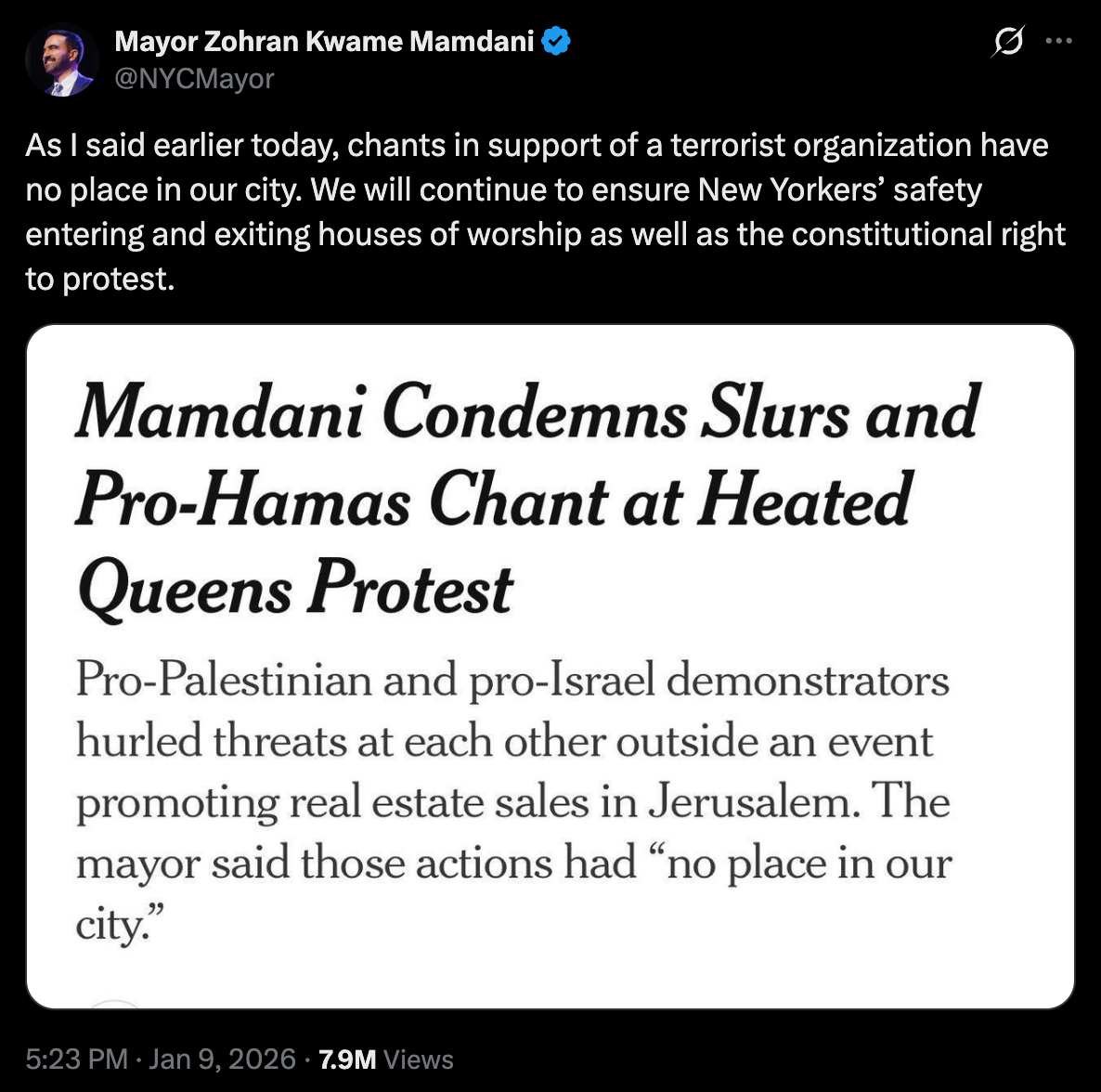
But he was more than willing to call Israel genocidal and an apartheid state without being asked.
We see anti-Israel protests everywhere, including inside Israel, where hundreds of thousands have marched against their own government.
Do you know where the only pro-Palestinian, anti-Hamas rallies happen?
In Gaza.
In March 2025, Gazans marched chanting “Hamas out.”
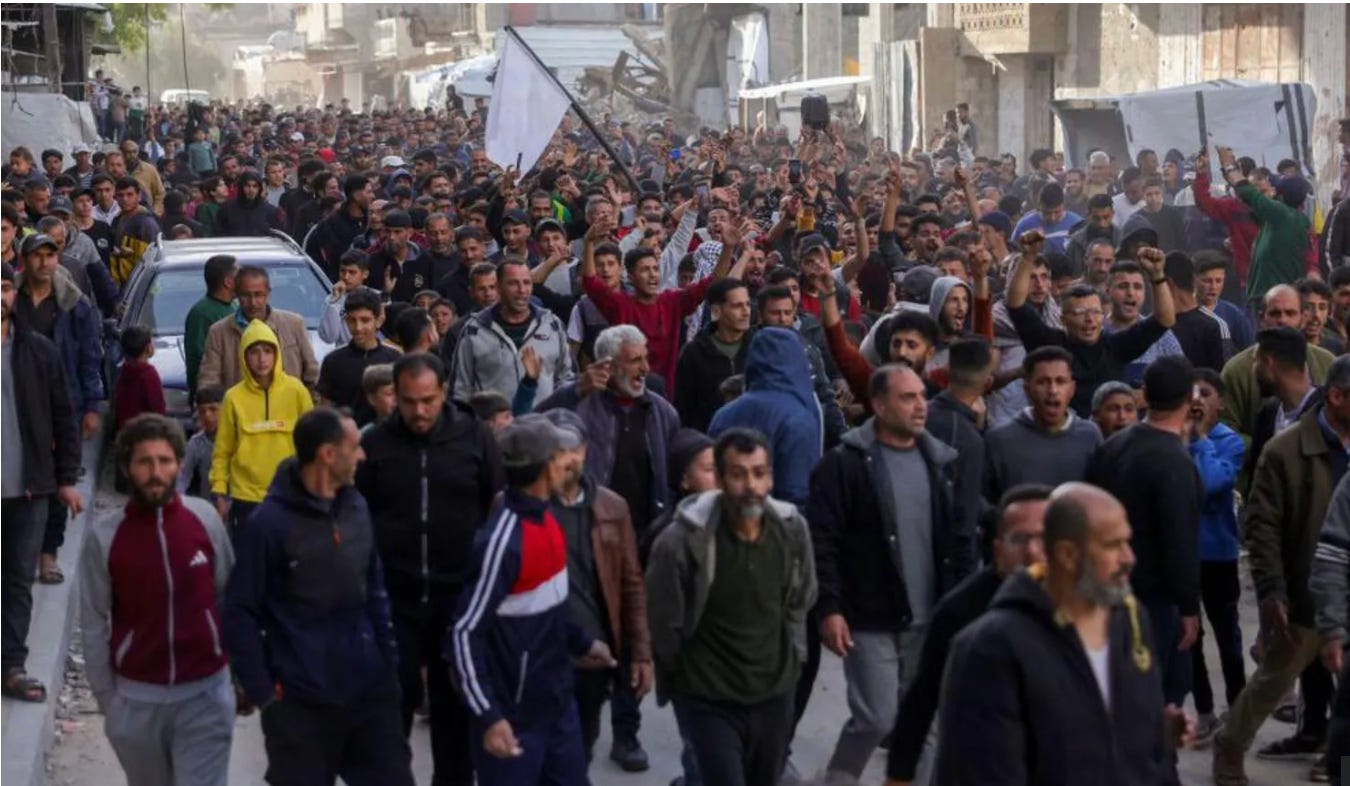
They risked their lives to do it.
A 22-year-old named Oday al-Rabay was found dead outside his family’s home after joining them.
His family says Hamas tortured him to death.
So some of the people with the most reason to fear Hamas said it out loud.
The people with the least reason, in the West, won’t.
Because to them, in a genocide, there are no two sides.
Now there are exceptions.
At least Abdul El-Sayed said Hamas is evil. He said it on CNN in April. “Hamas: Evil. Israeli government: Evil. We can say both.”
Credit to him. In this movement, that’s exceptional.
And unfortunately exceptionally rare.
Genocide = resistance movement
When El-Sayed, or Macklemore, or Zohran Mamdani say genocide, they are pointing people toward Israel and away from Hamas, whether they know it or not.
They could say what Israel is doing is excessive.
They could say Israel is committing war crimes in a war against Hamas.
They are not saying that.
They say Israel is genocidal.
They are saying Israel wants to kill Palestinians because they’re Palestinian.
And to many people in the public, it justifies anything Hamas does.
And we can see that in how many people describe Hamas as a “resistance movement.”
Gandhi’s movement was a resistance movement.
Martin Luther King’s was too.
The French Resistance. The Warsaw Ghetto fighters. Solidarity in Poland. Ukraine today.
Even armed ones. The Black Panthers carried rifles.
Which of those resistance movements told their own people to stand on rooftops as human shields, while they hid in tunnels?
Which of them walked into a music festival to kill, rape, and kidnap unarmed civilians?
The Jews of the Warsaw Ghetto were the victims of an actual genocide.
When they fought back, they shot at soldiers.
We have a word for movements that are aimed at civilians.
That word is terrorist.
Calling Israel genocidal, and Hamas a resistance movement against genocide.
It makes everything Hamas does a necessary response.
So maybe Israel is committing a genocide.
But given the implications, are you sure?
“But the experts said it’s a genocide.”
So now let’s consider the substantive question. Is this a genocide?
Experts did say what’s happening in Gaza is a genocide.
Some of them.
The UN Commission of Inquiry said so in September 2025. Amnesty said so in December 2024.
And on the other hand, this month a letter rejecting the genocide charge was signed by Harvard’s Steven Pinker, Niall Ferguson, and other prominent scholars.
So the experts disagree.
And when the experts disagree, “an expert said so” is not a reliable argument.
You have to think from first principles, not defer to a group.
Because groups are susceptible to groupthink.
Institutions get captured. We’ve all watched it happen.
Smart people can stop thinking independently when the tribe becomes more important than the truth.
And when it comes to Israel, there is special attention placed on them far beyond other countries, and that’s been the case since long before the current conflict.
The UN Human Rights Council has a permanent agenda item, Item 7, dedicated to Israel. It’s been there since 2007.
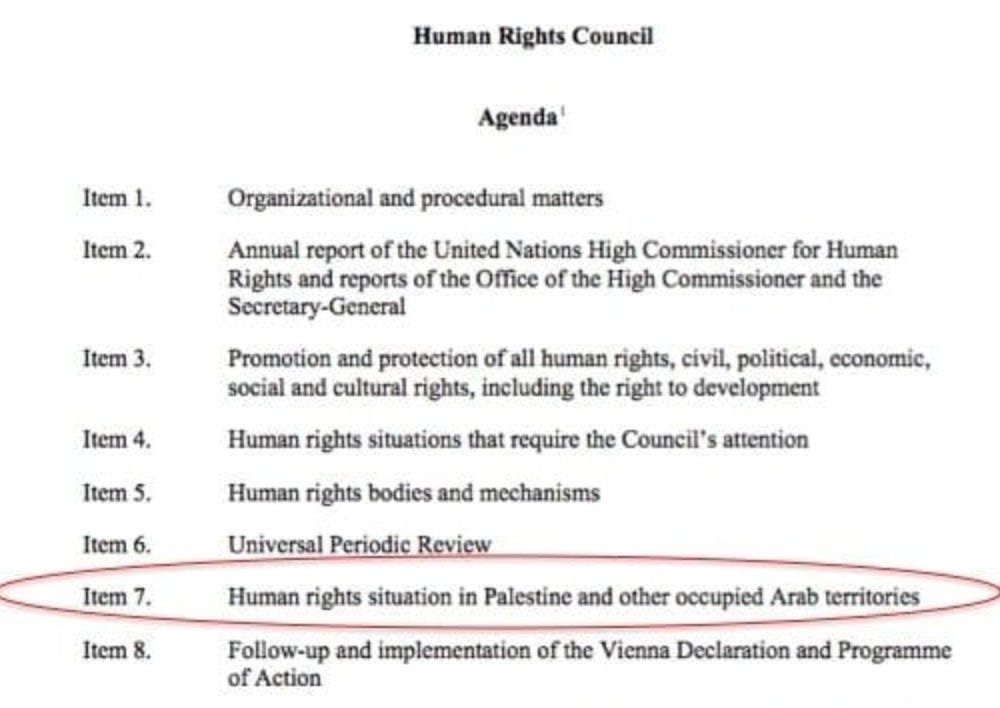
No other country on earth has one.
Not Sudan, where the world watched a genocide in Darfur in 2003, charged its president with genocide in 2010, and watched another begin in 2023.
Not North Korea, where the UN’s own commission found crimes against humanity in 2014, in camps holding up to 120,000 people.
Not Russia, which poisons its critics, flattened Chechnya, bombed hospitals in Syria, invaded Ukraine, and whose president has an ICC warrant for deporting Ukrainian children.
So “the UN said” has to be weighed like everything else.
So how certain do you need to be to assign the genocide charge?
Here’s the standard the ICJ set. The ICJ is the judicial body of the UN.
And it’s a good standard, regardless of whether they abide by it.
When intent has to be inferred from conduct, genocidal intent has to be the only reasonable inference.
Not a reasonable inference. The only one.
That bar is high on purpose, because genocide is the most serious charge there is.
It’s not enough to say that Israel’s actions can be reasonably explained as genocidal. You need to prove it’s the only reasonable explanation.
So when a country pauses its bombing so half a million kids can get polio vaccines, is the only reasonable inference that it’s genocidal?
When a country coordinates with aid organizations to allow food into a population, is the only reasonable inference that it’s genocidal?
When a country warns civilians to evacuate before it strikes, is the only reasonable explanation that they are genocidal?
It’s not unreasonable to think that Israel is committing a genocide.
It’s unreasonable to be certain that they are.
From here, you’ll learn:
The five statements from Israeli officials most often cited as proof of intent, and the three questions that test whether words amount to genocide.
What the only genocide the world court has ever confirmed looked like, and how it compares.
Why the casualty ratio everyone argues over can’t settle this, no matter whose number you use.
What Palestinian pollsters in Ramallah found about support for October 7, then and now.
The question to ask yourself if you still insist on the word.
