


Since Operation Epic Fury began, Israel has conducted a series of strikes that raise a question most people aren’t asking carefully enough.
They struck South Pars - the largest natural gas deposit on earth.
They released evacuation maps warning civilians near pharmaceutical companies in Tehran’s Vardavard district - and then struck them.
After the gas field strike, Trump posted on Truth Social that “the United States knew nothing about this particular attack,” and described Israel as having “violently lashed out out of anger.”
Taken at face value, these are not the words of a president whose ally is executing a shared playbook.
And yet, the public conversation about Israel’s role in this war is stuck between two caricatures.
On one end: Israel is the invisible hand behind everything, and the war is really about them, and America is controlled by Israel.
On the other: any criticism of Israel is disloyalty to an ally, and their interests are indistinguishable from ours.
Both positions are lazy. And they’re preventing a conversation that Americans need to have.
Israel and the U.S. share most of the same goals in Iran.
They do not share all of them.
And the gap between “most” and “all” is where potential problems live.
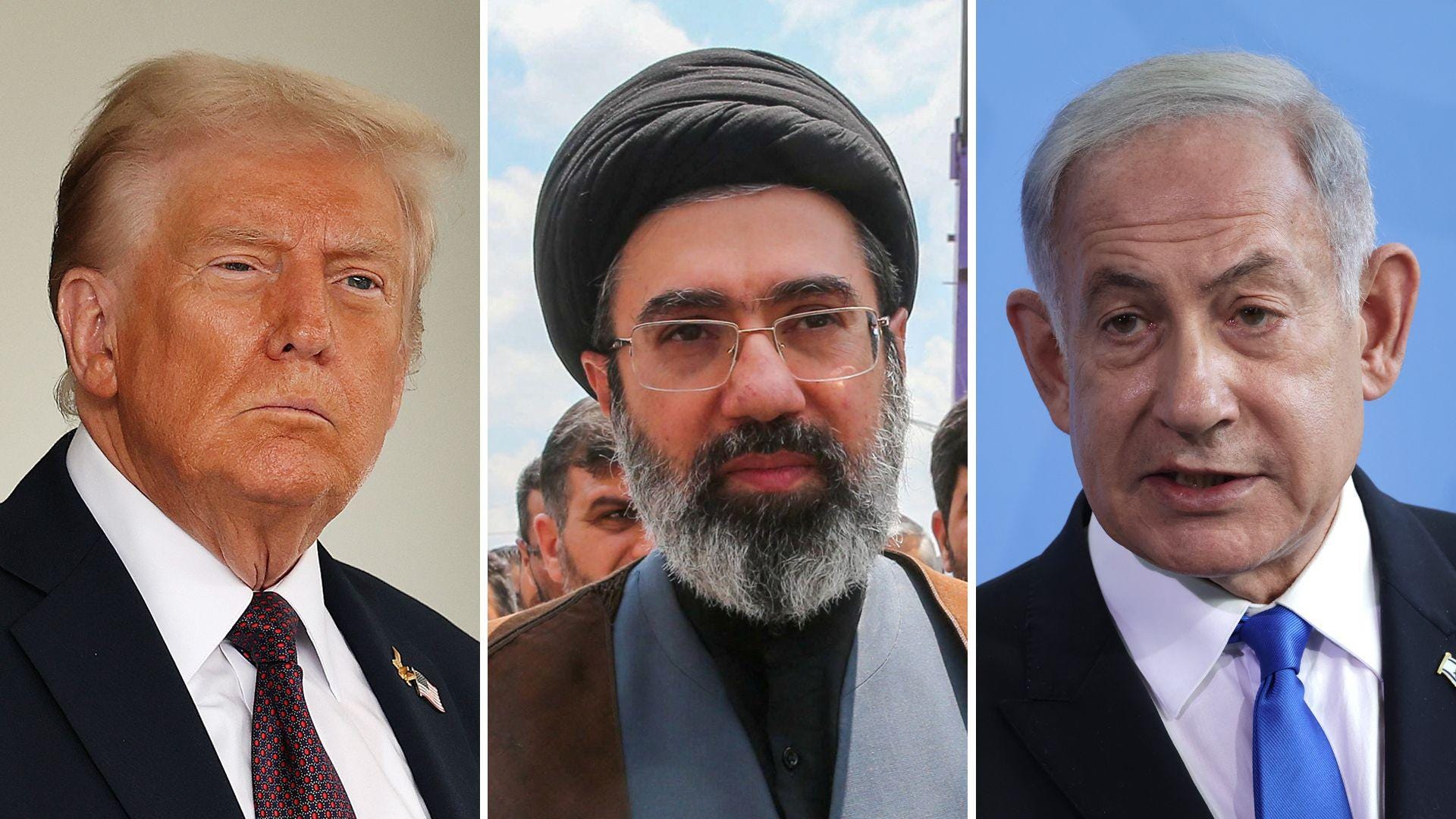
America’s goals
On March 2nd, Trump stated four objectives:
Destroy Iran’s missile capabilities
Annihilate their navy
Remove their support for terrorists like Hamas
Make sure they can never get a nuke
He restated these same objectives in his prime-time address on April 1st, and added: “Regime change was not our goal. But regime change has occurred because of all of their original leaders’ death.”
The leadership of the Islamic Republic has been decimated - Khamenei is dead, dozens of senior officials are dead. But the regime itself is still in place. Its old leadership isn’t.
But Trump’s framing reveals something important: he wants to be able to claim credit for regime change without committing to it as an objective.
Every American president since Carter has wanted the Islamic Republic gone.
But wanting regime change and making it a strategic objective you commit resources to are fundamentally different things.
I can want to run a marathon without training for one.
Wanting is free. Objectives cost something.
What Israel is doing and why
Israel’s objectives cost something too - and they’re willing to pay more than we are.
Netanyahu has made it clear that he’s not just wishing for regime change. He’s prioritizing it as an objective:
February 28, day one of the war: “This will create the conditions for the brave Iranian people to rid themselves of the yoke of tyranny.”
March 12 press conference: “We are creating the optimal conditions for a toppling of the regime.”
Same press conference: Israel has “an organized plan with many surprises to destabilize the regime, to enable change.”
Regime change is not a wish for him, it’s a commitment.
And that distinction - between wanting something and building a plan to achieve it - is where American and Israeli interests diverge.
Israel’s perspective
As mentioned - there is a gap between American and Israeli interests. This is normal - alliances are built on aligned, not identical, interests.
Understanding what those interests are, how they diverge, and what the rational implications of that divergence are, helps us immunize our minds against excessive conspiracism on one extreme, and naivete on the other.
So to understand the gap, let’s examine Israel’s interests by constructing a good faith argument, or “steelman” of their perspective.
To be clear - I’m not interested in telling Israel what to do. They live next door to a regime that has promised to destroy them. Their security calculus is their own.
I’m also not Israeli, and thus have a limited understanding of their perspective, so this will be incomplete.
But at minimum it will be a demonstration of what careful, critical thinking looks like, rather than the hysteria we see on social media.
The South Pars gas field strike. Israel’s interests:
Cut Iran’s energy revenue
Starve the regime of cash,
Accelerate its collapse.
South Pars supplies roughly 70% of Iran’s domestic gas production. Striking it cripples the economy and creates the kind of internal pressure that could contribute to regime collapse.
This is a legitimate strategic argument - for Israel.
There is mixed reporting on whether the U.S. was on board with the strikes - Israel said the U.S. was aware, a Department of War official said they were aware, but Trump himself called it unauthorized.
Someone is either lying or misinformed, but let’s take Trump’s public statement at face value, because at minimum it’s useful for thinking about where America and Israel’s priorities diverge.
Iran retaliated by striking Qatar’s Ras Laffan facility, which shares the same geological formation as the site Israel struck, taking out 17% of Qatar’s liquid natural gas capacity.
Analysts estimate it will take 3-5 years to repair - a significant blow to global energy markets.
Oil surged past $110.
An ally’s action triggered retaliation against another ally and spiked costs for American consumers.
It also risks alienating the Iranian people - many of whom support American-Israeli action.
Attacking an energy source that civilians and militants rely on is harder to stomach for an already suffering people than just targeting military infrastructure.
The pharmaceutical strikes.
Israel released aerial evacuation maps warning civilians near pharmaceutical companies in Tehran’s Vardavard district before striking them. The evacuation maps confirm intent - this was likely not collateral damage.
The steelman of the Israeli perspective is that these facilities might be dual-use - both for civilian and military purposes.
Pharmaceutical production can involve chemical precursors relevant to weapons programs.
So from the Israeli perspective - they may have degraded a potential chemical weapons capability while minimizing civilian harm.
But which of Trump’s four objectives does bombing a pharmaceutical company serve?
It doesn’t destroy missiles.
It doesn’t sink ships.
It doesn’t defund proxies.
It doesn’t prevent a nuclear weapon.
What it does is degrade Iran’s ability to function as a society - which serves regime change, not America’s stated goals.
This is the pattern. Actions that make sense under a regime-change objective but don’t map onto any of the four objectives America has stated.
The risk calculus
Here’s what I think both critics and defenders of Israel miss.
The critics say Israel is “dragging us into war” or “controlling America.” This gives Israel far too much credit and America far too little. The United States is the most powerful country on earth. We supply a large portion of Israel’s weapons, and give them diplomatic cover.
If Israel is doing things we don’t want, it’s not because they’re controlling us - it’s because we’re allowing it. We have more power in the dynamic.
The question is whether we’re clear-eyed enough to use it.
The defenders say Israel’s interests and ours are identical, and any daylight between us weakens both. The error of this thinking is that it makes American interests subordinate to Israeli ones by default.
Our interests overlap substantially. But overlap is not identity.
A doctor and a patient both want the patient healthy, but the patient might want painkillers the doctor won’t prescribe.
The patient will always have a higher tolerance for risk, because they are the one suffering the most.
The real framework is simpler than either side admits. Israel and the United States are allies with overlapping but non-identical interests, operating under different threat perceptions, with different risk tolerances, pursuing different levels of ambition in the same theater.
On the four objectives Trump stated, we’re aligned.
On regime change, we’re not. And every Israeli action that serves the fifth goal at the expense of the first four is an action that costs the United States - in credibility, in diplomatic leverage, in oil prices, in allies like Qatar taking damage they didn’t sign up for.
Mind the gap
I’m not interested in opining on what Israel should do right now. They live next door to a regime that has promised to destroy them. Their security calculus is their own.
But as an American, my concern is American interests.
And there is a category of Israeli action in this war - targeting civilian infrastructure and striking energy facilities that trigger retaliation against our own allies, specifically for regime change - that falls outside the objectives our president stated and restated.
That is the gap that Americans should mind.
Now let’s explore what may be going on in Trump’s mind.
What Trump actually thinks
This is the question nobody can answer with certainty, but it matters more than almost anything else in determining how this war ends.
