


America just turned 250. Clear Thinker turns 2 today. Become an annual member at 30% off forever - for the first 500 subs. Join here. Offer ends July 14 (extended by 1 day).
On October 31, 2024, I went to a Trump rally and a Kamala rally. On the same day.
By that point I was at the end of a months-long journey. I had voted for Democrats all my life, but had come to believe Trump was the best choice in 2024.
I wanted to do one last thing before locking in my vote — go to a Trump rally and see the community for myself.
It confirmed my suspicion. This was not the white-supremacist red-hat fan club the media told me to expect.
It was a passionate, positive, surprisingly funny group of people.
By comparison, the crowd at the Kamala rally seemed energized, but fearful and negative.
Not quite a year later, I attended Charlie Kirk’s memorial at State Farm Stadium in Glendale, Arizona.
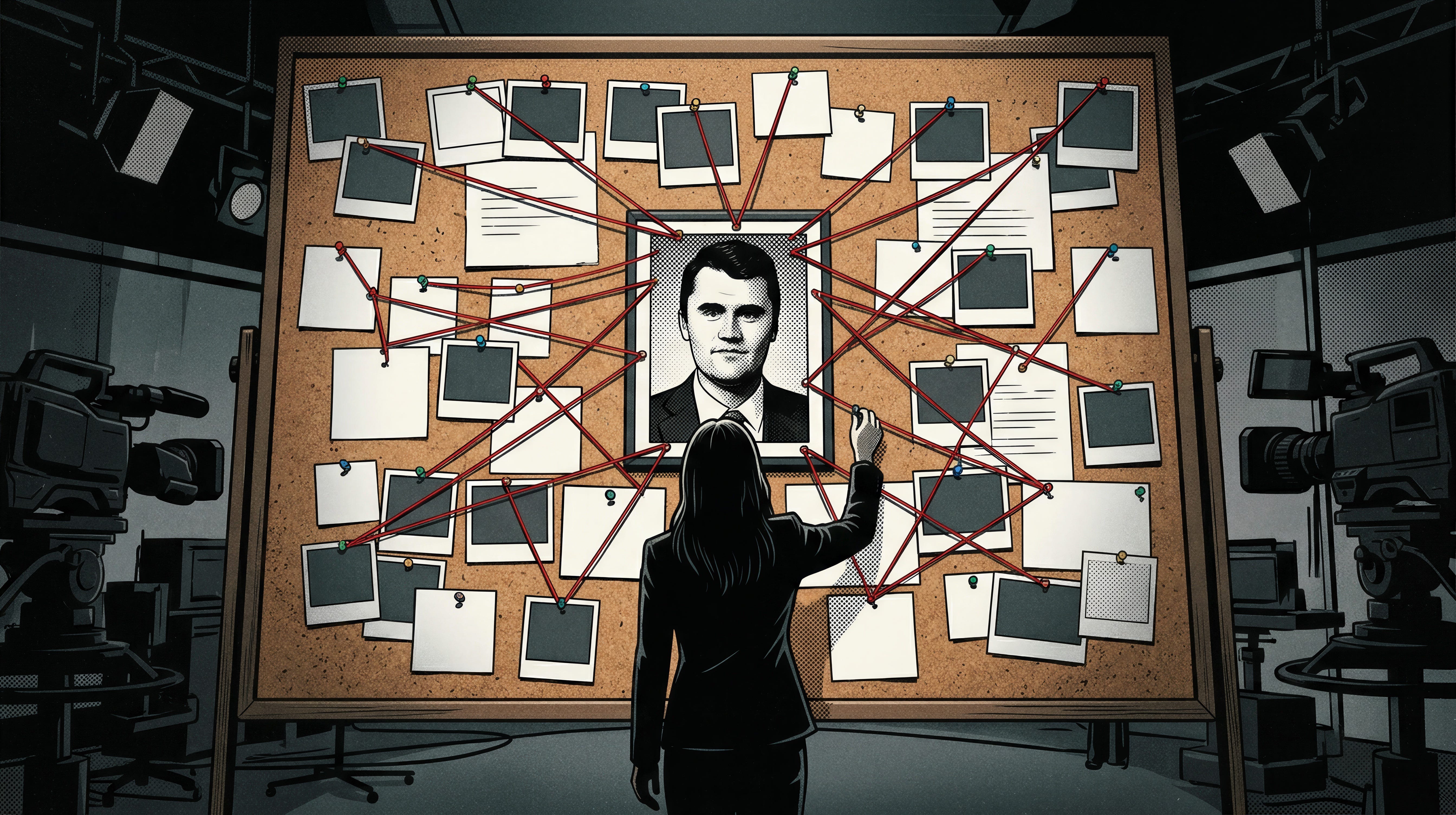
I wasn’t very familiar with Charlie’s work before he died. A year prior, I’d assumed he was a typical right-wing commentator making “own the libs” content, and that his shtick was embarrassing college students for views.
It was only after he died that I began to appreciate what he was trying to do — steer a frustrated, desperate generation of young people (facing a brutal job market, massive student debt, and astronomical home prices) away from bad ideas that have destroyed civilizations.
How prescient he was, considering the current rise of socialism.
And he was doing it with nothing but the force of good ideas, freely spoken.
He did so imperfectly, but successfully. And he seemed to be one of the few leaders even trying.
It was the malevolent glee of those who celebrated his death — along with the distortions of his more controversial opinions — that made me look at his work in long form, with fresh eyes, to see for myself if he was as bad as people said.
He was not. In fact — I concluded — he was a very good man attempting a very difficult thing.
So going into the memorial, I suspected I was walking not into a neo-Nazi rally, as social media would have me believe, but into something different.
What, I didn’t yet know.
What I experienced was an inspiring surprise.
Charlie’s death was catalyzing healing.
JD Vance proclaiming his faith in Jesus Christ.
Trump and Elon making amends after a public falling out.
Erika Kirk forgiving her husband’s killer.
Less prominent speakers echoed her message.
Repeatedly emphasizing that Charlie put Christ at the center of his life.
For the most part, this was not a rally about taking an eye for an eye.
There were speeches I disliked.
Stephen Miller’s I found unhelpfully aggressive — a swordsman looking for someone to swing at.
I was disappointed by Trump’s admission that he hates his enemies, amused by his candor, and slightly heartened when he said maybe Erika could teach him not to.
I left inspired to go back to church, to double down on seeking and speaking truth, and hopeful that the Right would take cues from these leaders by turning the other cheek — and turning toward problems, not against people.
Candace’s Investigation
My hopes for that moment were dashed in the months that followed.
Before I continue, I want to make it clear: this is not meant to be a personal attack on Candace. It is an attack on her methods, which I think are bad, and the results they are producing, which are also bad.
I’m not interested in influencer infighting, character attacks, or speculating about her motives. None of those are things that anyone can verify, and I prefer to stick to what we can verify.
Five days after Charlie died, Candace posted an episode titled “They Are Lying About Charlie Kirk.”
Within days, she started implicating Netanyahu and Israel in Charlie’s death.
Within weeks, Turning Point.
Within months, Erika Kirk.
I suspected early that something was off in her analysis. Too much emotion. Too many appeals to intuition. Too little patience for boring explanations.
But… maybe she was right? I thought. I respect Candace’s skill as a speaker. I respect her courage. She cited names and events I didn’t know. She was tracking Israel more closely than I.
Maybe she knew something I didn’t?
But it’s said you will know a tree by its fruits. And the fruits of her arguments were rotten.
A pattern of claims that didn’t survive scrutiny, and a habit of personal attacks.
So I started looking at the tree.
It turns out the roots of her argument weren’t good either.
I decided that if I was going to examine her claims — and potentially speak on them — I wanted to do it right. So I spent over 20 hours on just a few of them. I shared the results here.
What I found was a mess of unscientific thinking. She gathers receipts, but doesn’t read them rigorously.
And the deepest pattern was this: when she couldn’t explain something readily, she filled the gap with low-quality explanations — and among all the possibilities, she reliably emphasized the most complex, most inflammatory, most nefarious one, while deemphasizing, missing, or ignoring the boring ones that are usually true.
In philosophy terms, she was failing to apply:
Occam’s Razor: the explanation requiring the fewest assumptions is usually the right one.
Hanlon’s Razor: don’t assume malice when incompetence will do — because across enough cases, incompetence explains far more than malice.
It didn’t read like probabilistic thinking — weighing a range of possibilities against each other by likelihood. It read like a narrative: whichever version made the best story was the one that led.
Which is excellent for viewership. And useless for finding the truth.
It’s harder to refute BS than to create it.
To help you see what’s so wrong with what Candace is doing, I want to first introduce you to one of my favorite laws.
It’s called Brandolini’s Law — the bull**** asymmetry principle. Coined by an Italian software engineer named Alberto Brandolini in 2013:
“The amount of energy needed to refute BS is an order of magnitude bigger than that needed to produce it.”
It’s ten times harder to clean up than to spill.
This matches my experience. It took me over 20 hours to properly examine one hour of Candace’s claims.
She has posted well over a hundred episodes since Charlie died, most of them about Charlie.
To casual observers this seems like a job well done. But it’s actually indicative of the opposite. Her level of output is the problem.
A real investigation is never drip-fed daily. For the same reason a scientist doesn’t publish her results while she’s still running the experiment.
You gather the data.
You analyze all of it.
You subject it to peer review.
Then you publish — once — and stake your name on it.
Why? Because early findings get overturned by later ones.
Publish as you go, and you will inevitably broadcast things that seem true on Monday and are false by Friday.
Multiply that by a hundred episodes and it becomes impossible — for the audience, for critics, even for the host — to track what was claimed, what quietly died, and what was ever corrected.
One example: for weeks in late 2025, Candace pushed a theory that Egyptian planes had been tracking Erika for years — dozens of location “overlaps,” flight-tracker screenshots, a coincidence probability she put at basically zero. Then people pulled the actual flight logs, and it fell apart — a large share of the “overlaps” simply didn’t hold up.
She later conceded on air that the way the data had been presented led people to overstate things.
But she didn’t retract the underlying theory.
She doubled down hard: she claimed the planes were actually flying in and out of Israel, that the panic over the theory proved it was true, and that the real story was the Israeli connection.
She frequently frames critics as Zionists or paid Israeli shills rather than addressing the data.

When presented with contradictory data, she regularly misinterprets it — intentionally or not, I don’t know.
And you don’t have to go digging to find examples. Here’s part of a tweet from just three days ago — and this one you can check yourself in two minutes.

But here’s the problem — that’s not what Lance Twiggs, Robinson’s roommate, said.
Per the AP, Twiggs said that Robinson “sometimes talked about politics, including Trump,” and that he “did not talk much about gender issues or LGBTQ rights.”
Lance: “Sometimes talked about politics, including Trump” | Candace: “wasn’t political.”
Lance: “Did not talk much” | Candace: “didn’t ever.”
These are substantive differences — what Candace said simply is not accurate.
The interview is public. You don’t need her, or me, to interpret it for you. You can just read what he said.
This is why professional investigations run on three principles that sound boring and exist for very good reasons.
Slow — because complex evidence takes time, and new information invalidates old conclusions.
Private — because publishing mid-stream contaminates the case. It attracts fame-seeking tipsters. And it tempts the investigator to serve the audience instead of the truth.
Done in teams — because peers catch the biases no individual can see in themselves.
Slow, private, and peer-checked also means boring, unmarketable, and unprofitable.
In other words: the exact opposite of a Monday-through-Friday livestreamed investigation with audience tips, sponsor reads, and a merch store.
About those incentives
To be clear — this is not an accusation about her motives. I also make money researching and opining. I believe you can maintain integrity while making money as a commentator.
But I can tell you from experience: it is extremely difficult. And staying unbiased is nearly impossible.
Think about the position. Your livelihood depends on people’s opinions of your opinions.
Your sense of career progress is tied to income and follower count.
Contradict your audience too hard, you risk both.
Make a mistake, you lose trust.
Tell the truth too boringly, you lose attention.
It’s a brutal balancing act.
Frankly, it’s why I’ve avoided hosting a daily show. A three-minute video can take me five hours — much of that spent checking my own biases, trying to be opinionated while staying honest and fair.
The more content you must produce, the harder that bar is to hold.
What the courtroom just told us
Last week, Tyler Robinson’s preliminary hearing ran five days in a Provo courtroom — the first time this evidence left the world of podcasts and entered the world of oaths.
Start with the claim Candace’s camp hung its hat on for ten months: that a .30-06 round could not have hit Charlie’s neck without passing through — so the story must be a lie, wrong gun, second shooter.
On July 9, an ATF forensic examiner named Samantha Karner — a federal specialist with no connection to Turning Point, called to the stand by Robinson’s own defense — testified that the bullet recovered from Charlie’s body during the autopsy broke into multiple fragments consistent with a .30-caliber / .30-06.
So there it is, from a source under oath.
The bullet stayed in the body. It fragmented. And it was the caliber officials named from the start.
The fragmentation also quietly answers the question that launched a hundred episodes. How does a beast of a bullet stop inside a neck? A bullet that breaks into multiple pieces has dumped its energy inside the body — which is exactly what certain bullet types are designed to do. No man of steel required. No second rifle required. I identified this possibility months ago.
I mention this not as a victory lap, but to point out — anyone could have considered this possibility months ago, including Candace.
But she fixated on the explanation that matched her pre-existing suspicion.
When asked whether the fragments came from the specific rifle found in the woods, Karner would not say yes.
The comparison was inconclusive — the fragments were too deformed to carry enough unique markings.
Pressed on it, she stood her ground: “Saying anything but inconclusive was inappropriate.”
That is what a real investigation sounds like. Say what you know. Leave what you don’t know unconfirmed. Don’t speculate to fill the gap.
Candace, ten months in: there must be a second shooter, a planted gun, and Erika Kirk is complicit.
The examiner, under oath: the bullet was consistent with a .30-06, it cannot be tied to this specific rifle, and that is all we know.
One of these methods finds the truth. The other keeps an audience.
Behind the paywall: everything else five days of testimony established — the rooftop video, the rifle’s family history, the DNA, the engraved casings, the note, and what his own parents did.
Plus five questions that tell you — about any investigation, anywhere — whether you’re watching truth-seeking or theater.
What five days in court established
Here are some of the other key findings from the hearing. And note — this is evidence submitted in a courtroom, much of it under oath — meaning the people submitting it have strong incentives to tell the truth. Some of this information we knew before, but what’s new is that it was submitted as courtroom-tested evidence.
