


My journey talking about politics started on July 13, 2024. The day Trump got shot in Butler, Pennsylvania.
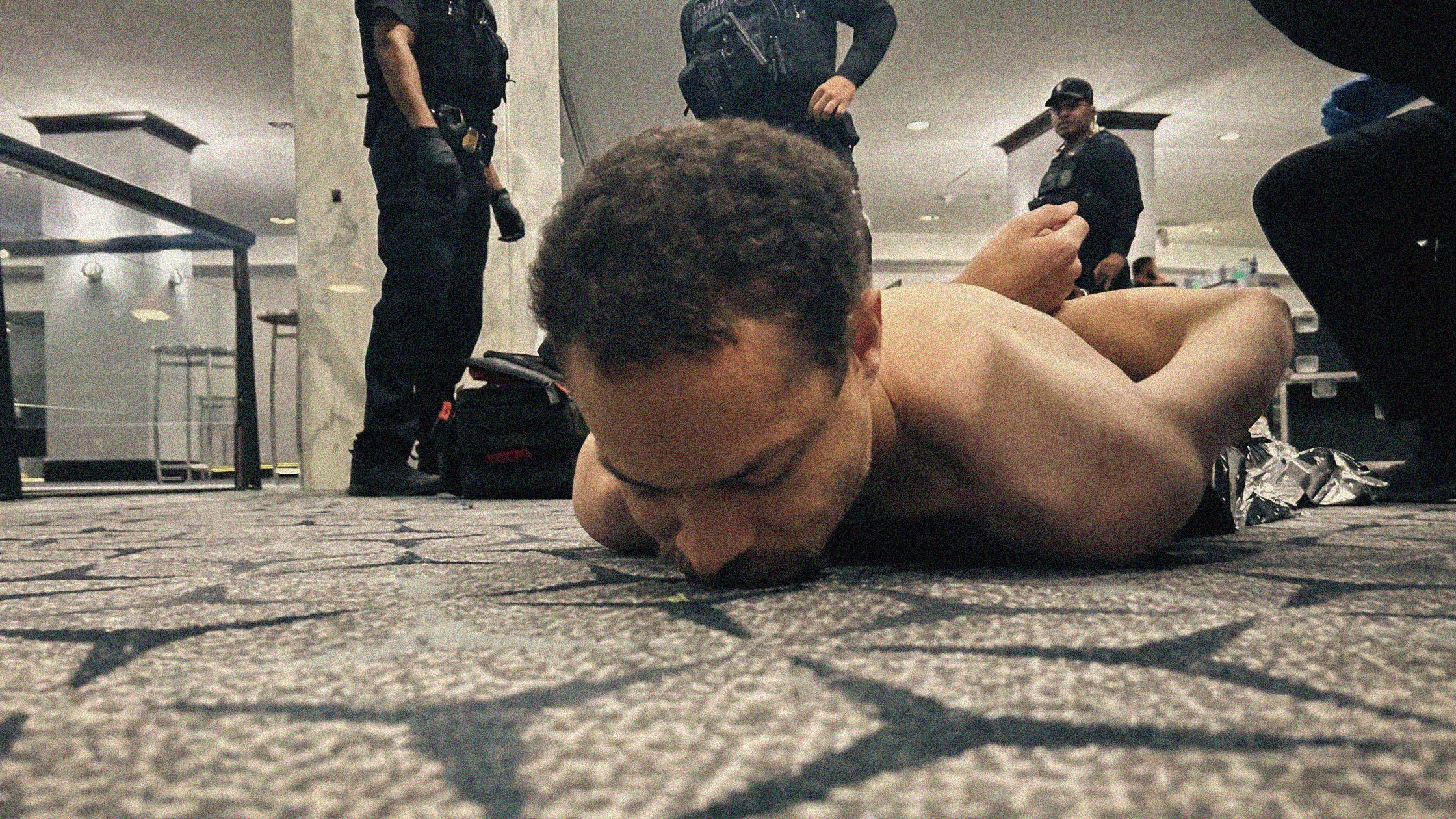
Twenty-one months later, I’m writing about another assassination attempt on Trump. The shooter this time was Cole Allen, 31, from California — a man who donated to Kamala Harris, attended No Kings protests, and posted anti-Trump rhetoric for years. He showed up to the White House Correspondents’ Dinner with a shotgun, a handgun, and three knives, sent his family a manifesto calling himself the “Friendly Federal Assassin,” and shot a Secret Service agent in the chest. The agent survived because of his vest.
I almost didn’t write this piece. To be honest, it feels like the same story, different day.
We’ve made no cultural progress on understanding the political violence problem since July 13, 2024.
None. People are getting their emotional hits from the news cycle, scoring points for their team, and moving on. There’s no introspection. No deeper reflection on what any of this is reflecting about us.
But here we are again. So let me try.
The cafe lady
On Sunday morning, I was in a cafe in Venice, California, looking for a breakfast burrito when I overheard a server say:
“Did you hear about what happened at that dinner? It was so staged.”
I doubt she formed that conclusion based on facts. I doubt she knew Cole sent his family a manifesto minutes beforehand. I doubt she knew his family tried to turn him in. I doubt she knew he donated to Harris and posted anti-Trump rhetoric for years. I doubt she thought through the obvious problem with the staging theory — if it was staged, why was Cole stopped in the lobby instead of being allowed into the ballroom for the photo op?
She did what most people do in this era of confusion: reject reality the moment it benefits the other side.
This is the disease we’re living through. The first lens through which we filter political violence is no longer “what happened.” It’s “is this useful to my tribe.” If the shooting helps us, it’s real. If the shooting hurts us, it’s staged. The facts don’t change. Our willingness to accept them does.
The data
Both parties have held the title of “most violent” at different points in American history. Right now, the left holds that dubious distinction.
By mid-2025, incidents of left-wing political terrorism outnumbered right-wing for the first time in over thirty years. The historical baseline is the opposite — right-wing attacks have killed far more people over the past decade.
But the recent trend is real, and most of the high-profile political assassinations and assassination attempts in recent memory have targeted figures on the right:
July 2024 - Trump in Butler
September 2024 - Trump at his West Palm Beach golf course
December 2024 - UnitedHealthcare CEO Brian Thompson
September 2025 - Charlie Kirk
April 2026 - Trump at the WHCD
The notable exception: Minnesota Democratic state representative Melissa Hortman was assassinated in June 2025, likely by someone right-leaning.
But it’s not just the high-profile incidents. It’s the cultural soil they grow in.
Forty-one percent of voters under 30 said the killing of UnitedHealthcare’s CEO was “acceptable.” Half of college students view Luigi Mangione favorably. Twenty-eight percent of self-identified liberals supported his murder. Nearly forty percent of young Americans now say political violence is acceptable in some circumstances, according to the Harvard Youth Poll.
There’s something particularly destabilizing about political violence. Trump’s life isn’t worth more than the common man’s — but it has a greater impact on society. Because the moment we start resolving political disagreements through assassination, the entire premise of civilization falls apart. Civilization is the agreement that we replace bullets with ballots. Every act of political violence is a vote against that agreement.
What I see
I live in California. I’m in liberal circles.
Days after Trump was shot in 2024, an acquaintance told me she had no sympathy for him because he was “not even human.”
That was said in earnest, days after a man was shot in the head in front of an American crowd.
I also met a young woman from the United States while I was in Osaka who said “Trump and JD Vance need to die”.
And yet
These are expressions of casual attitudes about violence at best, and active malevolence at best, from the left.
But we can’t speak seriously about the left’s attitude toward violence without addressing what the right has done with violence against the left.
When Nancy Pelosi’s husband was beaten with a hammer in their home, Trump made it the punchline of campaign rallies.
When Ilhan Omar was attacked at a town hall earlier this year, Trump suggested she staged it.
And in December 2025 — less than four months before the WHCD shooting — Rob Reiner and his wife Michele were stabbed to death in their Los Angeles home, allegedly by their own son.
Less than 24 hours later, Trump posted on Truth Social that Reiner died “reportedly due to the anger he caused others through his massive, unyielding, and incurable affliction with a mind crippling disease known as TRUMP DERANGEMENT SYNDROME.”
None of this justifies actual physical violence against Trump.
But the question I want to ask the right-leaning readers honestly is: do you see the cycle?
Do you see how it’s counterproductive to getting the left to take violence against the right seriously when Trump team mocks violence against theirs?
This is what I mean when I say the violence problem is unevenly distributed but the solution is shared.
The left has the bigger violence problem right now.
The right’s response to violence against the left is part of the moral atmosphere that makes the bigger problem possible.
A Vicious Cycle
What’s predictable about every cycle of this is the same:
Violence happens to a figure on the right.
The right is outraged, and rightly so.
Parts of the left downplay or rationalize it.
The right uses that downplaying as evidence of left-wing depravity — which it is.
Nobody on the right asks whether the right’s behavior toward the left contributed to the moral atmosphere they’re now condemning.
Predictably, social media right now is on fire with partisan finger-pointing. X is the capital of right-wing vindication. Bluesky is full of leftists downplaying the shooting. On the fringes of both sides, people are claiming it was staged.
And as my Venice cafe anecdote shows, conspiratorial thinking is now mainstream.
People are so focused on the log in their enemy’s eye that they’ve missed the speck in their own. And the only thing more frustrating is watching everyone challenge the other side to introspect while doing none themselves.
To be fair, some figures on the left have condemned the WHCD shooting in clear terms. They deserve credit. But the broader pattern is the same: too many people are sidestepping the moral conversation about what’s happening by disputing whether it’s happening at all — and then wondering why people on the other side won’t take violence on their side seriously.
Here’s the honest truth: people are tribal. I’m tribal. You’re tribal. We’re all tribal to some degree. The question isn’t whether you’re tribal. The question is whether someone is tribal. The question is whether they’re aware of their tribe enough to break from it when the principle requires it.
The question
There’s a time to be right. There’s a time to show why you’re right. And there’s a time to come together.
Watching this cycle play out — again — what’s disheartening isn’t just that the left has a violence problem. It’s that nobody is willing to do the introspection that would actually break the cycle. Both sides are entirely focused on demonizing the other.
Here’s the question that will determine whether you’re part of the solution or part of the problem, regardless of which side you’re on:
To what extent is my side responsible? Even if it’s only ten percent. Even if it’s only one percent.
If someone can’t honestly ask that question, they aren’t interested in solving the problem. They’re interested in winning the argument.
And here’s the thing about that: vindication might feel good. But one must eventually ask oneself — is it working?
From here, we’ll discuss:
The one principle that actually ends political violence, and why both sides keep abandoning it the moment it gets inconvenient
How Trump himself articulated the prescription after Charlie Kirk was killed
The instinct that’s quietly destroying the right’s moral standing, and how to catch it in yourself before it does more damage
Why you, my audience, have more leadership room than the left right now
The hardest thing I’m asking you to do in this piece
