


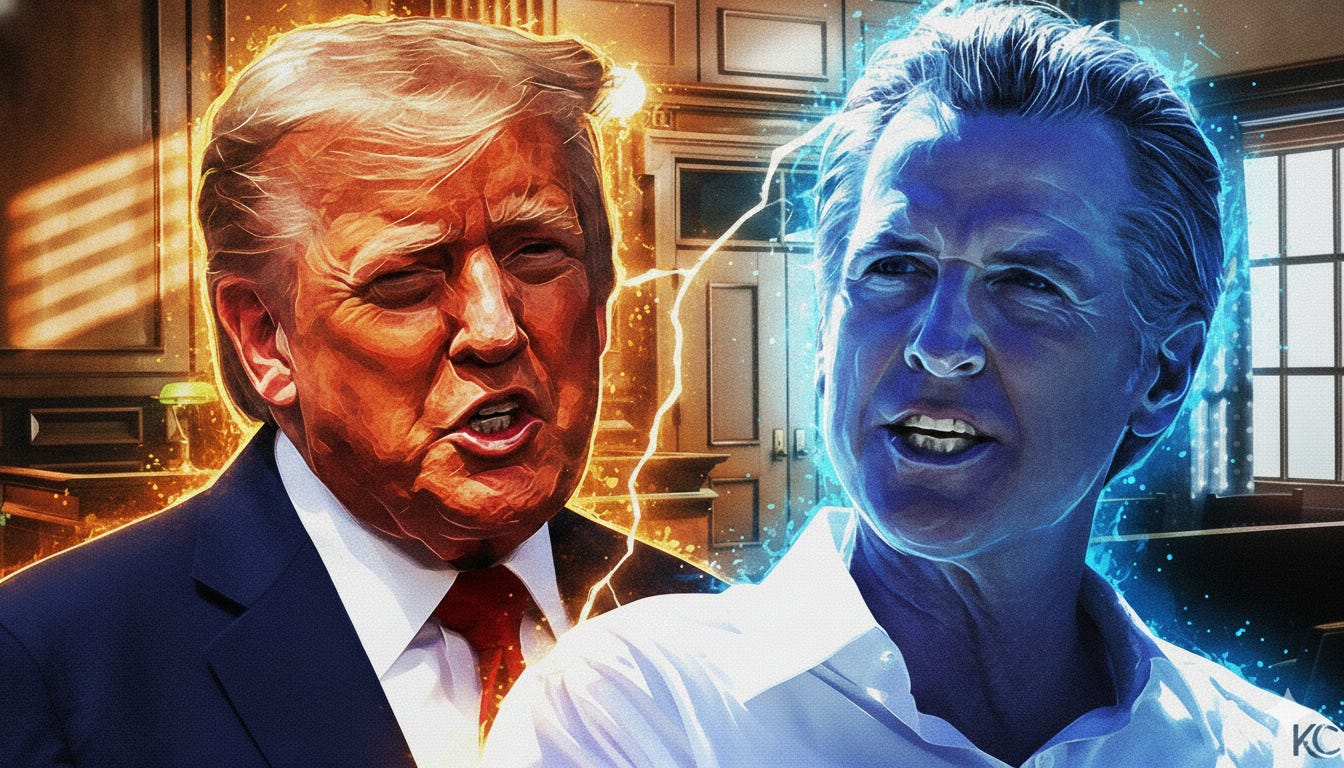
Two weeks apart. Two politicians. Two racial controversies.
Both went viral.
Both generated immediate outrage.
Both were reported inaccurately.
And both reveal something about us that we’d rather not see.
This is a story about Trump. And Newsom. But mostly, it’s a story about humans.
Act One: The Ape Video
A few weeks ago, a headline swept across social media:
“Trump posts racist video depicting the Obamas as monkeys to his Truth Social account.”
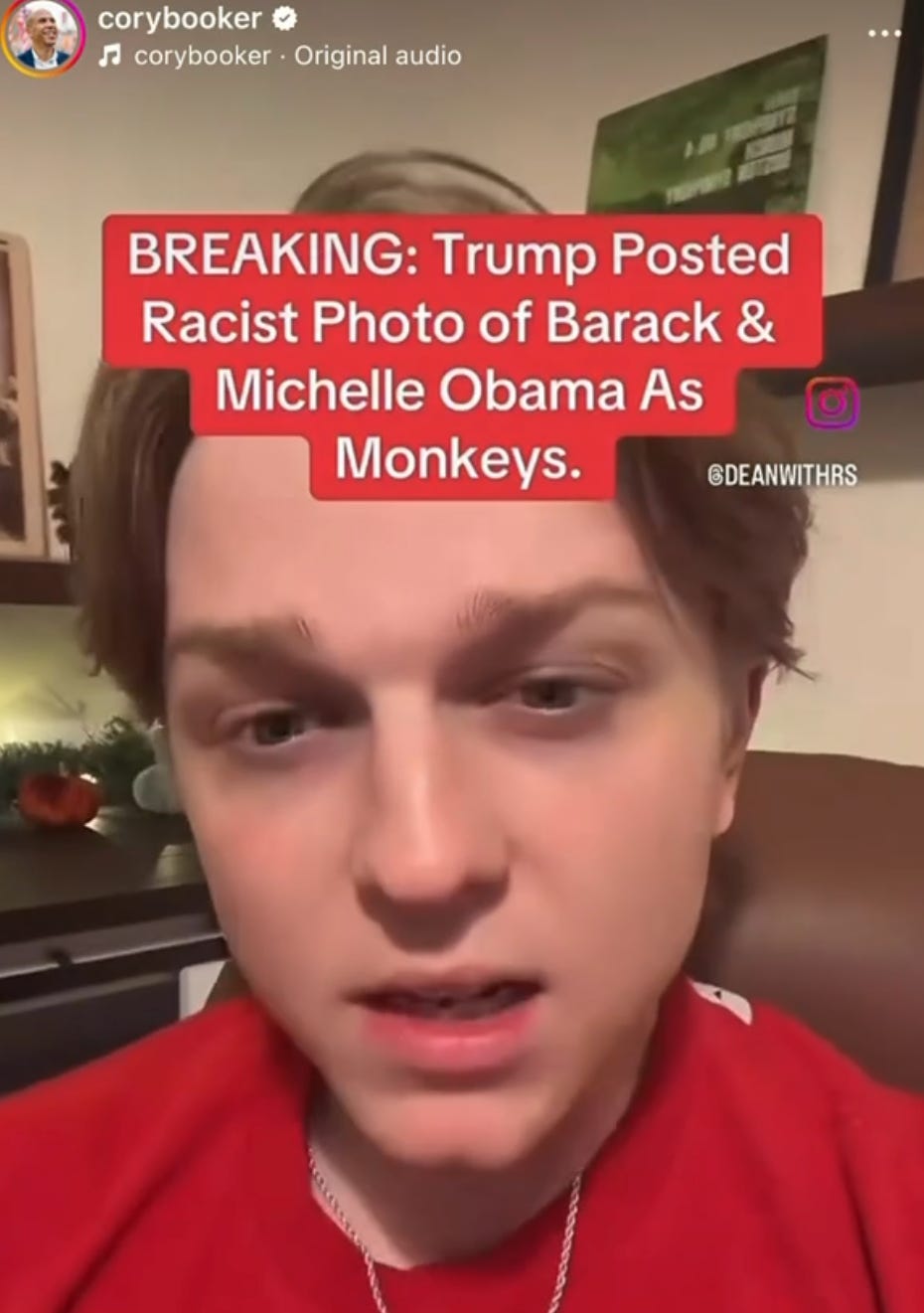
If you saw that headline — and tens of millions of people did — what did you think?
If you’re on the left, you probably thought: finally. Incontrovertible proof. The mask is off.
If you’re on the right, you probably thought: here we go again. Another hoax.
Both reactions happened before anyone watched the video.
Here’s what actually happened.
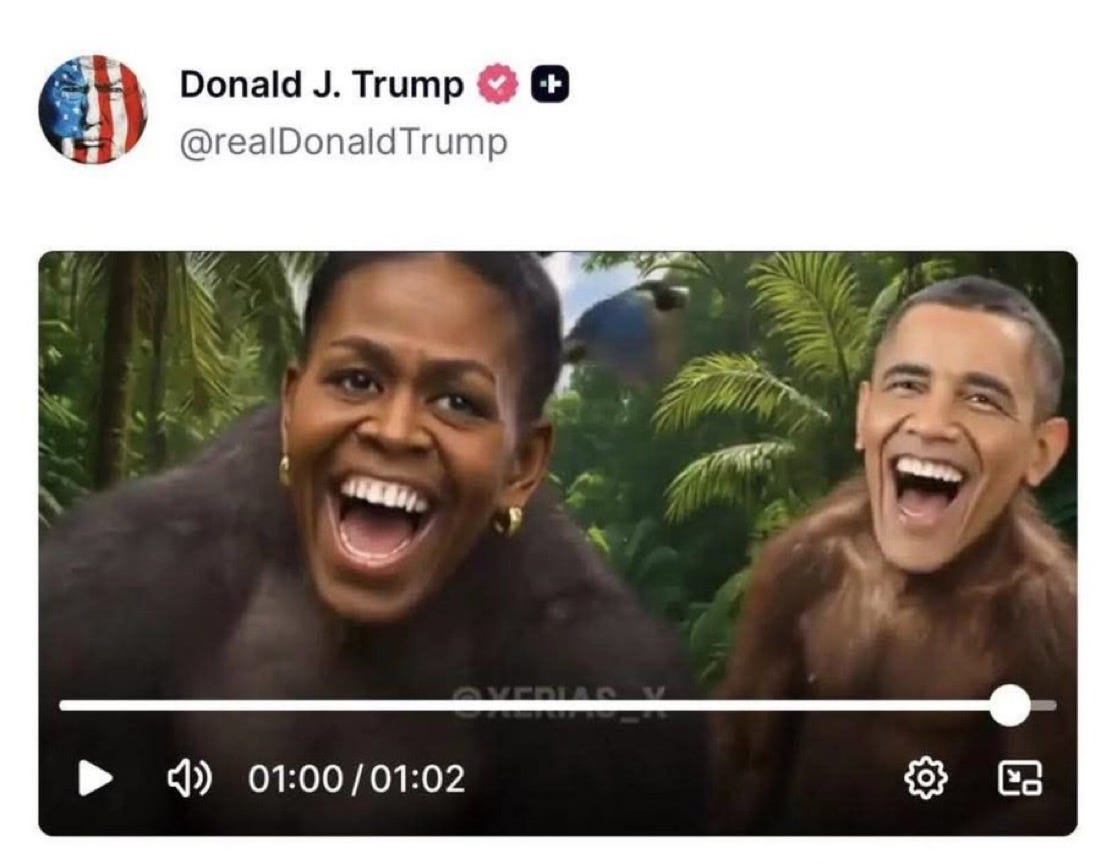
Trump’s account posted a 62-second video. The video was about the 2020 election — the same allegation Trump has been making for five years. Nothing new. Nothing unusual.
But embedded in that 62-second video was a one-second frame from a completely different video. A Lion King-style animation depicting various politicians as animals. Trump as a lion. Biden as a baboon. Hakeem Jeffries as something else. And the Obamas as monkeys.
One second. Out of sixty-two.
Here are the last 15 seconds of the video so you can see what I mean.
It looks like whoever screen-recorded the 2020 Election video auto-advanced to the Lion King video in their X feed and did not cut it out.
We don’t know why they didn’t cut it out - but that’s what happened.
Now. Watch what happens when you add context one layer at a time.
Trump posted a picture of the Obamas as monkeys. What do you think?
Actually, it was a video. Does that change anything?
Actually, it was one frame in a 62-second video. What now?
Actually, the rest of the video has nothing to do with the Obamas, monkeys, or animals at all. Now what?
Actually, the frame appears to have been included accidentally. And now?
Actually, Trump’s claiming that he only saw the first part of a video and it was posted by a staffer. And by the way, over 60 posts went out that night - so perhaps that 1 second frame was missed in the flurry of activity. How about now?
Each layer of context shifts the picture. Not completely — we don’t know for certain it was an accident. But enough to introduce doubt. Enough to ask: before we convict, did we look at the evidence?
The video I shared when the Trump story broke
Most people didn’t. In this short-form, hot take driven attention economy, most people decided the moment they heard the headline.
To be clear: you can know all of this context and still think Trump did something wrong.
And I’d agree with you.
A president’s social media account posted a frame depicting a black former president and first lady as monkeys.
Whether it was intentional or not, Trump is responsible for what goes out under his name.
The appropriate response was acknowledgment, an apology, and accountability. That didn’t happen. Instead, we got defensiveness and defiance from him and press secretary Karoline Leavitt.
But here’s the key point: the additional context doesn’t determine whether something was wrong. It determines how wrong.
Without context, this is a 10 out of 10 — a president deliberately posting racist propaganda. With context, it’s closer to a 5 — a serious failure of accountability from a team that should have caught a careless mistake.
Those are very different things. And conflating them doesn’t make you more anti-racist. It just makes you less accurate.
There’s a psychological reason most people never got that far. It’s called anchoring bias.
The Anchor
Anchoring bias is a cognitive tendency to over-rely on the first piece of information you encounter.
The first headline becomes the anchor. Every subsequent piece of information gets measured against it — not evaluated independently.
This is why falsehoods are so dangerous. Not just because they spread fast, but because they arrive first. And once the anchor is set, you’re not just fighting for the truth. You’re fighting against the resistance of people who’ve already made up their minds.
Changing a formed belief is ego-threatening. It requires admitting you were wrong. It can bring up shame, embarrassment, the uncomfortable feeling of having been fooled.
People would rather defend the lie they’ve heard than accept a truth they haven’t.
So people don’t change their minds. They defend their anchor. They look for new evidence to support it. And when someone points out contradicting evidence, they attack the messenger.
You’re biased. You’re a grifter. You’re carrying water for racists.
It’s easier than being wrong.
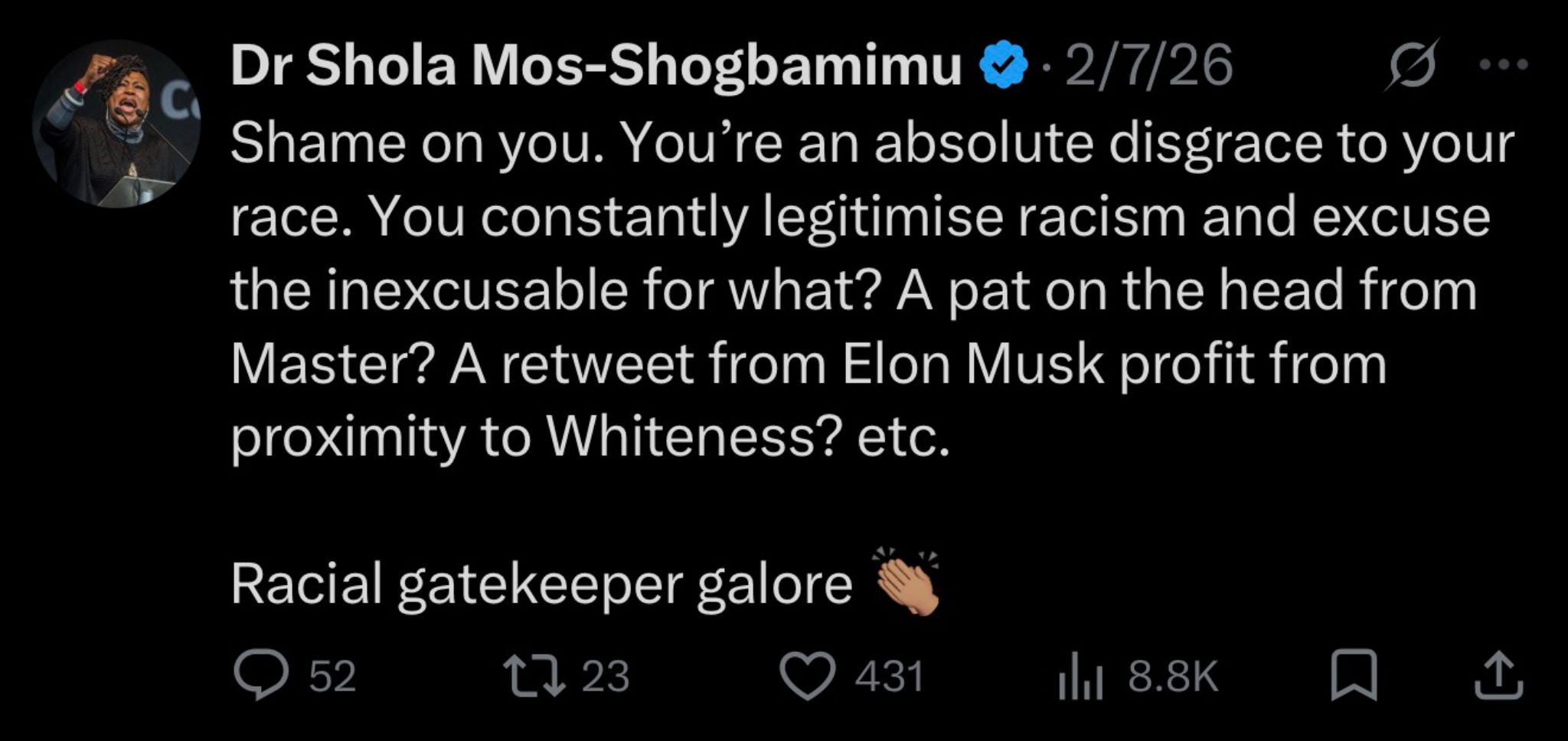
I saw this play out in real time with the Trump video. By the time I posted context, the world had already decided. And pointing out the truth didn’t change some minds — it made me a target.
Act Two: The SAT Score
Last Sunday, another headline swept across social media:
“Gov. Newsom to a black crowd in GA: ‘I am like you. I’m a 960 SAT guy. I can’t read.’”
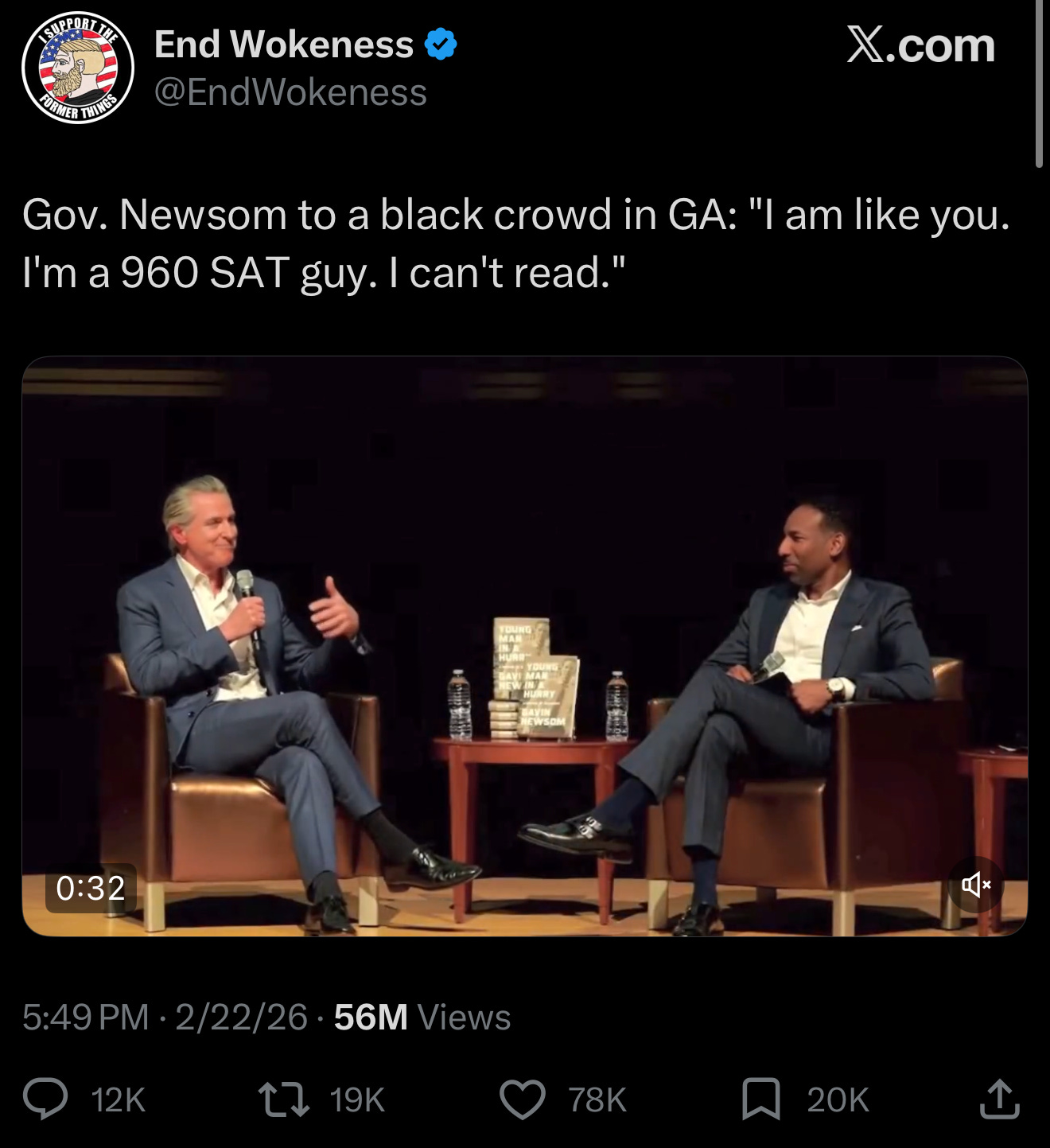
If you saw that headline — and tens of millions of people did — what did you think?
If you’re on the right, you probably thought: finally. Incontrovertible proof. Democrats are the real racists.
If you’re on the left, you probably thought: here we go again. Conservative manufactured outrage.
Both reactions happened before anyone watched the video.
Here’s what actually happened.
Gavin Newsom was on a book tour in Atlanta. His book is a memoir — about growing up, about struggling, about dyslexia. He was on stage at the Rialto Center for the Arts, in conversation with Atlanta Mayor Andre Dickens, in front of a ticketed audience that paid $45 to $100 per seat.
When asked what he wanted readers to take from the book, he said:
“I’m not trying to impress you. I’m just trying to impress upon you — I’m like you. I’m no better than you. I’m a 960 SAT guy. You’ve never seen me read a speech, because I cannot read a speech.”
The viral clip framed this as Newsom telling a black crowd he’s just like them because he can’t read.
Now. Let’s add context one layer at a time.
Newsom told a black crowd he can’t read. What do you think?
Actually, he said he can’t read a speech. Does that change anything?
Actually, he’s been publicly open about having dyslexia for years — and the entire book tour is about that struggle. What now?
Actually, the crowd wasn’t even black. Multiple videos from attendees, including footage show a diverse audience that appears majority white. The mainstream media journalist that called it “predominantly black” has since issued a correction. Now what?
Each layer of context shifts the picture.
But let’s steelman (i.e. give the best argument for) the most reasonable objection: okay, maybe he wasn’t talking to a black crowd, but he was talking to a black mayor, and he was looking at him when he said it.
Sure. You can say that. But any experienced speaker knows that when you’re being interviewed by a host, you naturally alternate between looking at your host and looking at the crowd. That’s not talking down to someone — that’s basic public speaking. The entire 30-minute conversation between Gavin and Mayor Dickens followed that pattern.
The video I shared when the Newsom story broke.
And even if we grant that he was speaking directly to Mayor Dickens — he wasn’t implying the mayor can’t read. Gavin was saying he can’t read a speech. Because of his dyslexia. That’s humility, not condescension on the basis of race.
Fine, but he was pandering.
Maybe.
Politicians pander. All of them. But pandering means being inauthentic — saying something to seem relatable that you don’t actually mean.
That’s a different category of wrong than implying black people are unintelligent. One is a 3 out of 10. The other is much worse.
Treating them as the same isn’t principled.
This is why it’s important to sit down and analyze a data point before we condemn people, rather than just retrofitting the point to a pattern.
Points sometimes match a pattern. Sometimes they don’t.
And sometimes the pattern itself is poorly founded.
When you skip examining the point and go straight to fitting it into your existing pattern, you are more susceptible to emotions and tribe dictating your decisions, rather than your logic.
To be clear, I'm not arguing either of these men is above criticism. I'm arguing these specific incidents were reported inaccurately and used as weapons rather than examined as evidence.
So why does this keep happening? And more importantly — what do we do about it?
That’s what I get into below for paid subscribers. Specifically: why the burden of proof always unfairly falls on the person trying to correct misinformation rather than the person spreading it, why even well-meaning people attack the messenger instead of updating their beliefs, and what it actually looks like to break this pattern — in your own thinking, your own conversations, and your own media consumption.
If you’ve ever wondered why pointing out the truth seems to make things worse — that’s exactly what we’re going to unpack.
